In recent months, conversations about global security have returned to the forefront of public attention. International tensions in several regions have prompted renewed discussion about the possibility of a wider conflict involving multiple nations. While large-scale war remains uncertain, the combination of political disputes, military activity, and strategic alliances has led analysts and citizens alike to ask difficult questions about what could happen if tensions were to escalate further.
One concern often raised during these discussions involves the potential use of nuclear weapons. Since the end of the Second World War, nuclear arsenals have remained a central factor in global military strategy. Governments maintain these weapons largely as deterrents, operating under the assumption that the devastating consequences of nuclear war discourage countries from using them.
Even so, the existence of these weapons naturally raises public concern during periods of heightened geopolitical stress.
Understanding how military planners evaluate strategic targets helps explain why certain locations might be considered more vulnerable than others in hypothetical conflict scenarios.
How Strategic Targeting Is Typically Evaluated
Military strategy often focuses on reducing an opponent’s ability to respond effectively rather than simply causing maximum destruction. In theoretical nuclear conflict scenarios, strategic infrastructure frequently becomes the primary focus of planning models.
For the United States, one key component of national defense involves intercontinental ballistic missile systems, commonly referred to as ICBMs. These missile systems form part of the country’s nuclear deterrence framework and are distributed across several central states.
The purpose of this distribution is to strengthen national defense by ensuring that no single attack could easily disable the entire deterrent capability.
However, in hypothetical strategic planning models, these same missile fields may also become potential targets.
If an adversary attempted to disable missile silos early in a conflict, it could reduce the United States’ ability to launch a retaliatory strike. Military analysts often refer to this concept as counterforce targeting, where the objective focuses on disabling military infrastructure rather than attacking civilian populations directly.
It is important to emphasize that these discussions come from theoretical defense analyses rather than predictions of real events.
Research and Simulation Models
Several research organizations and defense analysts have examined how nuclear fallout might spread if strategic missile sites were targeted. Scientific simulations attempt to understand how radiation could move through the atmosphere depending on wind patterns, weather conditions, and the number of weapons involved.
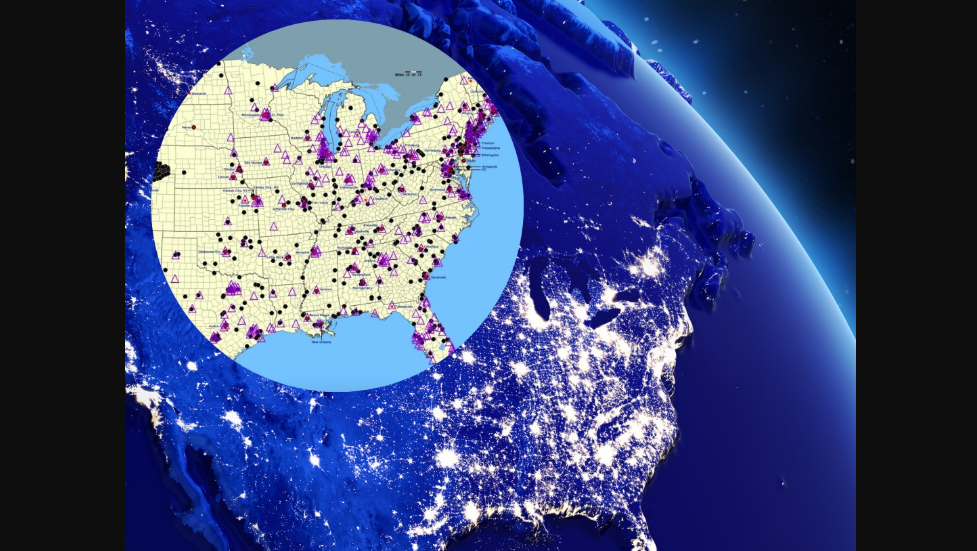
A widely referenced visualization created by Scientific American explored how radioactive fallout could spread across parts of the United States following hypothetical strikes on missile installations in the central region of the country.
Later coverage by Newsweek reviewed these simulations and highlighted several states where missile fields are located, suggesting that these areas could face the greatest direct exposure risk in such a scenario.
According to these analyses, the following states contain significant strategic infrastructure connected to missile systems:
Montana
Wyoming
Colorado
Nebraska
South Dakota
North Dakota
Iowa
Minnesota
Because these states host portions of the country’s missile defense network, theoretical models sometimes identify them as locations that could experience more immediate impact in a nuclear strike scenario targeting military installations.
Areas Considered Less Directly Exposed
In contrast, regions located farther from major missile fields or strategic military facilities may appear less directly exposed in certain modeling exercises.
Analyses reviewing potential fallout patterns have occasionally listed several states across the eastern and southeastern United States as relatively distant from central missile fields. These areas include:
Maine
New Hampshire
Vermont
Massachusetts
Rhode Island
Connecticut
New York
New Jersey
Pennsylvania
Delaware
Maryland
District of Columbia
Virginia
West Virginia
North Carolina
South Carolina
Georgia
Florida
Alabama
Mississippi
Tennessee
Kentucky
Ohio
Indiana
Michigan
These locations appear less likely to be immediate targets in scenarios focused specifically on missile silos.
However, this classification should not be interpreted as a guarantee of safety.
The Reality of Nuclear Fallout
Experts consistently emphasize that nuclear conflict would have consequences far beyond initial strike zones. Fallout patterns depend heavily on wind direction, atmospheric conditions, and the number of detonations involved.
Radioactive particles released during a nuclear explosion can travel hundreds or even thousands of miles before settling on the ground. This means that areas far from a strike location could still experience contamination.
Food production, water supplies, transportation networks, and electrical infrastructure could all face disruption.
In addition to immediate damage, long-term environmental consequences could affect agriculture, ecosystems, and public health for years.
For this reason, many experts caution against viewing any location as truly safe during a nuclear conflict.
Expert Perspectives
Policy specialists working in arms control and non-proliferation research often highlight the widespread nature of nuclear war’s impact.
John Erath, Senior Policy Director at the Center for Arms Control and Non-Proliferation, has explained that individuals living near military targets would likely experience the earliest and most severe effects in a conflict scenario.
Yet he also stresses that the consequences would extend far beyond those locations.
Radiation exposure, disruption of supply chains, economic instability, and environmental contamination could affect large portions of the country and potentially much of the world.
In other words, nuclear conflict would not remain limited to specific regions.
Why Preparedness Discussions Exist
Although these scenarios may sound alarming, the primary purpose of such research is preparedness rather than prediction.
Governments, scientific organizations, and policy experts study worst-case situations so they can better understand risks and develop strategies to reduce them.
This work also informs diplomatic efforts, arms-control agreements, and international negotiations aimed at preventing nuclear escalation.
In fact, much of modern nuclear strategy is built on the concept of deterrence, which aims to ensure that the cost of using nuclear weapons remains so catastrophic that nations avoid that path entirely.
A Shared Global Responsibility
The discussion surrounding nuclear conflict often highlights an important reality: global security depends heavily on cooperation, diplomacy, and responsible leadership.
While theoretical models can help researchers understand potential risks, preventing such scenarios remains the primary objective of international policy.
Efforts to reduce nuclear arsenals, maintain communication between nations, and encourage diplomatic solutions all play a critical role in preserving global stability.
The Bigger Picture
Ultimately, the idea of “safe” locations during a nuclear conflict is largely theoretical.
Even regions located far from military infrastructure could experience environmental, economic, and humanitarian consequences.
For this reason, experts often emphasize that preventing conflict remains far more important than analyzing where it might occur.
Preparedness research serves as a reminder of the importance of diplomacy, international cooperation, and responsible decision-making.
In a world where nuclear weapons exist, maintaining peace remains one of the most important priorities shared by nations across the globe.