In small-town cafés all across the country, moments unfold every day that never reach the evening news yet linger quietly in people’s lives. These places hold the rhythm of ordinary existence: coffee poured into well-worn mugs, gentle debates about weather forecasts, children negotiating for extra whipped cream. Most of the time, nothing remarkable happens. Yet occasionally, an evening arrives that reshapes how everyone present understands kindness, dignity, and responsibility. One such evening took place in our café on a bitterly cold night, when two men left without paying their bill. What seemed at first like a simple act of wrongdoing slowly revealed itself as something far more layered and human.
The night had started like many others. The wind outside cut sharply through coats and scarves, and the cold clung stubbornly to anyone who lingered too long on the street. Inside, the café offered refuge. Warm air carried the scent of baked bread and dark-roasted coffee, wrapping around customers like a blanket. Soft conversation filled the room, and the windows fogged gently from the contrast between indoors and out.
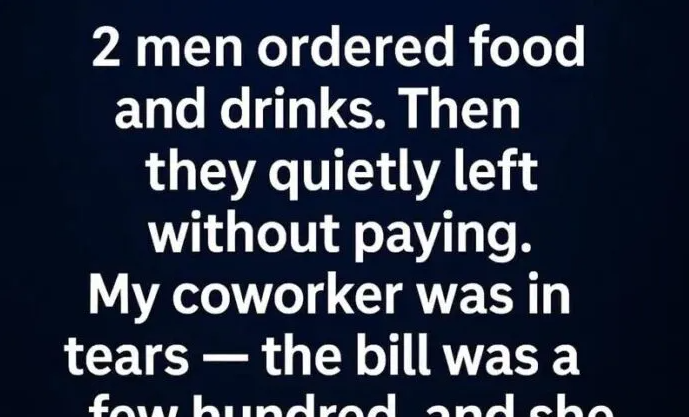
The two men arrived together. Both appeared to be in their forties or fifties, dressed neatly but worn at the edges. They ordered without hesitation: full meals, hot drinks, sides added along the way. Their table filled quickly, and their bill grew larger than most we see on an average night. Throughout the meal, they were courteous and appreciative, thanking servers and speaking in low voices. There was nothing disruptive about them. They appeared grateful to be there.
When their plates were cleared and the table wiped down, the shift moved on as usual. It took a few moments before anyone noticed that the men were no longer inside. They had slipped out quietly, leaving behind an unpaid check that sat alone on the table.
My coworker Mia was the one who noticed first. She stood at the register staring at the bill, her face draining of color. Mia worked two jobs to support her young son, and she carried the weight of responsibility with quiet determination. Seeing a bill of that size unpaid hit her hard. Her eyes filled with tears, not from anger, but from the sense of unfairness pressing down all at once.
Something stirred in me. Standing still did not feel like an option. I grabbed my coat and stepped into the night, the cold biting immediately. I spotted the men walking quickly down the street, their shoulders hunched against the wind.
I called out, my voice shaky but firm, telling them they had forgotten to pay. They stopped and turned around, surprise written across their faces. The moment stretched, heavy and silent.
One of them stepped forward slowly. His hands were visible, his posture open. He admitted they had left without paying and explained, quietly and without excuses, that they were both unemployed. The meal had been meant as a brief escape from months of stress, bills, and uncertainty. When the check arrived, they did not know how to face it.
Up close, there was no defiance in their expressions. There was fatigue, embarrassment, and a deep sense of shame.
I asked them to come back inside so we could talk. They hesitated, then followed me into the warmth of the café. Mia watched anxiously as the story unfolded. The men spoke honestly about factory layoffs, a business closure, rent overdue, and the steady erosion of confidence that follows prolonged hardship.
Our manager listened without interruption. When the explanation ended, he stepped forward and spoke calmly. He told them to pay what they were able and said he would cover the remainder. There was no lecture, no raised voice, no public embarrassment.
The men handed over the small amount of cash they carried. Our manager accepted it respectfully. The atmosphere in the room shifted. The tension eased. Shoulders relaxed. The men stood straighter, as though something heavier than debt had been lifted.
As they prepared to leave, one of them paused at the door. His voice trembled as he thanked us for treating them with dignity. Then they disappeared into the cold night.
Mia and I stood together watching the street empty again. Outside, the world remained harsh and indifferent. Inside, something warmer lingered.
That evening stayed with me. It reshaped how I view situations that appear simple on the surface. It reinforced lessons many people learned long ago: circumstances are rarely visible at first glance, and dignity carries power that punishment often lacks.
Mia went home that night with a story for her son, one that spoke about compassion and fairness rather than loss. I went home reminded that accountability and humanity can exist together.
Years later, I no longer remember the exact total of that unpaid bill. What remains clear is the sound of gratitude in a tired man’s voice, the quiet resolve of a manager choosing grace, and the understanding that kindness, when offered thoughtfully, changes everyone involved.