When we decided to renovate our 100-year-old home, we expected the familiar challenges that often come with aging houses. There would be layers of dust sealed into corners, tired wooden beams bearing the marks of time, and hidden repairs left behind by previous owners.
Old houses always reveal signs of wear, and we approached the project prepared for those ordinary discoveries. What we did not anticipate was uncovering something quietly intriguing, something that would pause the renovation and shift our attention in an entirely different direction.
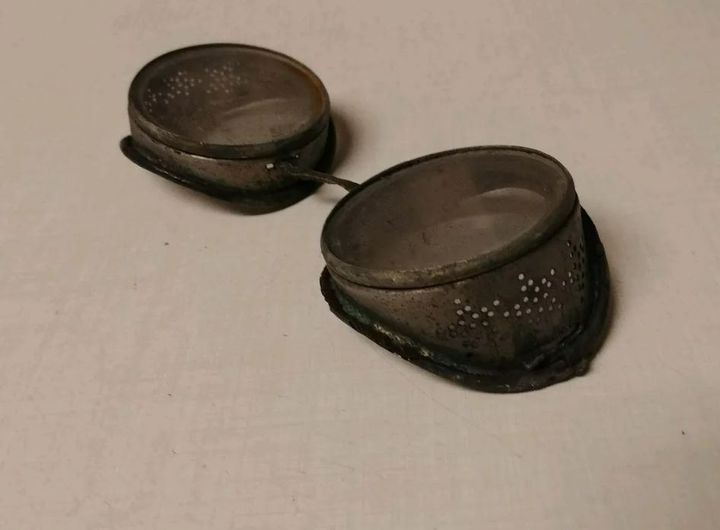
As one interior wall was carefully opened, two small metal objects emerged from the narrow space between the studs. They were positioned deliberately, not scattered or forgotten. Darkened by age and connected by a thin strip of metal, the objects appeared purposeful. There were no engravings, no labels, and no obvious clues to identify their function. Yet the smoothness along certain edges suggested they had once been handled regularly. Holding them created an unexpected sense of intimacy, as though the past had briefly reached forward, offering a silent introduction.
The discovery immediately changed the rhythm of the renovation. What had been a practical task suddenly became reflective. A century-old house is more than a structure made of wood and plaster. It holds traces of countless routines, choices, and repairs made by people who once called it home. Every adjustment inside these walls was shaped by the needs of daily life at the time. These metal objects may have served a simple role, something entirely familiar to someone long gone. Today, that knowledge has faded, leaving behind only questions and curiosity.
We placed the objects on a workbench and studied them closely. Their weight felt balanced, and the connecting strip suggested they were meant to function together rather than separately. We considered whether they might have belonged to an old household tool, a mechanical fastener, or perhaps part of a system that no longer exists. None of the possibilities felt certain. The mystery itself became part of their value. Rather than frustration, there was a quiet respect for how everyday knowledge can slip away as generations pass.
Old homes preserve stories in ways modern buildings rarely do. Their hidden spaces often hold evidence of problem-solving, craftsmanship, and routines shaped by the era in which they were built. Walls and floors become silent archives. Finding something unexpected reminds us that former residents lived practical lives, adapting to challenges with the tools available to them. They repaired what needed fixing, improved what they could, and moved forward without imagining that their actions would one day be examined with curiosity.
As the renovation continued, we resisted the urge to discard the objects or dismiss them as unimportant. Instead, they became a reminder that history is not defined only by major events or famous names. It is built from ordinary moments repeated over decades. A tool placed behind a wall, a repair completed with care, a solution that worked well enough to last for years. These quiet decisions shaped the house as much as any major renovation ever could.
We shared photos of the objects with neighbors and local historians, hoping someone might recognize them. The responses varied, ranging from thoughtful speculation to stories of similar discoveries in other old homes. Even without definitive answers, the conversations themselves added meaning. Each guess reflected a shared appreciation for craftsmanship and the passage of time.
In the end, the importance of the discovery had little to do with value or rarity. It offered perspective. It encouraged us to slow down and acknowledge the many hands that had built, maintained, and cared for the space long before us. Renovations often focus on improvement and renewal, yet moments like this gently redirect attention toward continuity. They remind us that progress does not erase the past; it rests upon it.
Those two metal objects now sit carefully stored, not as curiosities to be forgotten, but as symbols of connection. They serve as quiet proof that even the most unassuming homes can carry meaningful traces of human life. Sometimes, a renovation uncovers more than structural surprises. Sometimes, it reveals a shared timeline, linking present occupants with those who once stood in the same rooms, solving everyday problems in ways that still echo a hundred years later.