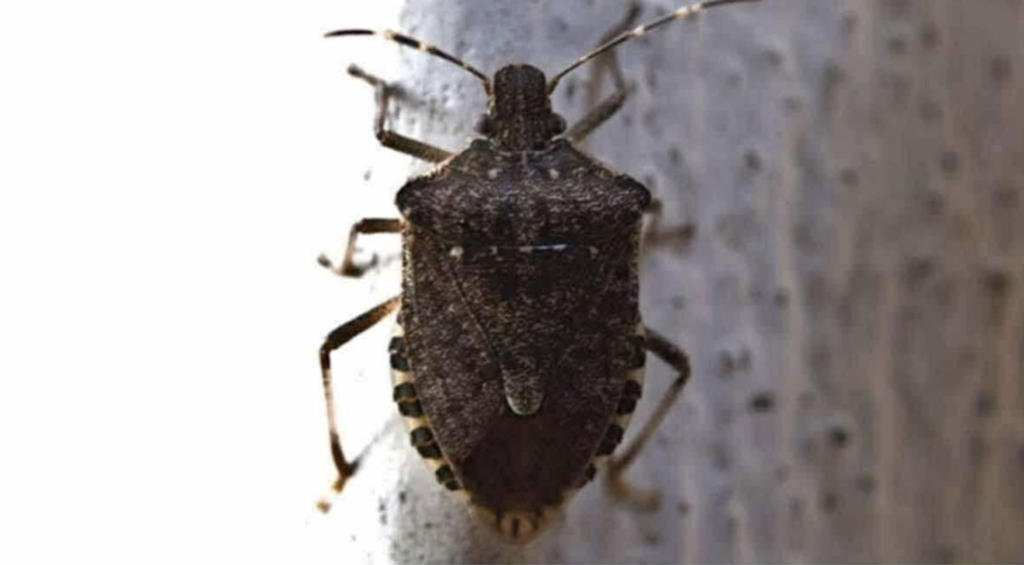
There has been growing confusion online about certain insects appearing in homes, with many people quickly assuming they are dealing with bedbugs. This misunderstanding is understandable, given how alarming the word “bedbug” can be.
However, the insects described in many of these discussions are not bedbugs at all. Clarifying the differences is important, because misidentification can lead to unnecessary fear, incorrect treatments, and wasted effort.
True bedbugs, scientifically known as Cimex lectularius, have very specific habits and characteristics. They are not outdoor insects and do not originate in gardens, plants, or soil. Bedbugs are not green, and they do not blend in with leaves or vegetation.
Their coloring is typically reddish-brown, and their bodies are flat and oval-shaped, allowing them to hide easily in narrow indoor spaces.
Another key point is behavior. Bedbugs are not attracted to plants, moisture, or household heating elements like radiators. Their primary interest is human blood. They feed exclusively on people, usually at night, and they prefer to remain close to where humans sleep.
Mattresses, box springs, bed frames, headboards, and tiny cracks in walls or furniture are their most common hiding places. During the day, they stay concealed, emerging only when they sense a sleeping host nearby.
The way bedbugs spread is also very specific. They are most often transported through luggage, used furniture, bedding, or clothing. Hotels, public transportation, and secondhand items are common sources.
They do not fly, jump, or wander in from outside. Because of this, seeing insects appear suddenly near windows, plants, or outdoor-facing walls strongly suggests that something other than bedbugs is involved.
In many cases, the insect causing concern is actually Palomena, commonly known as a green stink bug. This insect is frequently mistaken for a bedbug due to its sudden indoor appearance, especially during seasonal changes. Despite the confusion, green stink bugs are completely different in both appearance and behavior.
Green stink bugs are, as their name suggests, green. They are larger than bedbugs, with a shield-like shape and visible wings. Unlike bedbugs, they live outdoors for most of the year, commonly found in gardens, fields, and wooded areas. They feed on plants rather than people and pose no threat in terms of biting or blood-feeding.
As temperatures drop in the fall, green stink bugs often seek shelter indoors. This seasonal behavior explains why many people notice them suddenly appearing inside homes. They are attracted to warmth and will enter through cracks, gaps around windows and doors, and other small openings in search of a protected environment. Their presence indoors is accidental rather than intentional.
Another important distinction is how these insects respond to their environment. Green stink bugs are sensitive to strong smells and are commonly repelled by scents such as mint, lavender, vinegar, and other aromatic substances. This is very different from bedbugs, which are not deterred by household scents and typically require professional treatment to eliminate.
Understanding these differences can save homeowners a great deal of stress. Treating a green stink bug as if it were a bedbug infestation can lead to unnecessary chemical use, disposal of furniture, or costly extermination services. In reality, managing stink bugs often involves sealing entry points, gently removing the insects, and using natural repellents to discourage their return.
Accurate identification is the first step toward effective action. While bedbugs require serious attention due to their impact on health and sleep, green stink bugs are more of a seasonal nuisance than a true pest. They do not reproduce indoors in large numbers, do not damage household items, and do not feed on people.
When unfamiliar insects appear, taking a moment to observe their color, shape, and behavior can make all the difference. Not every bug indoors signals a major problem. In many cases, it is simply nature reacting to changes in weather and temperature.
By understanding what bedbugs are—and what they are not—you can respond calmly and appropriately. Knowledge replaces fear, and with the right information, even unsettling discoveries become far easier to manage.