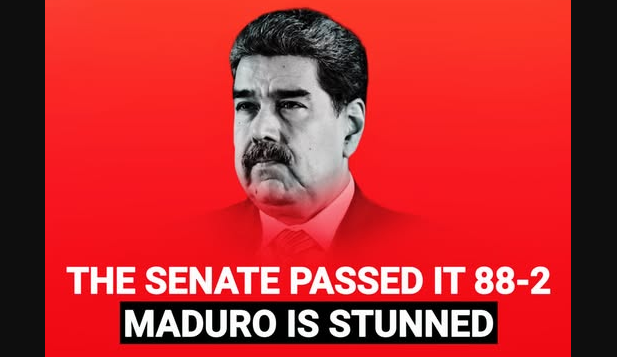
The recent military operation that led to the capture of Venezuelan leader Nicolás Maduro — and his transfer to the United States — has triggered intense discussion in Washington about presidential war powers and congressional oversight. In early January, U.S. forces carried out a coordinated operation in Caracas that resulted in Maduro and his wife, Cilia Flores, being taken into custody and brought to New York to face charges. PBS+1
While the dramatic news dominated global headlines, lawmakers in the U.S. were swift to turn their attention to domestic legal and constitutional questions. Many members of Congress voiced concern over the executive branch’s decision to deploy military force without seeking approval from Congress, raising long-standing questions about the balance of power between the legislative and executive branches.
At the forefront of this debate is Senator Tim Kaine, who announced plans to push for a Senate vote on a war powers resolution that would require future military actions to have congressional authorization. Kaine described the situation as a crucial moment to reaffirm constitutional limits. He emphasized that decisions involving military force should be subject to debate and approval by Congress, as outlined in the Constitution. His initiative reflects concern across both sides of the aisle that the executive branch might act without proper legislative checks on matters of war and peace. PBS
Kaine framed his proposal by referring to the nation’s approaching 250th anniversary, stressing that constitutional safeguards should not be weakened over time. He warned that without clear boundaries on executive authority, future military engagements could become more common without appropriate legislative consent. In his comments, he pointed to a broader historical pattern in which presidents of both parties have expanded their interpretation of commander-in-chief powers, often at the cost of congressional involvement. PBS
Opposition to Kaine’s move stems from concerns about responsiveness during crises. Some lawmakers argue that requiring explicit congressional approval for every military action could impede rapid responses to urgent global threats. They assert that in certain circumstances, waiting for Congress to convene and approve force could hinder national security efforts, especially in situations that evolve rapidly. Supporters of this view maintain that operational flexibility is essential for protecting U.S. interests abroad.
Despite these disagreements, many lawmakers agree on one point: the Maduro operation has highlighted a growing tension between the branches of government over control of military decisions. Critics of the mission note that Congress was not formally informed prior to the deployment, a point acknowledged by Secretary of State Marco Rubio in recent briefings. Reuters
Beyond domestic debates, the international reaction to Maduro’s capture has been widespread. Countries around the world have voiced contrasting views on the legality and implications of the U.S. action, with some leaders calling for respect for Venezuelan sovereignty and others urging a transition toward democratic governance in the country. Meanwhile, Venezuela’s Vice President, Delcy Rodríguez, was sworn in as interim president following Maduro’s removal, further complicating the political landscape. Reuters
The situation also carries broader implications for U.S. foreign policy. President Donald Trump has indicated plans to maintain a presence in Venezuela for a period of time and to make decisions about the country’s vast oil resources, positioning the operation as part of a larger strategic objective. These comments have intensified the debate about the role of military force in achieving economic and geopolitical goals. AP News
As the conversation continues in Washington, observers note that the upcoming war powers vote could have far-reaching effects on U.S. governance. The outcome may determine whether Congress reasserts its constitutional role in decisions involving military intervention, or whether the presidency retains broader autonomy in deploying forces abroad.
The debate over the capture of Nicolás Maduro and the limits of executive authority highlights the ongoing challenge of balancing effective foreign policy with constitutional accountability — a dynamic that is likely to shape U.S. political discourse in the months ahead.