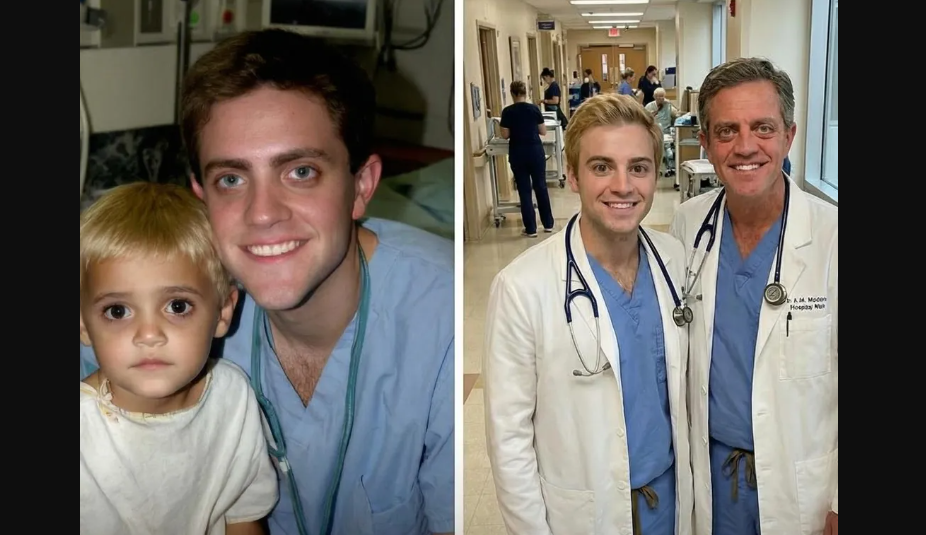
A lifetime spent caring for children teaches resilience in many forms, yet nothing prepared me for the young boy I encountered decades ago. He was small for his age, lying quietly in a hospital bed, facing a heart condition that required immediate and delicate surgery.
Despite the seriousness of his situation, his eyes held a calm gentleness that stayed with me long after that day. The procedure was complex and carried real risks, yet it unfolded with a success that felt almost miraculous. By the next morning, his heart rhythm was steady, his breathing even, and his chances for a full life finally tangible.
When I returned to his room expecting to see relieved parents by his side, I found something entirely different. The space was silent. His personal items remained untouched, the bed carefully arranged, and a single stuffed dinosaur rested on the pillow.
His parents had completed the necessary paperwork and left without notice. The child who had survived a life-altering surgery now faced recovery without the presence of those who brought him into the world. That quiet room marked a turning point, not only for him, but for the future that would slowly take shape around him.
The following day, my wife and I met him again. We arrived without certainty about what would follow, yet we were sure of one thing: he deserved consistency, care, and safety. One visit became another, and soon he was spending time in our home.
At first, he slept on the floor beside his bed, cautious and alert, addressing us formally, unsure whether trust would be temporary. Over time, reassurance came through routine moments—a hand held during a fever, comfort offered after a nightmare, shared meals that grew less quiet each day.
Gradually, his guarded demeanor softened. Words like “Mom” and “Dad” entered his vocabulary, first hesitantly, then with confidence. As he grew older, he filled our home with empathy, determination, and an awareness of how fragile life can be.
Education became deeply meaningful to him, a way to honor the chance he had been given. When he chose medicine as his path, his goal was clear: to help children facing challenges similar to those he once faced. The day he learned he had matched as a surgical resident at the same hospital where his life began again, emotion filled the room. He spoke quietly, sharing that the care he received had given him direction and purpose.
Years passed, and our lives settled into a rhythm shaped by shared work and family routines. Then one evening, an emergency call drew us back into the hospital under unexpected circumstances. My wife had been involved in an accident. She was shaken and bruised, though stable. Standing nearby was a woman we did not recognize, someone who had pulled her from the vehicle and stayed until help arrived. Her appearance reflected hardship, and her eyes carried exhaustion shaped by years of struggle.
When she looked at my son, recognition crossed her face. Her attention fixed on the faint scar near his heart, and she whispered his name with trembling certainty. She revealed a truth she had carried for decades: she was the woman who brought him to the hospital as a child, and the one who left. Fear, poverty, and overwhelming circumstances had guided her decision, one she had regretted ever since. In an unexpected turn, she had now saved the life of the woman who raised him.
What followed required patience and honesty. My son listened carefully, balancing long-held pain with a growing understanding of the complexity behind her choices. In time, he offered what she had been unable to grant herself: the possibility of healing and accountability. With support, she began rebuilding her life, receiving medical care and stability that had long been out of reach.
That Thanksgiving, she joined us at a table shaped by both sorrow and gratitude. My daughter placed the old stuffed dinosaur near her place setting, a quiet reminder of the past and the hope carried forward. As we shared the meal, it became clear that healing extends beyond medicine. Repairing a heart can involve forgiveness, presence, and the willingness to let compassion guide what comes next. Looking at the family formed through endurance and care, I understood that staying, listening, and choosing empathy can shape a life as powerfully as any surgery.