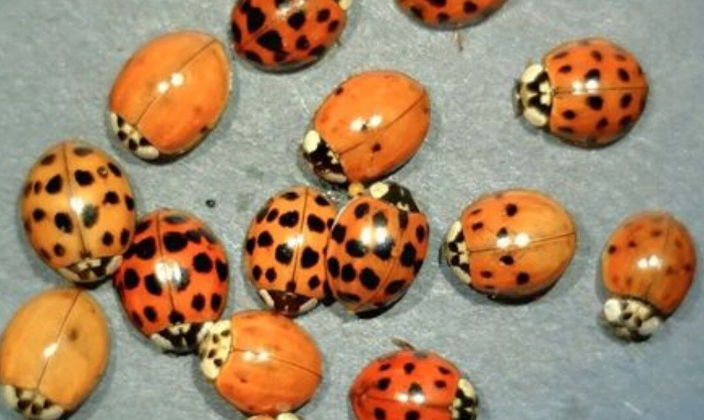
Spotting a yellow ladybug often feels like uncovering a small secret quietly tucked into the natural world. Many people grow up familiar with the red ladybug marked by black dots, making the sight of a bright yellow one feel unexpected and memorable. Against green leaves or blooming flowers, its color stands out with a soft glow that naturally draws the eye. When one appears nearby, resting on a stem or drifting through the air before landing, it often invites a pause and a closer look.
These moments tend to linger in memory because yellow ladybugs are not seen as often. Their presence creates a sense of curiosity, encouraging people to wonder where they came from and what makes them different. Even a brief encounter can feel meaningful, simply because it interrupts routine and brings attention back to the quiet details of nature.
Yellow ladybugs are not unusual or mythical creatures. They are real insects belonging to the large Coccinellidae family, which includes thousands of species found across the globe. Ladybugs display a wide range of colors and patterns, including red, orange, black, and yellow. Each variation serves a purpose shaped by evolution and environment. Nature rarely limits itself to one design, and ladybugs offer a clear example of that creativity.
One of the most recognized yellow varieties is the fourteen-spotted ladybug. This species features a soft yellow shell accented by darker markings arranged in a balanced pattern. Other yellow ladybugs exist as well, each adapted to specific habitats and climates. Their diversity highlights how color variation helps species survive and thrive in different conditions.
The bright yellow coloring of these insects carries practical meaning. In nature, vivid colors often act as warning signals to predators, a form of communication known as defensive coloration. Ladybugs can release a bitter-tasting substance when threatened, and their noticeable appearance signals that they are not an appealing meal. Birds and other animals learn to associate such colors with an unpleasant experience and tend to avoid them in the future.
Beyond their appearance, yellow ladybugs play an important role in maintaining ecological balance. Like their red counterparts, they feed on common plant pests such as aphids and mites. By controlling these populations, ladybugs support healthy plant growth and reduce the need for chemical pest control. Gardeners often welcome them, recognizing their contribution to sustainable gardening practices.
Their presence in gardens and green spaces offers both practical and visual benefits. Seeing a yellow ladybug among leaves or flowers reminds us that even small creatures play a meaningful role in larger systems. Their work often goes unnoticed, yet it supports the health of entire plant communities.
Over time, yellow ladybugs have also gained symbolic meaning in various cultures and personal traditions. The color yellow is often associated with sunlight, warmth, optimism, and renewal. Because of these associations, some people interpret the appearance of a yellow ladybug as a gentle sign connected to positive change or encouragement. These meanings are rooted in personal belief rather than scientific evidence, yet they reflect how people relate emotionally to nature.
Symbolism aside, encounters with yellow ladybugs tend to leave a positive impression. They offer a brief reminder that beauty exists in small, quiet forms and does not always announce itself loudly. Observing one can slow the pace of a day, even for a moment, and shift attention toward the present.
Whether appreciated through biology, gardening, or personal symbolism, yellow ladybugs hold a unique place in the natural world. They combine usefulness with visual charm, serving ecosystems while inspiring curiosity. Their presence encourages awareness and appreciation of the many variations nature offers.
In a world often focused on speed and routine, noticing a yellow ladybug can feel grounding. It represents how small encounters can bring moments of wonder and connection. By paying attention to these details, people often find their surroundings richer and more meaningful. A yellow ladybug, resting quietly on a leaf, becomes a reminder that nature’s diversity is always present, waiting to be noticed.