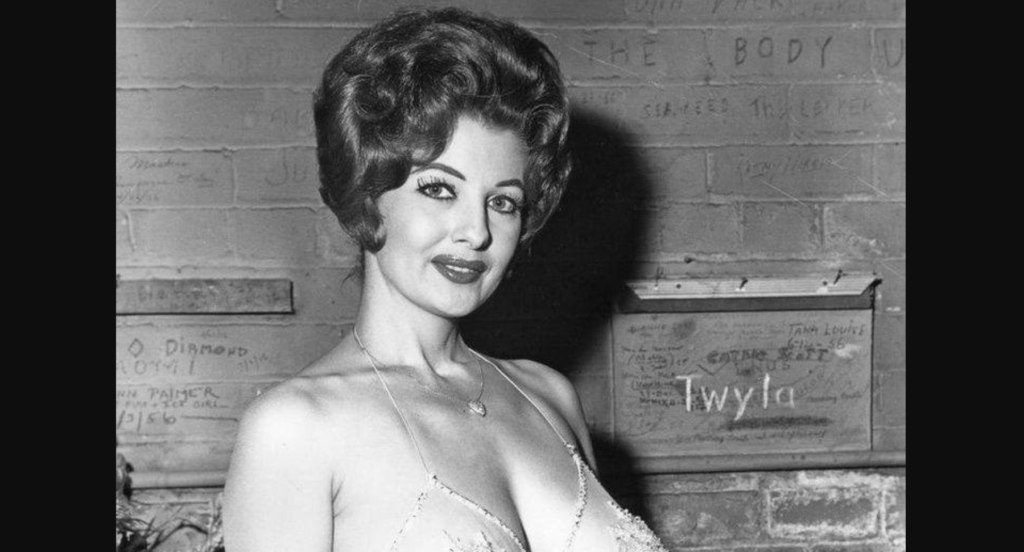
With a name like Tempest Storm, an unforgettable life seemed almost destined. Her blazing red hair, striking eyes, and relentless determination transformed a young runaway from a small Georgia town into one of the most iconic figures in the history of burlesque.
Born Annie Blanche Banks on Leap Day in 1928 in Eastman, Georgia, her childhood was marked by hardship and instability. Seeking escape from poverty and abuse, she ran away from home at the age of fourteen. Two short-lived teenage marriages followed, but her sense of ambition pushed her far beyond the life she had known. Determined to reinvent herself, she made her way to Hollywood, fueled by dreams that stretched far beyond the circumstances she had left behind.
During her early days in California, a casting agent presented her with two potential stage names: Sunny Day or Tempest Storm. Drawn to drama and electricity, she selected the name that would define her presence. While working as a cocktail waitress, a customer asked if she performed striptease. The question sparked her curiosity, and upon trying it, she discovered a magnetic ability to hold an entire room’s attention with a simple glance, a graceful turn, or a slow reveal.
Her career quickly took shape. By the late 1940s, she had stepped onto burlesque stages, and by the mid-1950s, she emerged as a full-fledged headliner. Her performances blended elegance, sophistication, and mystery. Audiences were drawn not only to her appearance but to her ability to craft an atmosphere—her performances were more about allure than removal, more about presence than shock. Her fame grew exponentially, and Lloyd’s of London insured her figure for $1 million, a testament to her rising star. Reports suggested she earned around $100,000 a year, a monumental figure at the time. The media dubbed her “Tempest in a D-Cup,” and she appeared in cult-favorite films such as Teaserama and Buxom Beautease alongside the legendary Bettie Page.
Despite the bold persona she displayed onstage, her private lifestyle reflected commitment and discipline. She avoided smoking and refrained from drinking alcohol stronger than her preferred 7-Up. She maintained daily sauna routines and declined cosmetic procedures throughout her life, choosing to embrace her natural features. Her popularity sometimes caused crowds to become overwhelming—on one occasion, an estimated 1,500 students nearly caused a stampede as they pressed in to see her perform.
Tempest Storm also captured attention for her personal relationships. She was romantically linked to Elvis Presley and Mickey Rooney before marrying jazz singer Herb Jeffries in 1959. Their interracial marriage attracted controversy at the time, yet the couple stood firm in their commitment. Together they welcomed a daughter, Patricia Ann, who became a central part of Tempest’s life.
Her influence never dimmed. Tempest continued to perform well into her eighties, remaining a symbol of dedication and artistry long after many of her contemporaries retired. San Francisco honored her legacy by establishing an official “Tempest Storm Day,” recognizing her cultural impact and lasting imprint on performance art. Her story was later chronicled in a 2016 documentary, allowing new generations to witness the depth of her talent and resilience.
Tempest Storm passed away in Las Vegas in 2021 at the age of ninety-three. She left behind far more than glamorous costumes and memorable performances. She left a legacy defined by strength, passion, reinvention, and fearless individuality—a life that embodied her legendary name from beginning to end.