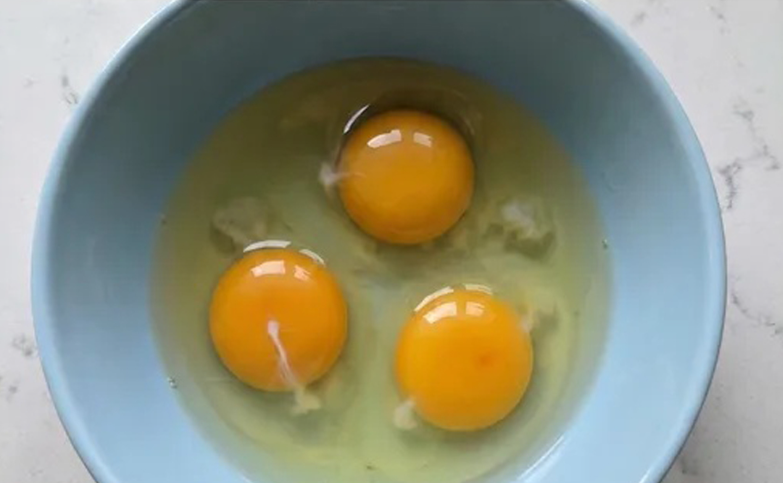
When you crack open an egg, you might notice a thin, white, string-like strand attached to the yolk.
At first glance, it can appear unusual or even slightly concerning. Many people assume this feature signals that the egg is spoiled or imperfect, and some remove it by habit before cooking.
In reality, this small strand is entirely natural, completely safe, and often a sign that the egg is fresh and well-preserved.
This white cord is called the chalaza, a protein structure that forms as part of the egg’s development. Its purpose is simple and important: it anchors the yolk in the center of the egg, keeping it suspended within the egg white.
By acting as a stabilizing support, the chalaza prevents the yolk from shifting or pressing against the shell when the egg is moved or turned. Most eggs contain two chalazae—one on each side of the yolk—although depending on how the egg cracks open, you may only see one clearly.
The chalaza also offers helpful clues about freshness.
In newly laid eggs, it appears thicker, stronger, and more well-defined. As an egg ages, the chalaza gradually softens and becomes faint. Seeing a firm, rope-like strand is often an indicator that the egg is of good quality and has not been sitting for long.
Nutritionally, the chalaza is made of the same proteins found throughout the egg white, which means it is completely edible. It blends into the rest of the egg during cooking, whether you are frying, scrambling, boiling, or baking. Once heat is applied, the strand dissolves and becomes unnoticeable in both texture and flavor.
There is only one situation where cooks occasionally remove the chalaza: when working with recipes that require an ultra-smooth consistency. Pastry chefs and home bakers sometimes strain eggs for custards, crème brûlée, silky sauces, mousse, or certain baked desserts where even the smallest lump might affect the final result. For everyday cooking, however, the chalaza does not interfere in any way.
Understanding what the chalaza is—and why it exists—can make the process of preparing food feel more comfortable and informed. What may look like a strange or unwanted part of the egg is actually a functional component that reflects the egg’s natural structure.
The next time you notice that small white strand floating beside the yolk, you’ll recognize it as a normal and beneficial element, not a flaw. It is a reminder of how efficiently nature protects delicate ingredients, ensuring the yolk stays centered and secure.
With this knowledge, cooking with eggs becomes more intuitive and reassuring. You can crack them confidently, knowing that the chalaza is not a sign of spoilage but a mark of freshness and natural design—all working quietly inside one of the most versatile foods in the kitchen.