Have you ever compared your impression of a picture with someone else’s, only to discover that both of you focused on completely different things? Moments like these remind us how uniquely each human mind operates. Our brains interpret what we see through layers of memories, habits, and small learned preferences—often working so quickly that we don’t even realize it’s happening. What stands out instantly to one person may remain invisible to another, showing how perception is shaped by the inner logic of the mind rather than the image itself.
Optical illusions are especially intriguing because they sit at the crossroads of psychology and observation. When you look at an illusion, your brain rushes to create a meaning before conscious analysis even begins. That snap interpretation is influenced by attention style, problem-solving patterns, and the way your mind organizes information. This is why illusions have become popular tools for playful self-reflection. They’re not meant to diagnose anything, but they can give a lighthearted glimpse into how a person thinks, reacts, and prioritizes visual cues.
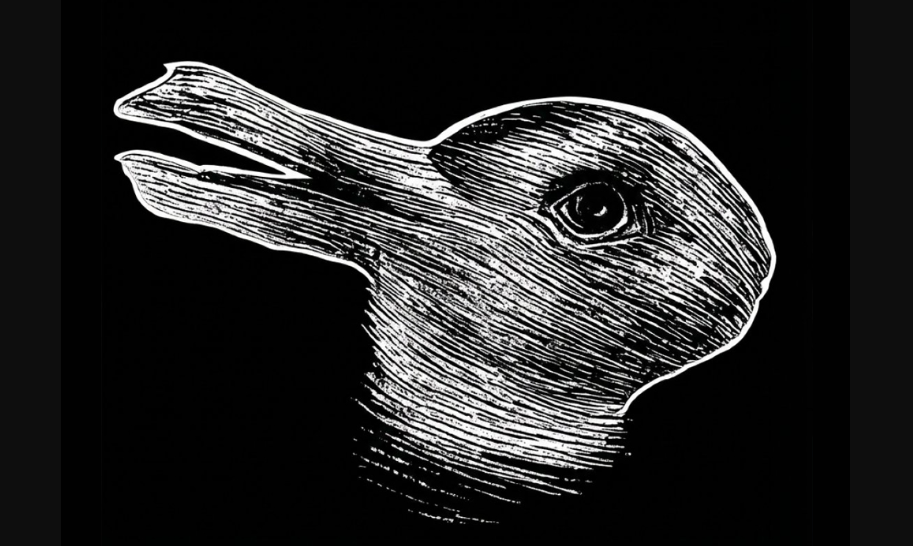
One of the most famous examples is the duck–rabbit illusion—an image that can be seen as two different animals depending on which outline your brain grabs first. Some people instantly recognize the duck; others unmistakably notice the rabbit before anything else. Neither interpretation is the “correct” one. The picture is intentionally designed to support both. What makes the illusion interesting is how quickly and confidently the mind settles on one version, even though both are equally present. This first reaction can hint at whether you lean toward structured, detail-oriented thinking or whether you gravitate toward creativity and symbolic interpretation.
If one animal appeared to you first, it may simply reflect your natural approach to the world. Many people who see the duck before anything else tend to value clarity, recognizable patterns, and straightforward problem-solving. Those who see the rabbit first often appreciate abstract ideas, creative connections, and unseen possibilities. And some people shift between both instantly, suggesting adaptability and fluid thinking. None of these tendencies define you fully, yet they offer an engaging way to reflect on how your brain organizes meaning.
Below are the popular interpretations associated with this classic illusion. They are not scientific conclusions, but they provide insight into common thinking styles—and people often find parts of them surprisingly accurate.
If You Saw the Duck First 🦆
People often associate these traits with the “duck-first” interpretation:
• Practical, grounded, and calm
• Steady under pressure
• Attentive to concrete details
• Comfortable focusing on the present moment
• Good at managing tasks without unnecessary hesitation
What this may suggest about you:
Your mind gravitates toward clarity and direct information. You interpret situations based on what is immediately visible, making you dependable when life feels chaotic. Others often appreciate your stability and your ability to remain composed.
If You Saw the Rabbit First 🐰
These are the traits commonly connected to noticing the rabbit first:
• Imaginative and intuitive
• Emotionally perceptive
• Curious and creative
• Sensitive to tone, atmosphere, and subtle shifts
• Inclined to think about possibilities or future outcomes
What this may say about you:
You naturally seek meaning, patterns, and deeper significance. You often sense things before others articulate them. Your mind explores connections and ideas, creating an inner world that’s rich and expressive.
If You Saw Both Almost Immediately 🦆🐰
People who recognize both animals at once often display traits such as:
• Flexibility in thinking
• Balanced logic and intuition
• Ability to understand multiple viewpoints
• Strong emotional awareness
• Comfort with complexity
What this may indicate:
You shift perspectives easily and interpret situations from more than one angle. This makes you a thoughtful communicator and a reliable mediator when others struggle to find common ground.
If the Image Kept Switching Back and Forth
Those who see constant movement between the duck and the rabbit are often described as:
• Highly introspective
• Mentally adaptable
• Curious about systems and explanations
• Sometimes restless or easily stimulated
• Naturally questioning and analytical
What this may reveal:
Your mind prefers exploration over quick conclusions. You are comfortable examining ideas from different directions, even when the answer takes time to unfold.
The Real Insight
This illusion does not define personality. It reflects a moment in time—how your mind responded when presented with two equally possible interpretations.
Perhaps the most meaningful lesson is this:
A person can be the duck one day, the rabbit the next, and both when the world calls for it.
Human perception is expansive. And your way of seeing the image is one more reminder that your mind moves through the world with its own rhythm and its own remarkable intelligence.