A Sudden Shift: When the Body Reacts Without Warning
As winter settles in and temperatures fall, an unsettling change occurs for millions of people across the world. Cold weather does far more than create a chill—it transforms the color and temperature of the body’s outermost points: fingers, toes, ears, and sometimes even the tip of the nose.
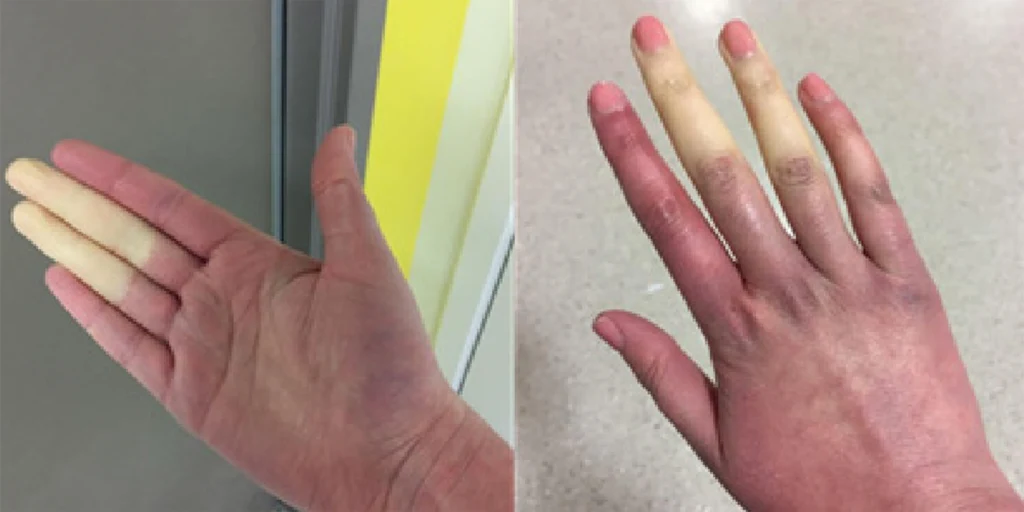
Many individuals have experienced that moment of worry when their fingertips take on a pale white shade or turn slightly blue. Over time, people begin accepting this strange response as a harmless part of being cold. Yet this dramatic color shift is often signaling something deeper. For nearly one in five adults, this reaction is linked to a common, frequently undiagnosed medical condition.
What looks like a simple cold-weather quirk is actually the body cutting off blood flow in a way that is far from ideal.
Understanding Raynaud’s: What Really Happens Beneath the Skin
This condition, known as Raynaud’s disease or Raynaud’s phenomenon, appears when the body’s extremities are exposed to cold temperatures—or, in many cases, even a mild environmental drop.
Melisa Lai Becker, MD, described the distinction clearly in an interview with Good Morning America. She explained that a typical person might walk into chilly weather without gloves and experience mildly cold hands. For someone with Raynaud’s, the experience is completely different.
Raynaud’s causes a sudden spasm of small blood vessels in the fingers and toes, dramatically restricting circulation. Dr. Lai Becker notes that the difference is undeniable: “Touch their hands and you can feel it. Even in moderately cool conditions, their fingers are white and ice-cold.”
According to the NHS, Raynaud’s occurs when blood flow becomes disrupted in the extremities. Although widespread and often non-life-threatening, it creates intense discomfort and can deeply affect day-to-day life.
The Signature Symptoms: What Sets Raynaud’s Apart
This exaggerated response to cold or emotional stress produces symptoms that are highly recognizable:
Color Changes:
The skin may move through three stages—white from reduced blood flow, blue as oxygen decreases, and red as circulation returns.
Physical Sensations:
People often report throbbing pain, burning, tingling, or numbness in the affected area once circulation shifts.
Beyond the Hands:
Although fingers and toes are most commonly impacted, some individuals notice symptoms in the nose, ears, lips, or even in more sensitive areas like the nipples.
The NHS also notes that stress or emotional strain can provoke the same reaction. The body’s natural stress response—tightening blood vessels—becomes amplified in those with Raynaud’s.
Who Is Most Likely to Experience Raynaud’s?
Raynaud’s affects both men and women, but Dr. Lai Becker points out a significant demographic pattern: the condition is far more common in women and often begins during adolescence. Many individuals first notice the symptoms when they are teenagers and then see episodes become more pronounced into adulthood.
These sudden flare-ups can happen without warning, and the intensity varies widely from person to person. Some episodes pass quickly, while others linger and make daily tasks more difficult.
When You Should Seek Medical Care
Because Raynaud’s is widespread and often mild, people dismiss symptoms for years. However, there are situations where speaking to a doctor becomes essential.
Severe Pain or Interruption of Daily Life:
If the pain becomes strong enough to interfere with activities such as buttoning clothing, turning keys, or holding objects in cold weather, a medical evaluation is recommended.
Possible Underlying Conditions:
Most cases are classified as primary Raynaud’s, meaning they occur independently. In some instances, however, an underlying medical issue—such as lupus, rheumatoid arthritis, or scleroderma—can contribute to blood vessel dysfunction. This is known as secondary Raynaud’s and requires professional assessment.
Appropriate treatment varies from lifestyle adjustments to prescription medications that help widen blood vessels.
Taking Back Control in the Cold
Winter does not need to dictate your comfort or quality of life. If your fingers or toes turn a striking white or blue, or if cold temperatures routinely trigger pain, understanding the reason is empowering.
Recognizing that these symptoms point to Raynaud’s disease is the first meaningful step toward managing the condition. With awareness, care, and proper guidance, the harsh sting of cold weather no longer has to disrupt your daily routine—or your peace of mind.
If you’d like, I can also create a shorter version, a social-media caption, or a title set for this article.