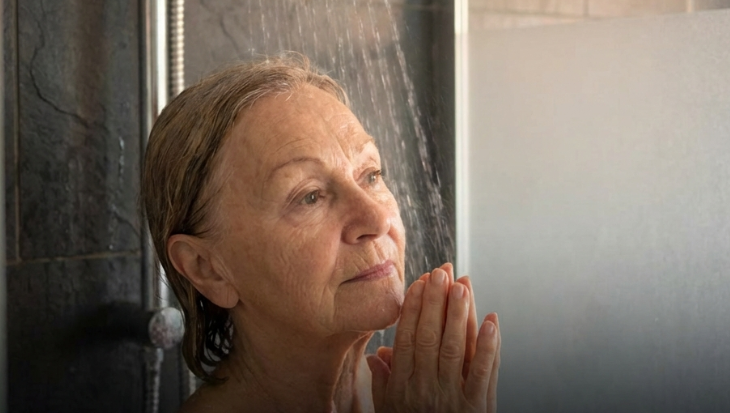
If you’re over 65 and you’ve begun to notice that your skin feels drier, itchier, or more sensitive than it once did, you’re not imagining it—and your moisturizer may not be the only factor involved. Many people continue the same shower habits they followed in their 30s and 40s, assuming that daily hot showers are essential for cleanliness and comfort.
However, after 65, the skin changes gradually in ways that make it more delicate and more prone to irritation. What once felt like a healthy, energizing routine can slowly begin to work against you. The result may be tightness, flaking, and discomfort—even when you believe you’re doing everything correctly.
Why Skin Changes After 65
As we age, the skin naturally becomes thinner and less resilient. Oil production decreases, collagen levels decline, and elasticity weakens. This means the skin has a harder time holding onto moisture and repairing itself after stress.
In younger years, the skin can recover quickly from long, hot showers and frequent washing. Later in life, that same routine can strip away essential natural oils faster than the body can replace them.
Over time, this can lead to:
-
Persistent dryness
-
Itching or irritation
-
Redness or sensitivity
-
Flaky or rough texture
These symptoms may appear suddenly, though they often develop gradually due to everyday habits that once caused no issues.
The Role of Hot Water and Soap
Hot water feels soothing, especially in colder months. Even so, high temperatures can break down the skin’s natural protective barrier. This barrier helps lock in moisture and protect against environmental irritants.
Long showers, combined with strong soaps or heavily scented body washes, may intensify the effect. Scrubbing firmly with washcloths or loofahs can further weaken already fragile skin.
Over time, this repeated exposure can make skin more vulnerable. It may begin to feel tight immediately after showering. You might notice that lotion seems less effective or that dryness returns quickly.
The issue often lies not in hygiene itself, but in how that hygiene is maintained.
A Gentler Routine for Aging Skin
For many adults over 65, a less frequent and more mindful routine can support healthier skin. Some dermatology professionals suggest that full-body showers every other day—or several times per week—are often sufficient for maintaining cleanliness, depending on personal activity levels.
On non-shower days, washing the face, hands, underarms, and other key areas can help you feel refreshed without drying out your entire body.
When showering, a few small adjustments can make a significant difference:
-
Use lukewarm water instead of hot
-
Limit showers to 5–10 minutes
-
Choose fragrance-free, moisturizing cleansers
-
Avoid harsh scrubbing
-
Pat skin dry gently rather than rubbing
One particularly effective habit is applying a rich moisturizer immediately after bathing while the skin is still slightly damp. This helps trap moisture and reinforces the skin barrier.
Moisturizing Matters More Than Ever
As natural oil production slows with age, external hydration becomes increasingly important. Thick creams or ointments often provide more lasting moisture than lightweight lotions.
Look for products containing ingredients such as:
-
Ceramides
-
Glycerin
-
Hyaluronic acid
-
Shea butter
These components support the skin’s ability to retain hydration and strengthen its protective layer.
Consistency is key. Regular moisturizing can reduce itching and improve overall comfort, especially during colder months when indoor heating may worsen dryness.
Personal Comfort Still Matters
Daily showers may feel relaxing or emotionally grounding for some people. Routine can provide structure and comfort, and there is no universal rule that fits everyone.
If you prefer showering every day, the goal becomes balance rather than elimination. Keeping showers shorter, reducing water temperature, and selecting gentle products can allow you to maintain your preferred routine while protecting your skin.
Focus soap use on areas that truly need cleansing rather than applying it across the entire body. Small adjustments often prevent dryness without compromising hygiene.
Listening to Your Skin
Aging does not mean abandoning cleanliness or comfort. It means adapting habits to align with the body’s evolving needs.
If dryness, itching, or irritation persist despite making changes, speaking with a healthcare professional can help rule out underlying conditions such as eczema or thyroid imbalance.
Your skin is one of your body’s most visible indicators of overall health. By paying attention to its signals and adjusting daily routines thoughtfully, you can maintain both cleanliness and comfort.
With a few mindful changes, staying fresh and refreshed can continue to feel satisfying—without leaving your skin dry or uncomfortable afterward.