The early hours of the morning had settled over the city with an almost deceptive calm. Streets were empty, lights were dimmed, and the world seemed to pause in that fragile space between night and day. For most people, it was another ordinary dawn. For Julián, it marked the beginning of an experience that would change how he understood safety, routine, and vulnerability.
Julián was not someone who lived recklessly. Among friends and coworkers, he was known as dependable and hardworking — the kind of person who carried his responsibilities quietly and rarely complained. After separating from his wife four years earlier, he had adjusted to living alone in a modest apartment. The space was not luxurious, but it was functional, familiar, and, until that night, felt entirely safe.
His daily rhythm rarely changed. After long hours at work, he would return home tired, prepare a simple meal, and spend the evening unwinding in silence. Cleaning was often postponed until the weekend, and like many people living alone, he sometimes overlooked small details — an open window, leftover crumbs, or laundry waiting to be folded. None of it seemed urgent. None of it seemed dangerous.
“He had never considered that something so ordinary — sleeping in his own bed — could turn dangerous.”
That night was no different. Exhausted, Julián went to bed without much thought. He did not notice the faint buzzing near the window or consider that the warm, quiet apartment might attract unwanted visitors. Sleep came quickly, as it usually did.
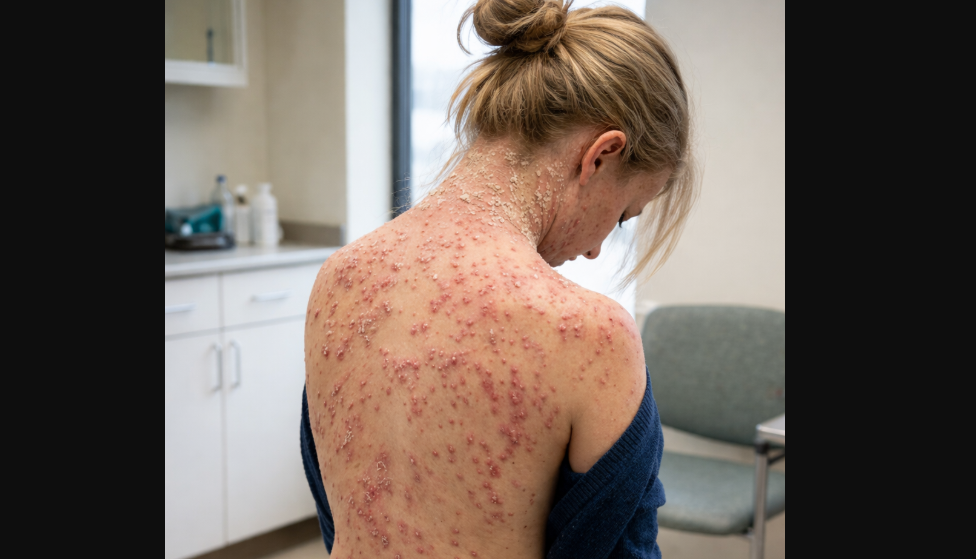
Some time later, he woke abruptly, startled by a sudden and intense discomfort spreading across his back. Confusion overwhelmed him at first. Discomfort during sleep was not unusual, and he assumed it might be a muscle spasm or an awkward sleeping position. Within moments, however, the sensation intensified, becoming impossible to ignore.
His heart began to race as he tried to orient himself. The room felt unfamiliar and his thoughts scattered. When he attempted to sit up, he noticed movement on the bed. In the low light, he made out small shapes retreating quickly across the sheets. In that instant, the realization set in — insects had found their way into his sleeping space.
Panic followed immediately. Julián instinctively tried to brush them away, his movements uncoordinated as fear and confusion took over. The physical reaction in his body escalated — not only from the initial contact, but from the stress response itself. He felt lightheaded, his breathing grew shallow, and his skin became unusually sensitive.
Living alone meant there was no one to immediately assist him. As his symptoms worsened, Julián struggled to stay focused. He moved toward his phone, steadying himself against the wall, fully aware that something was seriously wrong. His vision blurred, and standing became increasingly difficult. Still, he managed to place a call for emergency assistance before losing strength entirely.
When paramedics arrived, they found him unconscious on the floor. His condition indicated a severe reaction that required immediate medical attention. He was transported to the hospital, where doctors and nurses worked quickly to stabilize him and determine the cause of his symptoms.
Julián regained consciousness later in a hospital room filled with bright light and the steady sounds of medical equipment. For a moment, he struggled to remember where he was. Then the events of the night returned in fragments. A nurse stood nearby, speaking calmly, explaining that his decision to call for help had been critical. He was told that his body had experienced an extreme reaction — likely triggered by multiple insect exposures combined with acute physical stress.
“Medical professionals see this pattern often enough to recognize it: an overlooked environmental factor leading to a serious health emergency.”
While such incidents are not common, they are familiar to medical professionals. The nurse explained gently that certain insects are drawn to warmth, food residue, and stagnant indoor environments. Many encounters result in mild irritation, but in some cases the body can respond aggressively — especially when exposure occurs during sleep, when reaction time is significantly delayed.
Julián listened quietly, absorbing the information with a mix of relief and disbelief. The idea that something so ordinary could turn dangerous unsettled him more deeply than the physical discomfort itself.
In the days that followed, recovery was slow but steady. Medical staff monitored him carefully, treating his symptoms and ensuring no further complications developed. The physical marks began to heal, but the emotional impact lingered longer. He found himself replaying the night repeatedly, wondering how easily things could have ended differently — if he had been more deeply asleep, if he had dismissed the symptoms, if he had not reached his phone in time.
Doctors reassured him that while the incident was serious, it was also preventable. They emphasized the importance of maintaining a clean sleeping environment, particularly for individuals living alone. Simple steps — regular cleaning, sealing windows, removing food remnants, and checking bedding — can significantly reduce risk.
For Julián, the experience became a turning point. Returning home after his hospital stay felt different. The apartment was the same, but his awareness had shifted. He cleaned thoroughly, repaired the window, and adjusted habits he had long considered harmless. More importantly, he began to reflect on how easily routine can breed complacency.
Living alone had taught him independence, but it had also made it easy to ignore small warning signs. The incident forced him to acknowledge how vulnerable anyone can be, regardless of strength or experience. Friends who learned what had happened were shocked. Many admitted they had never thought about similar risks in their own homes.
Julián shared his story not to alarm others, but to encourage awareness. His message was straightforward: safety often lies in the details people overlook.
Medical experts agree that incidents like this one highlight the body’s role as an early warning system. When the environment becomes unsafe, physical symptoms may be the first signal. Paying attention and responding quickly can make a crucial difference.
Today, Julián has returned to work and resumed much of his normal life. Some nights, he still pauses before going to bed, checking his surroundings more carefully than before. The experience left a lasting impression — not one of fear, but of respect for how closely comfort and risk can exist side by side.
He does not view that night as a tragedy, but as a lesson learned at a high cost. It reminded him that even familiar spaces require care and attention. That routine should never replace awareness. In the quiet moments before sleep, Julián no longer takes rest for granted. Instead, he treats it as something worth protecting — through small, consistent actions that, taken together, create genuine safety.
His story serves as a reminder that life’s most serious moments do not always arrive with warning. Sometimes they emerge from the ordinary. And sometimes, surviving them depends entirely on recognizing when something feels wrong — and acting before it is too late.