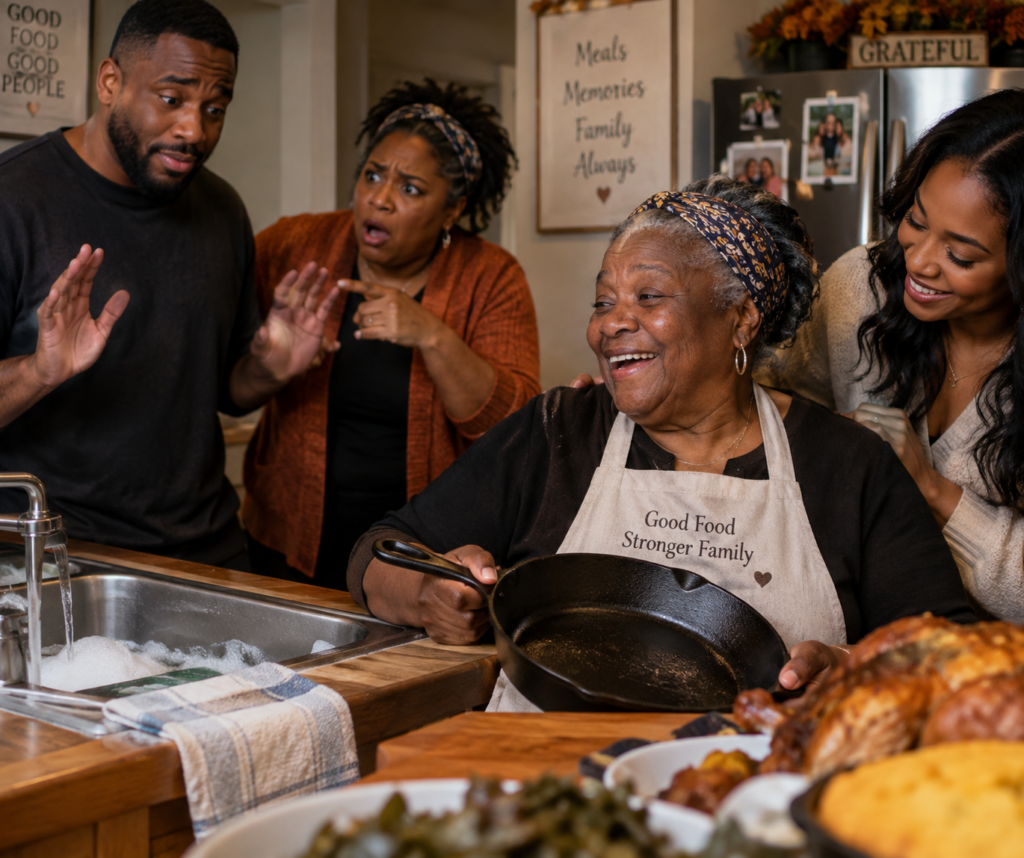
“My daddy bought this pan used,” Grandma said.
That wasn’t the story I expected.
No heirloom from some grand estate.
No dramatic secret.
Just a used skillet.
Her father had bought it decades earlier when Grandma was a girl.
Their family didn’t have much.
She remembered meals being stretched until there was enough for everybody at the table.
Some nights the skillet held meat.
Some nights it didn’t.
“But something was always in it,” she said.
After her father died, her mother kept cooking with it.
Eventually it went to Grandma.
That was why my aunt had called it Daddy’s skillet.
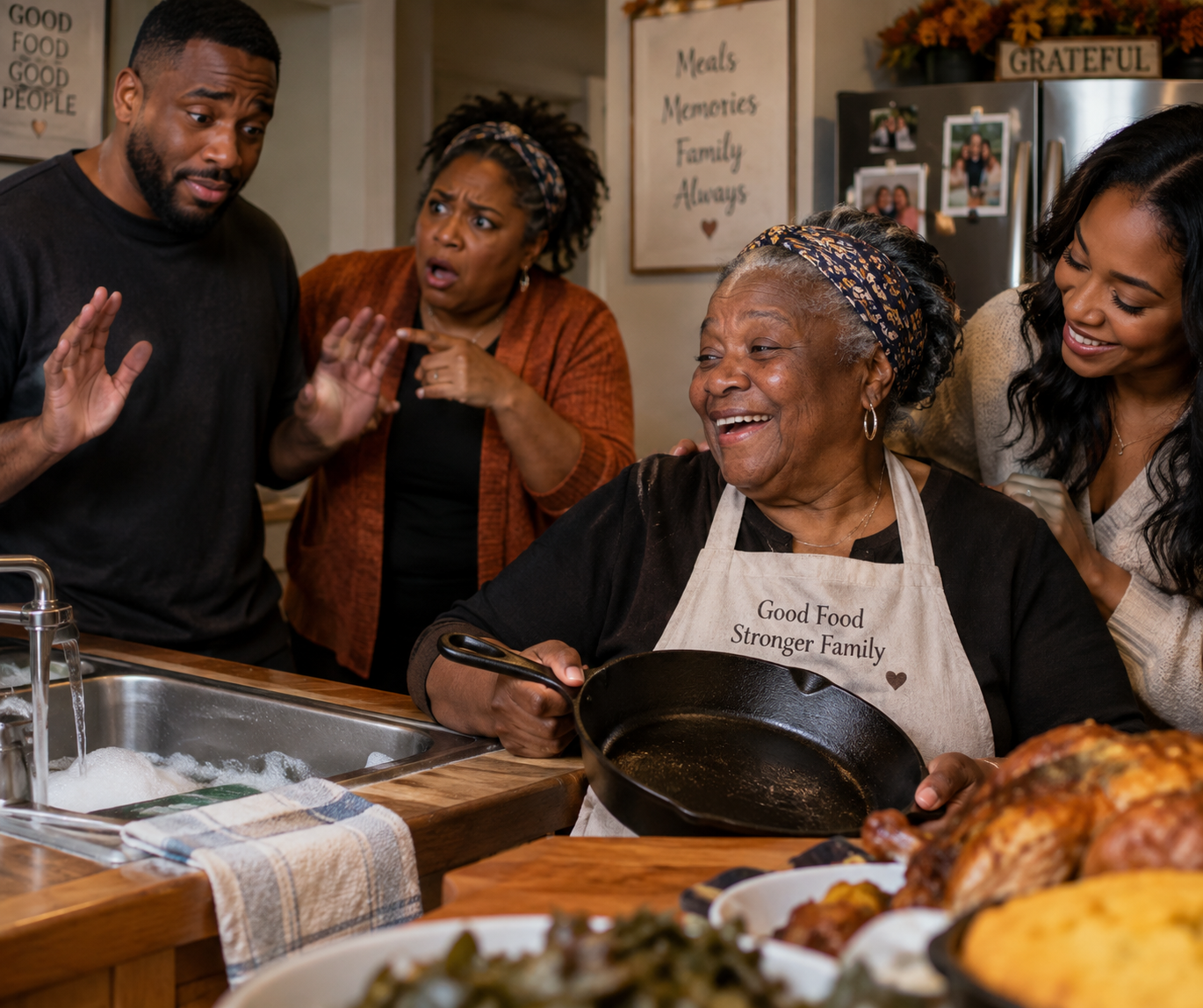
My husband was still standing near the sink looking guilty.
“So… did I ruin it?”
Grandma laughed again.
“No.”
That surprised half the room.
For years, we’d treated soap near that pan like a federal offense.
Grandma explained that what mattered to her wasn’t some magical layer that could never be touched.
She simply took care of the skillet the way she’d been taught.
And she wanted us to take care of it too.
My aunt still wasn’t convinced.
“So you’re saying he can wash it with soap?”
Grandma looked at her.
“I said he didn’t kill it. Don’t get excited.”
Everybody laughed.
She rinsed it, dried it thoroughly and put it on the stove.
Then my husband asked the question none of us had thought to ask.
“Why do you still use this one when you have newer pans?”
Grandma shrugged.
“Because it cooks.”
That was Grandma.
We wanted a speech about family history.
She wanted to finish Thanksgiving dinner.
Years later, after she stopped cooking regularly, the skillet went to my mother.
It still gets used.
Nobody mounted it on a wall.
Nobody put it behind glass.
There are newer pans in the cabinet that probably heat more evenly and require less maintenance.
But when somebody makes cornbread, that old skillet usually comes out.
And yes, we occasionally wash it with a small amount of dish soap.
Modern dish soap generally doesn’t contain the harsh lye that helped create the old rule about never using soap on seasoned cast iron. What matters more is avoiding prolonged soaking, drying the pan well and maintaining its seasoning.
My aunt still doesn’t approve.
Last Thanksgiving she saw my mother standing near the sink with the skillet and said:
“Don’t let me catch you putting soap in Daddy’s pan.”
My mother didn’t even turn around.
“Go set the table.”
Some family traditions survive because everybody follows them.
Others survive because everybody keeps arguing about them.
The skillet has survived both.
This is a fictional story. The characters and events are imaginary. The text was written with the assistance of artificial intelligence.