He was seventeen when he called me.
It was after midnight.
I remember because I had been asleep on the couch with the television on.
“Aunt Renee?”
Something in his voice made me sit up.
“Where are you?”
He told me.
A gas station about twenty minutes from my house.
I grabbed my keys.
When I got there, he was sitting on the curb behind the building.
He wasn’t hurt.
He wasn’t drunk.
He was scared.
His grades had collapsed.
He had missed enough school that graduation was suddenly in question.
And for months, he’d been telling his parents everything was fine.
“Why haven’t you told your mama?”
He stared at the pavement.
“She already has enough going on.”
Loretta’s husband had been recovering from surgery that year.
Money was tight.
The house had been tense for months.
None of that changed the fact that their son needed help.
But he made me promise not to tell them that night.
I told him I wouldn’t lie for him forever.
Then I drove him home.
The following afternoon, we sat in a booth at a diner with his school paperwork spread across the table.
There wasn’t one dramatic solution.
That’s the part he remembered differently than I did.
For the next few months, I simply became another adult who checked.
Did you go to class?
Did you turn that in?
Did you call your counselor?
What happened with the missing assignment?
Sometimes he ignored me.
Once he told me to leave him alone.
I did.
For exactly two days.
He graduated.
Eventually, he told his parents he’d gotten behind in school.
He never told them about the gas station.
Or the months of phone calls.
I didn’t either.
Standing at the retirement dinner eleven years later, I wished he’d warned me before telling a room full of people.
But he hadn’t.
“I used to think Aunt Renee had all this free time because she didn’t have a husband or kids,” he said.
A few people laughed softly.
“So I called her whenever I needed something.”
He looked at me.
“It took me a long time to understand that she didn’t have more time than everybody else. She just made room for me.”
I looked down.
That one got me.
Not because it made me sound heroic.
I wasn’t.
I had mostly nagged a teenager about homework.
Then he said, “A lot of people helped me become an adult. She’s one of them.”
He hugged me and handed the microphone back.
When I returned to Table 9, Gloria had tears in her eyes.
She immediately blamed the air conditioning.
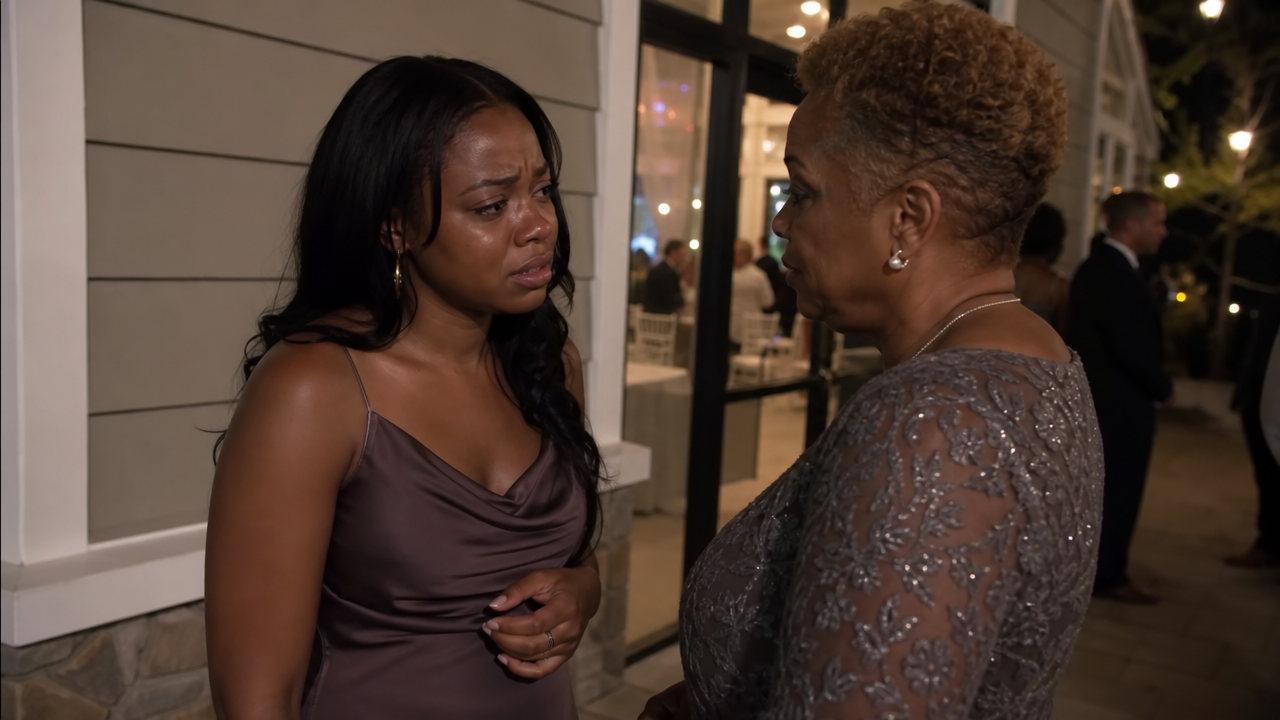
Later, while people were getting cake, Loretta found me.
For once, she didn’t have a joke ready.
“You never told me.”
“It wasn’t mine to tell.”
She nodded.
Then she looked toward her son.
“I thought I knew everything that was happening in my own house.”
“Nobody does.”
We stood there for a moment.
Then she glanced toward Table 9.
“I shouldn’t have moved you.”
“No. You shouldn’t have.”
That was it.
I didn’t rescue her from the awkwardness.
And she didn’t manufacture an excuse.
A few minutes later she went back to her guests.
I went back to Gloria, who had apparently stolen another one of my dinner rolls.
I stayed at Table 9 for the rest of the night.
Not to make a point.
I just liked the people there better.
This is a fictional story. The characters and events are imaginary. The text was written with the assistance of artificial intelligence.