When Richard Miller buried his wife Anne in the winter of 1979, the nursery at the end of the hallway was still painted pale yellow.
They had painted it together eleven years earlier, the week they found out Anne was pregnant. They lost that baby. And the next one. After that, the doctors stopped giving them hope, but Anne never let Richard repaint the room.
“Somebody’s going to need it someday,” she’d say.
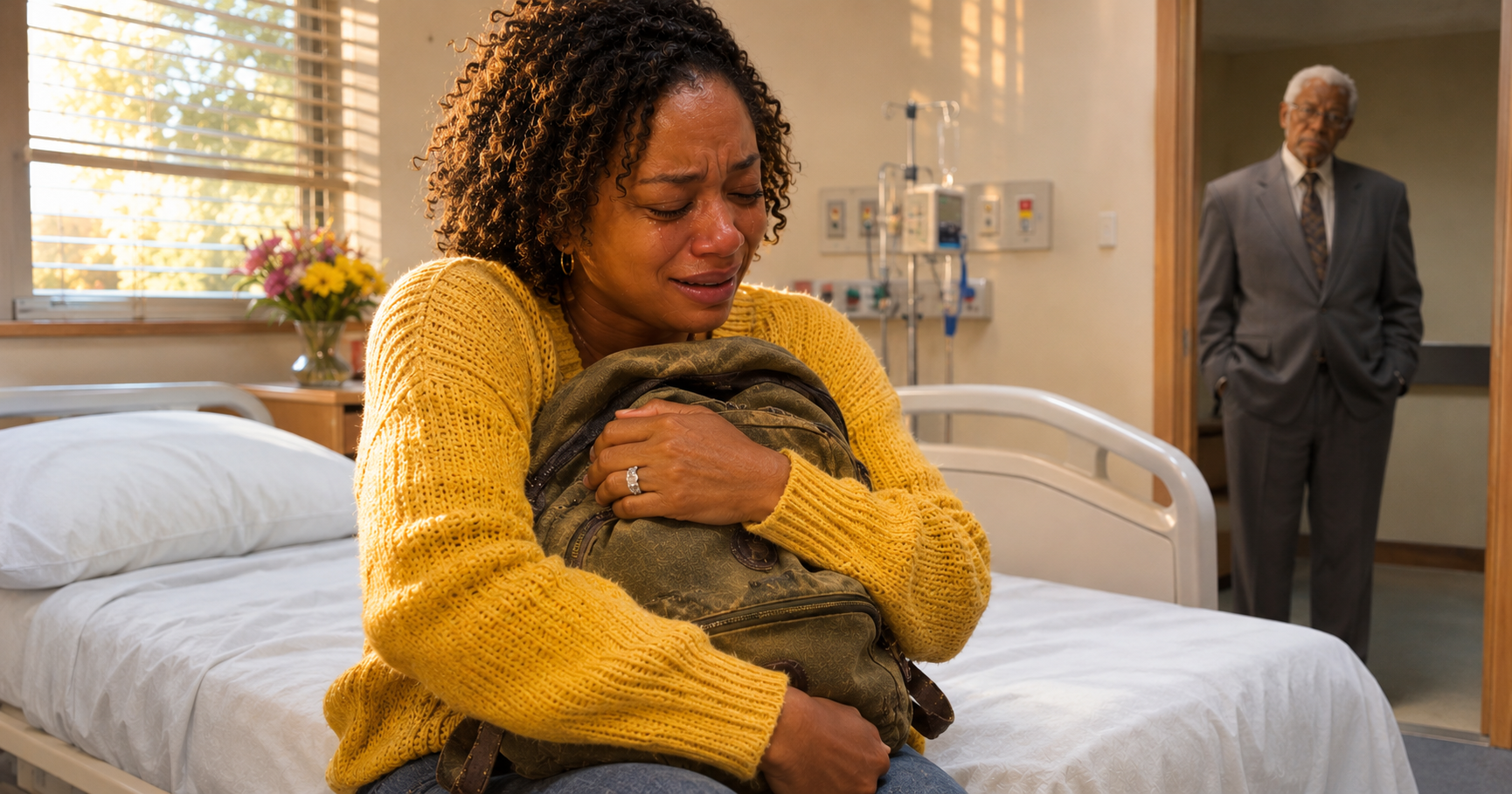
Cancer took her at forty-nine. In the hospital, on her last good night, she held Richard’s hand with what little strength she had left.
“Promise me our love won’t end with me,” she whispered. “Find someone who needs it.”
Richard promised. He had no idea what it meant.
The Rainy Night
For months after the funeral, Richard barely lived. He was fifty-two, a machinist at the auto plant, and he went to work, came home and sat in Anne’s chair until it got dark.
People told him to sell the house. His brother Frank told him to find a nice widow at church and start over.
Then, one rainy night in October, his pastor called.
“Richard, I know this is strange. But St. Mary’s has a situation, and I keep thinking about you.”
The situation was nine baby girls.
They had come to the orphanage over the same few weeks, from different hospitals and different mothers, all left with no one. The nuns had kept them in one room because they had nowhere else to put them. Somehow the babies had gotten used to each other. When one cried, they all cried. When one was picked up, the others went quiet.
“No family will take nine,” Sister Margaret told Richard in the hallway. “By spring, they’ll go to nine different homes. Some of them won’t go anywhere at all.”
Richard stood in the doorway of that room and looked at nine little faces in nine rusty cribs.
Then he thought of the yellow room.
He knelt beside the closest crib. The baby inside grabbed his finger and didn’t let go.
“Then they’ll come home with me,” he said. “All nine.”
Sister Margaret thought she’d heard him wrong.
Everyone Said No
The social workers said no. A widower, alone, on a factory salary? It was impossible.
Richard came back the next week with his pay stubs. Then with letters from his pastor. Then with a list of every woman at church who had promised to help with bottles and diapers.
He came back nineteen times.
His brother Frank laughed in his face. “You’ve lost your mind with grief.”
And in his neighborhood, people didn’t bother to whisper. “What is a white man going to do with nine Black girls?”
Richard didn’t argue with any of them.
He sold his truck and took the bus. He picked up a second job sweeping floors at the high school at night. He spent every weekend for two months in his garage and built nine cribs by hand, sanding every edge smooth so no little finger would ever catch a splinter.
On the first day of spring, 1980, nine baby girls came home to the yellow room.
The Hard Years
There is no pretty way to describe raising nine babies alone.
Richard went months sleeping three hours a night. He learned to make formula in a soup pot. He learned that nine fevers can happen in the same week.
And he learned something that nobody at the plant could teach him: how to do his daughters’ hair.
The first time he tried, it took him two hours, and the braid fell apart before church. So he asked Mrs. Ella Johnson from across the street to teach him. She came over every Saturday for a year. By the end, Richard was braiding hair at the kitchen table at midnight, nine little heads, one after another, while the radio played gospel low.
In 1987, the plant closed. Richard lost his job, and for one terrible winter, the state sent someone to the house to “evaluate the situation.”
The day of the visit, Richard opened the door to find half the church standing on his lawn. Mrs. Johnson. The pastor. Sister Margaret, gray-haired by then, holding a casserole.
“We’re here to be evaluated too,” Mrs. Johnson told the social worker. “Because if you’re taking these girls, you’re taking them from all of us.”
Nobody took anyone.
Nine Girls, Nine Women
They grew up loud. They grew up fighting over the one bathroom and the last biscuit. They grew up knowing exactly who their father was.
Grace sang so beautifully in the church choir that people came from other churches to hear her.
Ruth fixed everything in the house that broke, which was everything.
Hannah read bedtime stories to her sisters every night, long after Richard fell asleep sitting up in the chair.
Esther was the troublemaker. Lydia was the quiet one. Miriam could make anyone laugh. Joy never stopped asking questions. Ada never stopped running. And little Rose, the one who grabbed Richard’s finger at St. Mary’s, never let go of his hand when they crossed the street, even at sixteen.
One by one, they left the yellow room.
Two became nurses. Three became teachers. Ruth became an engineer. Esther, the troublemaker, became a family court judge. Lydia became a pastor. Rose became a social worker, and for thirty years she has worked in the same office that told her father no nineteen times.
Thanksgiving, 2026
This year, Richard turned ninety-nine.
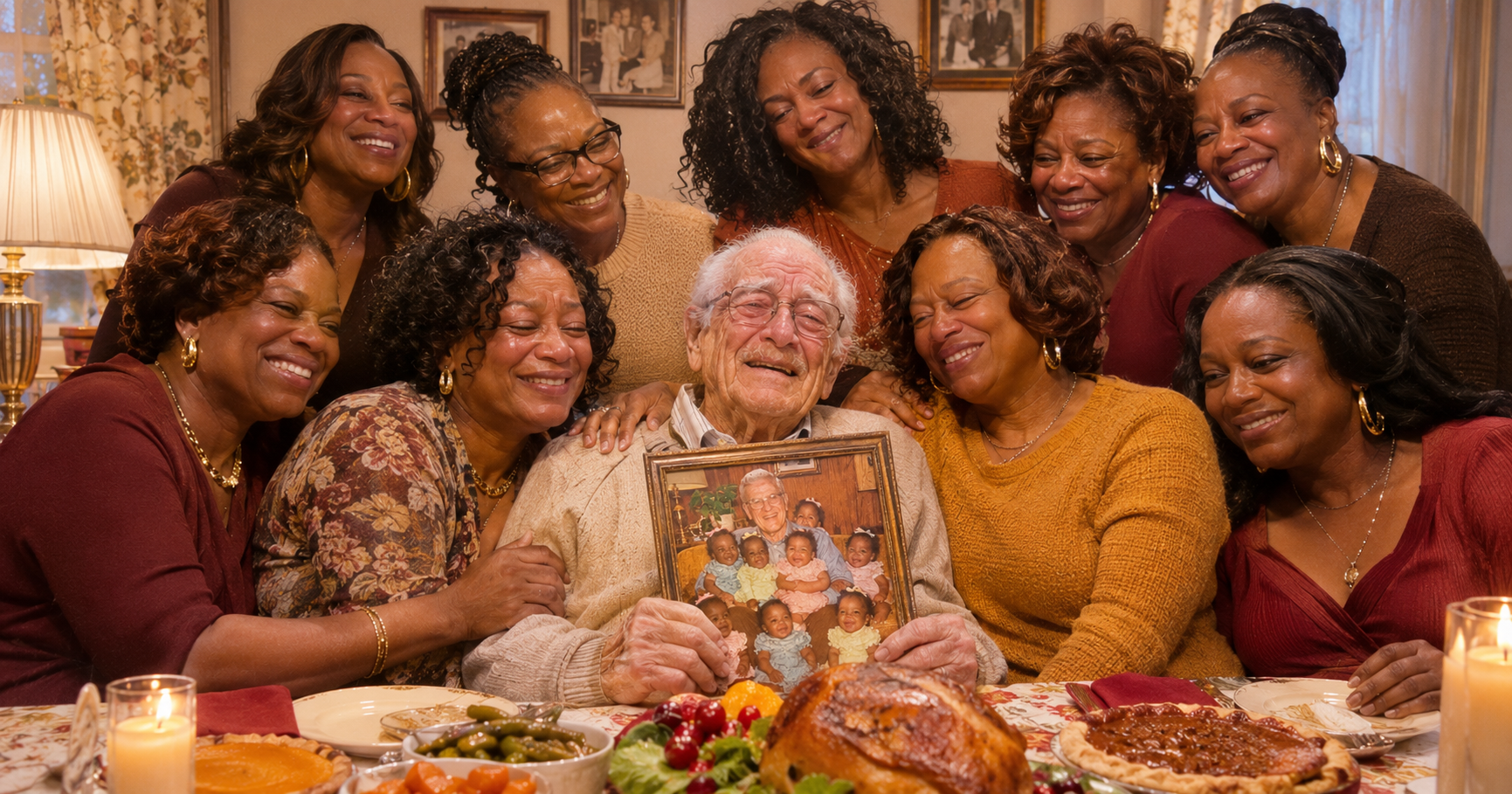
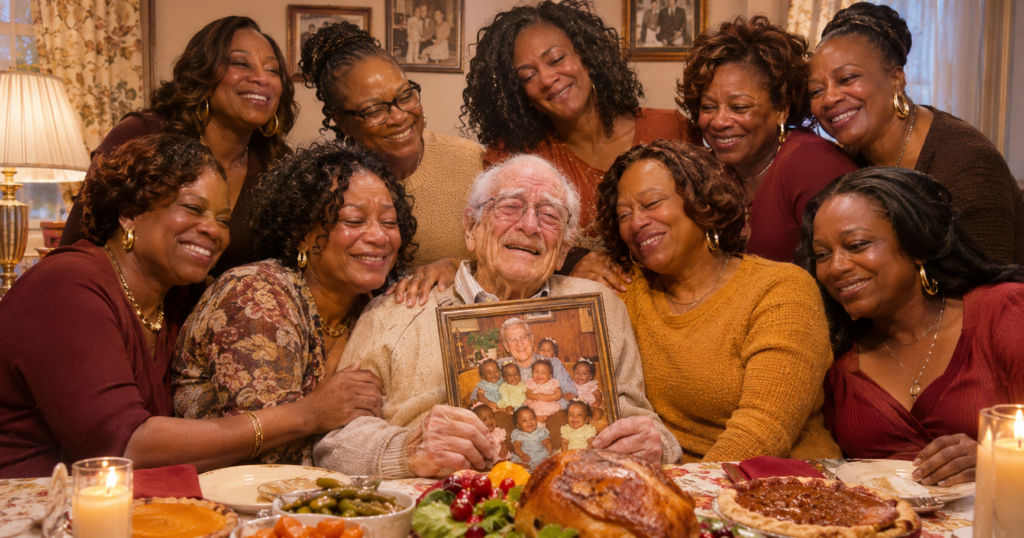
On Thanksgiving, all nine of his daughters came home with their husbands, their children and their grandchildren. Fifty-three people squeezed into a house built for four.
After dinner, Esther stood up and tapped her glass.
“Daddy,” she said. “We have something for you.”
Rose handed him an envelope. Inside was a photograph of a brick building with a new sign over the door:
THE ANNE MILLER HOME
For Sisters and Brothers Who Belong Together
“It opens in January,” Rose said, her voice shaking. “It’s for siblings in foster care. No more splitting them up. Not in our county. Not ever again.”
Richard looked at the photograph for a long time.
Then he looked around the table at nine grown women, all crying, all smiling, all his.
“Your mother told me to find someone who needed our love,” he said quietly.
“You did, Daddy,” Grace said. “Nine times.”
The Yellow Room
The yellow room is still at the end of the hallway.
Richard never repainted it. Now his great-granddaughters nap there when they visit, in a crib he built by hand in 1979.
When people ask him if he ever regretted it, giving up his truck, his sleep and twenty years of his life to raise nine girls who weren’t his, Richard always gives the same answer.
“They weren’t mine,” he says. “Until I said they were. Then they were mine forever.”
This story is a work of fiction. Names, places and events are invented.