For six years, I tried to be good enough for Gloria Whitfield.
I brought the sweet potato pie she said was “too sweet.” I learned to make her collard greens exactly her way and listened to her tell everyone they “weren’t quite right.” I sat quietly at every Sunday dinner while she asked my husband, in front of me, whether he ever thought about “what could have been” with his ex-girlfriend, the one who “came from a good family.”
My husband, Marcus, always said the same thing in the car afterward.
“That’s just how Mama is. Don’t take it personal, Naomi.”
So I didn’t. For six years.
The Table
This Thanksgiving, Gloria hosted twelve relatives at the big house on Peachtree Lane. The house she loved to remind everyone about. The house she said Marcus’s father had “built for this family with his own two hands.”
I spent two days helping her cook. I set the table with her good china. I ironed the cloth napkins because she said the ones I bought were “cheap-looking.”
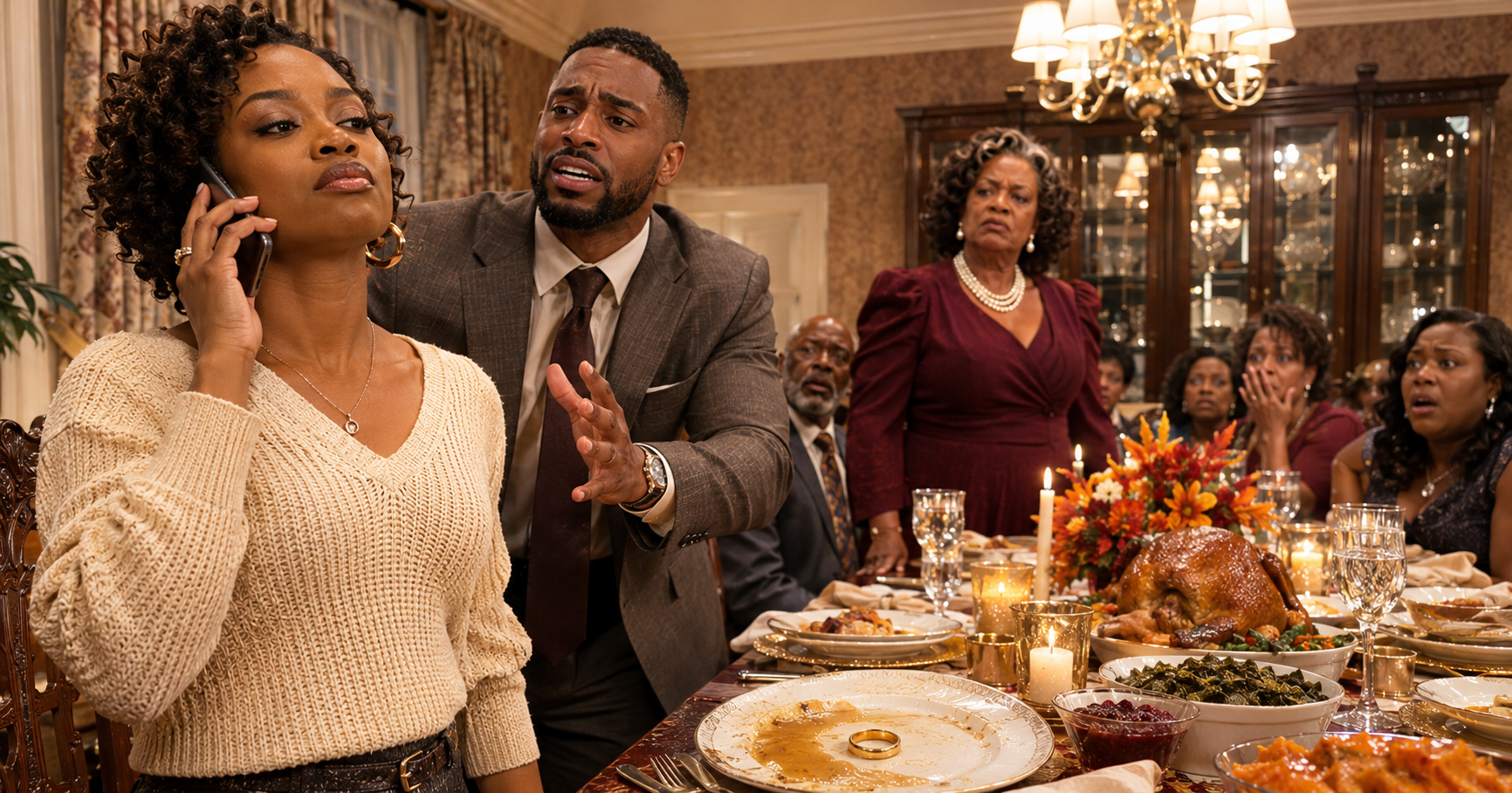
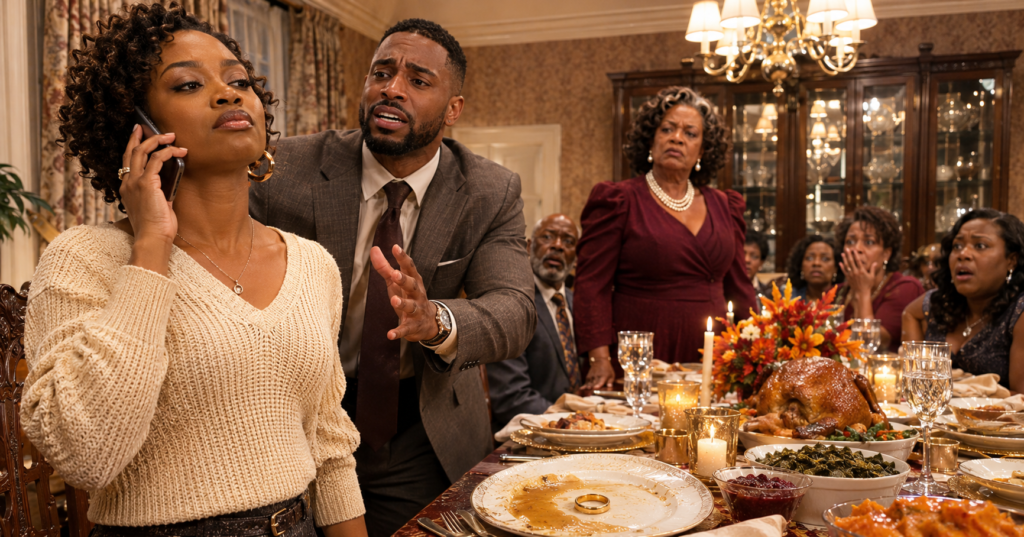
When everyone finally sat down, Gloria stood at the head of the table to say grace.
Instead, she looked straight at me.
“Before we pray,” she said, “I want to say something I’ve been holding in for six years.”
The room went quiet. Marcus’s aunt put down her fork.
“Naomi,” Gloria said, “you are a sweet girl. But you will never be good enough for my son. You came into this family with nothing, and you’ll leave with nothing. Everyone here knows it. I’m just the only one honest enough to say it.”
Someone gasped. One of the cousins laughed nervously, then stopped.
I felt my face burn. I turned to Marcus.
He was staring at his plate.
“Marcus,” I said quietly. “Say something.”
He didn’t look up.
“Mama’s right,” he said. “You’ve never really fit in here, Naomi.”
The Ring
I don’t remember deciding to do it.
I just remember the sound.
I slid my wedding ring off my finger, the ring I had worn every single day for six years, and I dropped it into his plate. It landed in the gravy with a soft little clink.
Twelve people stopped breathing.
Gloria smirked. “Well. Look at that. The truth finally came out.”
I picked up my phone, stood up and dialed the only number I knew by heart.
My father answered on the first ring.
“Hey, baby girl. Happy Thanksgiving.”
“Daddy,” I said, my voice steady for the first time all night. “It’s time.”
There was a long silence on the other end.
“I’m on my way,” he said.
Across the table, Marcus’s face went completely gray.
“Naomi,” he whispered. “Please. Don’t.”
What Marcus Didn’t Want Them to Know
Gloria frowned. “Don’t what? What is she talking about, Marcus?”
Marcus stood up so fast his chair fell backward.
“Naomi, please. Not here. Not in front of everybody. I’m begging you.”
I looked at him, the man I had defended to my own friends for six years, and I felt nothing but tired.
“Tell her, Marcus,” I said. “Or I will.”
He didn’t say a word.
So I turned to his mother.
“Two years ago,” I said, “this house was three months away from foreclosure.”
Gloria laughed. “That’s a lie.”
“After Mr. Whitfield passed, there was a second mortgage nobody knew about. The bank was going to take it. Marcus came to me crying. He said if you lost this house, it would kill you.”
The room was dead silent.
“So I went to my father,” I said. “The man you said gave me ‘nothing.’ He paid off the mortgage. All of it. Two hundred and eighteen thousand dollars.”
Gloria’s hand went to her chest.
“Marcus asked us to never tell you,” I continued. “He said your pride couldn’t take it. So I kept the secret. I let you insult me at this table for two more years, in a house my father saved.”
I looked at Marcus.
“The deed is in my father’s name, Gloria. It has been since the day he paid it.”
The Doorbell
Twenty minutes later, the doorbell rang.
My father, Raymond Ellis, stood in the doorway in his good church coat. He’s a retired bus mechanic. He worked thirty-five years of double shifts and saved every dollar so his only daughter would never have to depend on anybody.
He walked straight past Gloria and put his arm around me.
“You okay, baby?”
“I am now, Daddy.”
Gloria’s voice was shaking. “Mr. Ellis… is it true? About the house?”
My father looked at her for a long moment.
“It’s true,” he said. “I didn’t do it for you, Mrs. Whitfield. I did it because my daughter asked me. She said family takes care of family.”
He looked around the table at twelve faces that couldn’t meet his eyes.
“Seems like she was the only one here who believed that.”
Not Revenge
Everyone expected me to throw them out. Marcus did too. I could see it on his face.
But I didn’t.
“You can keep living here, Gloria,” I said. “My father and I talked about it a long time ago. This house was never about the money for us.”
She started crying. Real tears, for the first time since I’d known her.
“But I’m done,” I said, looking at Marcus. “I’m done being the only one in this marriage who stands up for it.”
I left that night with my father. I didn’t take the ring out of the gravy.
Six Months Later
The divorce was final in May.
Marcus calls sometimes. He says he’s in therapy. He says he’s sorry for every dinner, every car ride, every time he said “that’s just how Mama is.” I believe that he’s sorry. I don’t believe that sorry is enough.
Gloria wrote me a letter at Christmas. Two pages, handwritten. She said she had spent her whole life believing that money and family name made people worth something, and that it took a “nothing girl” and a bus mechanic to show her she was wrong.
She signed the house over to me in March. I didn’t ask her to.
I don’t live there. I gave it to a foundation that helps women leave bad marriages with nowhere to go. Last week, a young mother and her two kids moved into the room where I used to sleep when we visited for the holidays.
My father calls it the best return on an investment he ever made.
And every Thanksgiving now, I sit at his little kitchen table across town, with his too-sweet sweet potato pie, and I finally feel exactly like I’m enough.
This story is a work of fiction. Names, characters and events are invented.