I had spent sixty-two years learning how to endure things without complaining. I had buried my wife, watched the farm struggle through three brutal droughts, and worked until my hands became so rough that my daughter used to joke they could sand a wooden table without tools.
Quiet people rarely explain themselves. And because I never wore a tailored suit or sat on county development boards, Warren and Daniel Voss assumed that old Sam Reed from the south road had no reach, no voice, and no backbone.
They forgot one simple detail about Hartwell County: before I retired to cut hay and mend fences twenty years ago, I spent twenty-four years as a state trooper and chief investigator—and half the men wearing badges or sitting behind benches in this district started out riding in my passenger seat.
What Happened Before I Left the Porch
Before I walked out to my truck at 5:30 a.m., I didn’t load a shotgun, and I didn’t drive into town looking to start a brawl that would put me in a cell while Claire was still recovering.
Instead, I made two phone calls from my kitchen table while Dr. Ellis finished documenting every single bruise, laceration, and cracked rib on an official medical trauma chart:
Sheriff Caleb Mercer: The man I had trained as a rookie twenty-two years earlier, who picked up on the second ring and dispatched two senior deputies directly to my farmhouse to take Claire’s sworn statement and photograph her injuries before the swelling went down.
Earl Whitaker: The county’s senior land-title examiner and an old friend from my service days—who reminded me of something Warren Voss had apparently forgotten when he started bragging about owning half the rental properties in town.
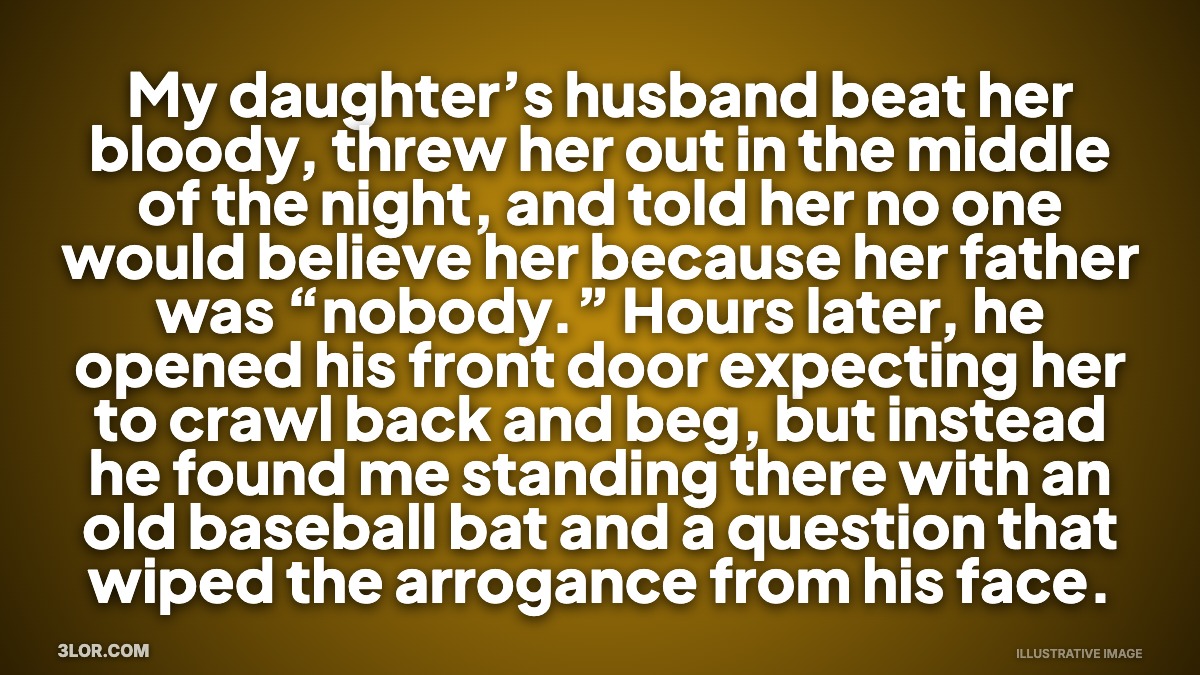
Then I picked up the battered ash-wood baseball bat from the hallway closet, climbed into my pickup, and drove up the paved hill to Daniel Voss’s brick colonial just as the sun broke over the ridge.
The Question on the Front Porch
I knocked once—firmly, steadily—and stepped back two paces onto the stone porch, resting the barrel of the bat calmly across my forearm.
The heavy oak door swung open thirty seconds later. Daniel stood there in silk pajama pants and a pressed white undershirt, holding a mug of coffee, already wearing the smug, practiced half-smile of a man expecting to see his wife standing barefoot on the steps begging to be let back inside.
The smile died the instant he saw me.
“Sam?” Daniel blinked, his eyes dropping immediately to the scarred wooden bat resting in my calloused hands, then darting past my shoulder toward the empty driveway. “What the hell are you doing on my property at six in the morning? If Claire sent you here to make threats—”
“Claire didn’t send me,” I said quietly, not raising my voice by even a fraction. “She’s asleep in my house with two cracked ribs, a split lip, and a doctor sitting beside her bed. I came up here to ask you one question before the sheriff’s cruisers pull into your driveway.”
Daniel’s throat worked as he swallowed, taking an involuntary step backward toward the foyer. “Listen, old man, you don’t know what happened last night. She fell down the stairs. Nobody in this county is going to take your word against my family’s. My father owns half this town—”
“That’s my question, Daniel,” I interrupted evenly, tapping the end of the wooden bat lightly against the porch rail. “Did your father ever tell you who holds the underlying agricultural and commercial ground lease on the south-creek ridge—the exact forty acres your family’s new luxury subdivision and rental offices sit on?”
Daniel frowned, his arrogance faltering into confusion. “What are you talking about? Voss Development owns that land.”
“Voss Development leased the mineral and surface rights from the Reed family trust thirty years ago under a ninety-nine-year morality and municipal-compliance covenant,” I told him, pulling a folded copy of the county deed record from my flannel shirt pocket. “My late wife inherited that parcel from her grandfather, and we never sold a square inch of it—because we liked letting folks around here build something useful. Which means when the county development board reviews your felony domestic-assault arrest at nine o’clock this morning, my attorney is filing an immediate lease-default notice that puts every single one of your father’s commercial buildings into receivership.”
The Sound of Sirens Coming Up the Hill
Before Daniel could stammer out a reply, the low, unmistakable rumble of two county sheriff’s cruisers crested the hill, blue lights strobing silently against the morning fog as they pulled straight into the circular driveway behind my pickup.
Sheriff Mercer stepped out of the lead cruiser, tipped his hat briefly toward me, and walked up the stone steps with a pair of steel handcuffs already unclipped from his belt.
“Daniel Voss,” Mercer said flatly, “turn around and place your hands behind your back. You’re under arrest for aggravated domestic battery.”
Daniel looked frantically from the sheriff’s badge to me, his face drained of every drop of color, all of last night’s cruelty evaporating into pure panic. “Sam—tell him! Tell him it was a mistake! My father will pay whatever medical bills—”
I didn’t answer him. I simply turned around, walked calmly down the front steps carrying the old wooden bat my wife had bought for our daughter’s seventh birthday, and climbed back into my truck.
In Hartwell County, you don’t need to shout to be heard. You just have to know which ground you’re standing on.
Editorial Note: This story is a work of fiction inspired by real-life family and legal conflicts. All names, locations, and details have been created for storytelling purposes.