New Year’s Eve is often imagined as a night filled with champagne glasses, fireworks, and hopeful resolutions for the months ahead. Celebration feels natural at the turning of the calendar. Yet if someone could step back in time and enter a middle-class household in parts of Europe or the American South during the late nineteenth century, the atmosphere might feel deeply unsettling by today’s standards.
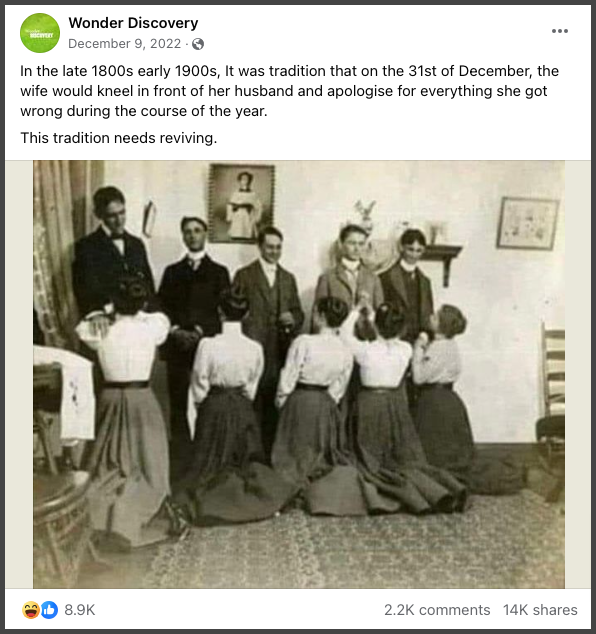
As midnight approached, the joy of the evening would come to a halt. The wife would rise from her seat, walk to the center of the room, and kneel before her husband. This moment was not a prayer and had nothing to do with misplaced objects or superstition. It was known as the “Annual Act of Contrition.” In front of family members, and sometimes invited guests, she was expected to speak aloud every perceived failure she had committed as a wife during the year. Each mistake, each moment of disagreement, and each instance of perceived disobedience was laid out for judgment.
In 2026, as conversations around partnership, equality, and mutual respect continue to evolve, this forgotten tradition stands as a stark reminder of how domestic peace was once defined. Harmony inside the home often came at the expense of a woman’s dignity and voice.
1. The Ritual of Public Penance
This ritual was never meant to be private. In many traditional households, the New Year apology followed a set pattern that reinforced hierarchy.
The husband remained seated, often in a designated chair associated with authority. His position symbolized judgment and control within the household.
The wife recited a list of perceived shortcomings. These could include speaking too sharply, spending household funds without approval, neglecting domestic tasks, or failing to show sufficient deference to her husband’s opinions.
After this confession, forgiveness was granted from above. The husband’s acceptance was seen as a way to clear resentment and allow the family to begin the new year without unresolved tension.
2. Origins and Cultural Foundations
Although history books rarely document this practice in detail, anthropologists suggest it grew from a combination of rigid patriarchal beliefs and distorted interpretations of marital harmony.
During the Victorian and Edwardian eras, husbands were legally and socially regarded as heads of the household. Under laws of the time, a woman’s legal identity was absorbed into her husband’s through a principle known as coverture.
The ritual served as a symbolic renewal of that arrangement. In exchange for protection and social standing, obedience and submission were expected. The ceremony reinforced expectations that governed daily life.
3. The Psychological Weight of the Tradition
As the year drew to a close, anticipation did not bring excitement for many women. December thirty-first became a date marked by anxiety.
Public apology turned forgiveness into a tool of control. Speaking errors aloud before others strengthened the imbalance of power and discouraged women from expressing dissent throughout the year.
Children observing the ritual absorbed powerful lessons. Sons learned authority was something owed to them, while daughters learned that worth was tied to apology and self-blame.
4. Why This History Matters Today
Revisiting this tradition in 2026 serves a purpose beyond historical curiosity. Patterns from the past often reappear in subtler forms. While no one kneels at midnight anymore, many relationships still reflect uneven emotional responsibility.
Women frequently feel compelled to apologize for circumstances beyond their control, such as household messes, busy schedules, or professional ambition.
Cultural expectations still encourage many to smooth conflict by accepting blame, even when responsibility is shared. Understanding the roots of these habits helps dismantle them.
5. Nana’s Perspective on Forgiveness
Nana grew up hearing stories from her grandmother about these old customs. Her response was direct and unwavering. She believed respect could never be demanded through humiliation.
For Nana, the New Year meant appreciation rather than confession. She and Grandpa shared a ritual built on balance. Each year, they sat together, held hands, and named qualities they admired in one another from the past twelve months. No hierarchy, no judgment, only acknowledgment.
A Resolution for the Present
Moving further into the twenty-first century means leaving practices like the Midnight Kneel in the past. Healthy partnerships are not built on one person granting forgiveness from a position of power.
True partnership grows from shared accountability, respect, and understanding. When challenges arise, resolution works best when both people stand on equal ground.
As the clock strikes midnight each year, the freedom to celebrate as equals is worth recognizing. The journey from enforced submission to mutual respect has been long, and its progress deserves acknowledgment.
When you raise a glass this New Year’s Eve, consider how far relationships have come—and the importance of continuing to build homes grounded in dignity, equality, and shared humanity.