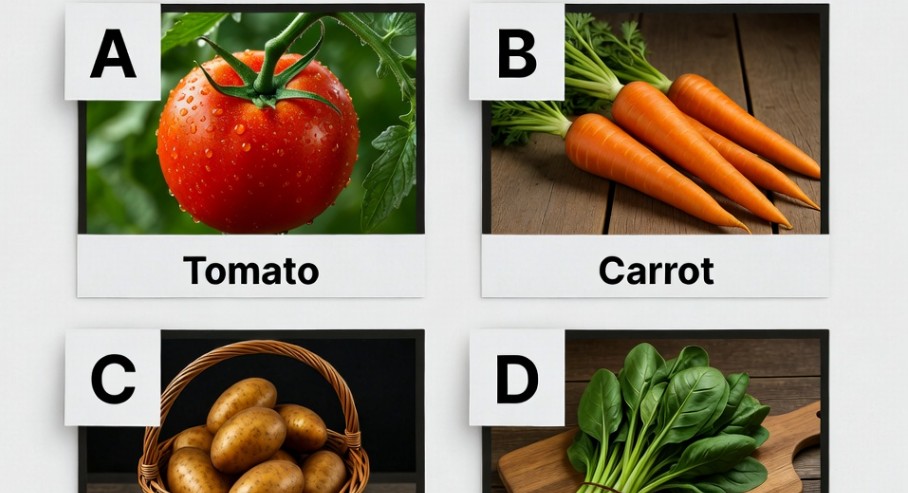
Take a close look at the image above and consider this engaging question:
Which one is not a vegetable? A. Tomato B. Carrot C. Potato D. Spinach
At first glance, many people direct their attention toward the tomato. After all, countless individuals have come across the well-known idea that a tomato functions as a fruit in certain contexts. The situation holds more layers of interest than it might appear at first.
Why Most People Select Tomato
Tomatoes appear regularly in salads, sauces, soups, and numerous savory preparations. Because they appear infrequently in dessert recipes, people tend to view them through the lens of vegetables in daily cooking.
From a botanical viewpoint, however, a tomato develops from the flower of the plant and holds seeds within. This characteristic places it in the fruit category according to plant science principles.
Tomatoes frequently feature in quizzes and thoughtful questions for this very reason. They occupy a place as vegetables in everyday use, while scientific classification assigns them to another group.
What About Carrots?
Carrots present a more direct classification. The orange portion people consume represents the root of the plant. As an edible root without the seed-containing structure of fruit, carrots receive clear recognition as vegetables.
Carrots deliver beta-carotene, fiber, and essential vitamins in abundance. These qualities contribute to their widespread popularity across global cuisines and health-focused diets.
People enjoy carrots in raw form, roasted preparations, and various cooked dishes. Their versatility and nutritional profile make them a consistent choice in family meals and professional kitchens alike.
Are Potatoes Vegetables?
Many individuals express surprise upon learning that potatoes differ from roots like carrots. Potatoes develop as underground stems called tubers. Despite this origin, they earn classification as vegetables since they consist of edible plant portions outside the fruit category.
Potatoes provide carbohydrates in rich supply and function as staple foods in numerous countries. Prepared through baking, mashing, frying, or roasting, they maintain a central role among widely consumed vegetables around the world.
Their adaptability in recipes allows families to create comforting dishes that bring people together during meals and celebrations. Potatoes continue to support nutrition and tradition across diverse cultures.
What About Spinach?
Spinach offers one of the clearest classifications in the group. The portion consumed comes from the leaf of the plant. Leaves represent vegetative structures, which confirms spinach as a vegetable without question.
Spinach stands out for its content of iron, vitamins, and antioxidants. These elements make it a preferred option among those who prioritize wellness and balanced eating habits.
People incorporate spinach into smoothies, salads, cooked sides, and pasta dishes. Its mild flavor and nutrient density allow it to enhance meals while supporting overall health in simple and delicious ways.
So What Is the Correct Answer?
When applying botanical science, the answer is: ✅ A. Tomato
Tomatoes qualify as fruits because they emerge from flowers and contain seeds. Carrots, potatoes, and spinach all align with vegetables through their roots, tubers, or leaves rather than fruit structures.
Why This Question Creates Such Interest
The mix of responses stems from variations between culinary approaches and scientific frameworks. In cooking environments, categorization often depends on flavor profiles and recipe applications.
Foods with sweeter notes commonly receive fruit labels, while savory options fall under vegetables in practical use. Through this approach, tomatoes receive vegetable treatment in kitchens everywhere.
Scientific methods rely on plant structure and reproductive processes instead. Tomatoes contain seeds and develop from flowers, establishing their fruit status independent of taste or common usage.
This distinction creates engaging discussions in homes, classrooms, and online communities. People enjoy exploring how everyday items hold different meanings across perspectives.
Final Challenge
Having reviewed the explanation, consider an additional question:
If tomatoes qualify as fruits, what about cucumbers, pumpkins, peppers, zucchini, and eggplants?
All of these items also belong to the fruit category from a botanical standpoint.
This straightforward quiz highlights a valuable observation. The classifications used in daily life sometimes differ from those provided through scientific study. These differences create opportunities for learning and spark curiosity in simple yet meaningful ways.
Many readers find such topics connect with broader interests in nutrition, gardening, and food science. Understanding these plant distinctions helps when planning meals, teaching children about nature, or exploring local produce markets.
Tomatoes, for instance, bring bright color and flavor to summer dishes while supporting vitamin intake. Carrots add natural sweetness and crunch to plates across seasons. Potatoes deliver energy and comfort in countless forms. Spinach contributes freshness and nutrients to balanced diets.
Each option holds its own place in kitchens and gardens worldwide. Exploring their backgrounds adds appreciation for the variety available in fresh foods. Families often discover new recipes and traditions when they examine ingredients with fresh perspective.
This type of content encourages mindful eating and greater awareness of how plants grow and nourish us. It also creates space for fun conversations during gatherings or educational moments with younger generations.
The next time you prepare a meal or visit a farmers market, you might notice these details with renewed interest. Small observations like these enrich daily experiences and deepen connections with the food that sustains us.