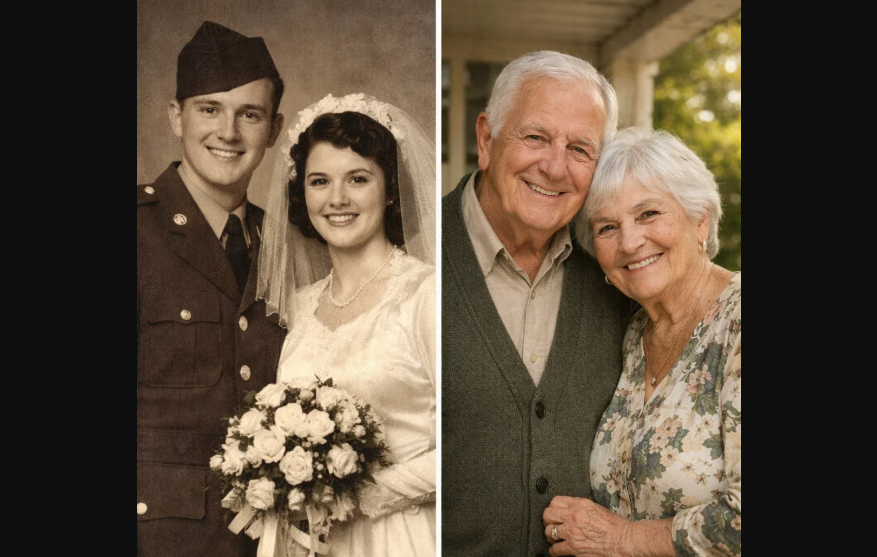
After fifty years of marriage, I never expected to find myself questioning whether it should continue. At seventy-five, many people cling to what feels familiar and safe, yet I felt restless and strangely invisible. My husband, Charles, had not been unfaithful, distant, or unkind.
Nothing about him had shifted in an obvious way. The change had happened inside me. Somewhere between raising children, managing a household, and caring for everyone else’s needs, I had slowly lost sight of who I was. The life that once felt steady and reassuring began to feel restrictive, and I confused that feeling with the belief that leaving might bring relief.
From the outside, our marriage looked like something to admire. We had built a long partnership rooted in shared responsibility, mutual respect, and decades of memories. Our home carried the echoes of birthdays, holidays, and ordinary evenings spent together.
Over the years, we developed a quiet understanding that rarely needed words. After retirement, though, time stretched differently. Days moved slowly, routines repeated themselves, and silence filled spaces that once felt full. I started feeling disconnected, and small frustrations grew into arguments that surprised both of us. I struggled to explain what was wrong because I didn’t fully understand it myself.
When I finally told Charles that I wanted a divorce, his response caught me off guard. He did not raise his voice or ask me to reconsider. He listened, nodded, and said that if freedom was what I believed I needed, he would not stand in my way. His calm acceptance unsettled me deeply. I had expected resistance, maybe even anger. Instead, his quiet respect left me feeling unanchored.
We completed the paperwork without conflict. Later that same day, we went out to dinner, guided more by habit than intention. Sitting across from him, I noticed how he adjusted the lighting at our table, explaining that softer light was easier on my eyes. In that moment, I misinterpreted the gesture.
I saw it as control instead of care. Words I had been holding inside for months came out harsh and unfair. I accused him of stifling me, of never truly seeing who I had become. Then I walked away, convinced I was finally choosing myself.
That night, I ignored his calls. I told myself I needed space, that silence would help me feel certain. The next morning, a knock at the door shattered that illusion. A neighbor stood there with urgent news. Charles had collapsed and had been taken to the hospital. Fear replaced every thought I had been holding onto.
I returned home to gather my things and found a note he had written. His handwriting was familiar, steady. The words were gentle, filled with patience and love. He wrote about the small things he had done over the years to care for me, never expecting recognition. He wrote about wanting me to feel safe, valued, and supported, even if that meant letting me go. As I read, my certainty dissolved into regret.
By the time I reached his hospital bed, the weight of my misunderstanding settled fully in my chest. Charles survived, though his recovery would take time. Sitting beside him, listening to the steady rhythm of the machines, I finally saw what I had missed. His love had never been a cage. It had been a quiet shelter, built from countless small acts that I had stopped noticing.
Now, as we move forward, I choose to see him clearly. Whatever time remains, I want to spend it with awareness and gratitude. I have learned that what we sometimes label as freedom does not always come from leaving. Often, it comes from understanding what has been there all along, waiting patiently to be recognized.