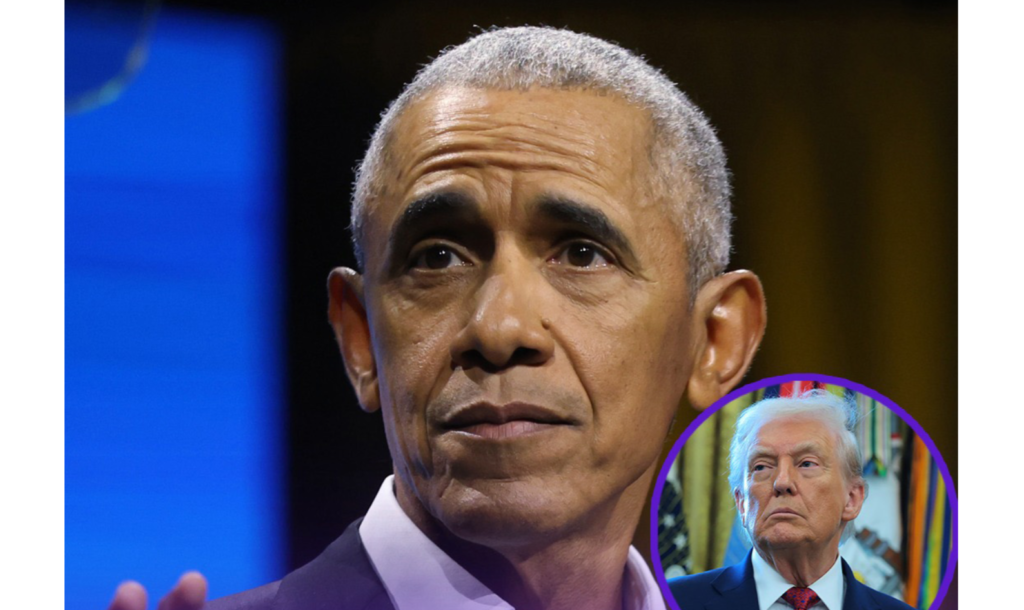
Barack Obama has addressed the backlash after President Trump defended the controversial AI clip.
Obama has addressed the controversy surrounding an AI-generated video shared by President Donald Trump, which depicted him and Michelle Obama as apes.
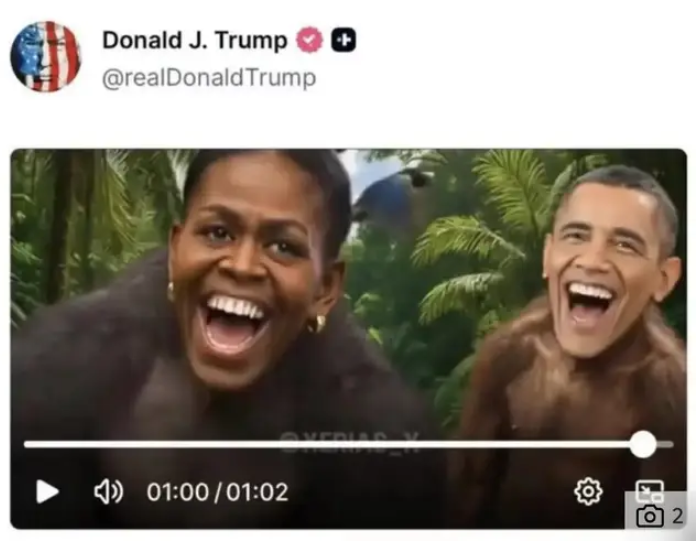
The clip, which appeared on the Truth Social account of Trump in February this year, prompted outrage online after viewers spotted the racist imagery at the end of a longer video making baseless claims about voter fraud.
Trump previously defended the upload, insisting the video was mainly about voter fraud and calling it a strong piece, while White House press secretary Karoline Leavitt dismissed criticism as fake outrage.
The post came after years of hostility between Trump and Obama, with the current US president having previously shared a fake video of his predecessor being arrested.
Now, in a wide-ranging interview with The New Yorker, Obama has responded to the video, making it clear that while he does not take attacks on himself personally, his family is another matter entirely.
Obama said to the publication, “I don’t take it personally,” adding, “I mean, I’m always offended when my wife and kids get dragged into things, because they didn’t choose this. That’s a line that even people whose politics I deeply reject, I would expect them to care about. I would never talk about somebody’s family in that way.”
The AI clip in question showed the former president and former First Lady with their faces superimposed onto the bodies of apes, while The Tokens song The Lion Sleeps Tonight, widely known for its playing in The Lion King, played in the background.
It was widely condemned at the time, with California governor Gavin Newsom writing on X, formerly Twitter, “Every single Republican must denounce this. Now.”
Ben Rhodes, who served as Obama’s deputy national-security adviser, also hit out at the post, saying, “Let it haunt Trump and his racist followers that future Americans will embrace the Obamas as beloved figures while studying him as a stain on our history.”
Trump refused to explicitly apologise for the nature of the clip.
Sharing at an Oval Office press conference in February, he said, “That was a video on, as you know, voter fraud. A fairly long video that had a little piece that had to do with The Lion King.”
He added, “It’s doing very well, it’s being shown all over the place. Long before that was posted. That was a very strong – I’m sure you saw it – piece on voter fraud. The piece that you’re talking about was all over the place, many times, I believe, for years.”
Additionally, Leavitt defended the video at the time, telling Tyla, “This is from an internet meme video depicting President Trump as the King of the Jungle and Democrats as characters from The Lion King. Please stop the fake outrage and report on something today that actually matters to the American public.”
In an interview with the New Yorker, Obama also said he was more concerned by AI-generated videos Trump had posted, which treat war like a video game and show excrement dumped on ordinary citizens.
“I mean, I’m a fair target in the sense of, yeah, you can feel free to pick on me, because I’m your own size,” he added.
This entire episode highlights the ongoing tensions in American political discourse, where digital tools and creative content continue to shape public conversations in unexpected ways. The use of artificial intelligence in political messaging has raised important questions about ethics, representation, and the boundaries of acceptable satire or criticism in modern campaigns. Many observers note that such content can quickly spread across platforms, influencing perceptions among different audiences before traditional fact-checking mechanisms catch up.
The involvement of high-profile figures like Obama and Trump brings additional layers of visibility to these issues, drawing attention from media outlets, political analysts, and everyday citizens who follow national events closely. Discussions around family involvement in political attacks often touch on broader themes of privacy and respect, elements that many people across the political spectrum value deeply. Obama’s measured response in the interview reflects a consistent approach he has maintained throughout his public life, emphasizing personal boundaries while engaging with larger policy and societal matters.
Furthermore, the reactions from individuals such as Gavin Newsom and Ben Rhodes underscore the diversity of voices within the Democratic sphere, each contributing perspectives rooted in their own experiences and roles in previous administrations. These statements add to the rich tapestry of commentary that surrounds major political incidents, providing context for those seeking to understand the full picture. On the other side, defenses offered by Trump and Leavitt focus on the primary message they intended to convey, centering on topics like election integrity that remain significant points of debate in contemporary politics.
As technology evolves, the intersection of AI with political communication presents both opportunities and challenges for democracy. Content creators and platforms face increasing scrutiny to balance free expression with responsible moderation, ensuring that innovative formats do not cross into harmful territory. Public figures, regardless of their position, often find themselves navigating these complex dynamics, where a single shared clip can spark nationwide conversations lasting weeks or months.
Obama’s comments in The New Yorker provide insight into his personal philosophy on leadership and resilience, particularly when family members become unintended targets. His words encourage reflection on the standards of conduct expected from leaders at the highest levels, promoting a sense of decency that transcends partisan lines. This perspective resonates with many readers who appreciate calls for civility amid heated exchanges.
The original video’s musical choice, drawing from a beloved classic like The Lion Sleeps Tonight, added an element of cultural familiarity that some viewed as amplifying the visual elements in unintended ways. Such creative decisions in digital media can carry symbolic weight, influencing how audiences interpret the overall message. In the weeks following the initial share, various commentators analyzed the clip from multiple angles, examining its production techniques and potential motivations behind its creation and dissemination.
Overall, the situation serves as a reminder of the power of visual media in shaping narratives, especially in an era where anyone with access to advanced tools can generate compelling yet controversial material. Political veterans like Obama continue to offer thoughtful analysis on these developments, contributing to informed public dialogue on the role of technology in governance and society. As the United States moves forward, addressing these challenges will require cooperation and careful consideration from all involved parties, fostering an environment where robust debate coexists with mutual respect.
This story continues to evolve as more details emerge from interviews and public statements, keeping it at the forefront of discussions about media responsibility and political accountability in the digital age.