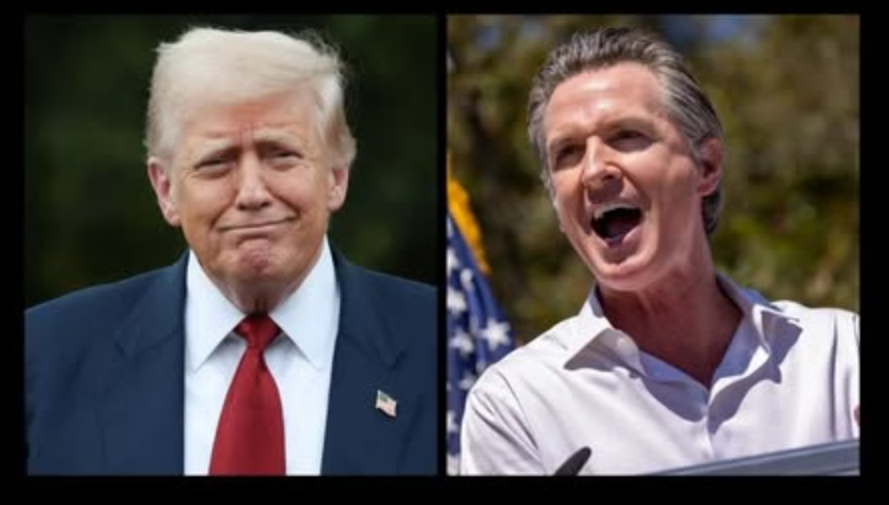
California Governor Gavin Newsom has recently come under intense public focus due to statements he made that some critics argue seemed to support physical aggression toward supporters of former President Donald Trump. The remarks, shared during a public event earlier this week, rapidly spread across traditional news outlets and social media platforms, igniting widespread discussion about whether they overstepped boundaries or were merely misunderstood.
During his address, Newsom spoke about the growing political divisions in the nation and the importance of standing firm against extremism in all its forms. His primary goal was to highlight the need to counter radical ideologies and prevent their spread within American communities. However, certain phrases in his speech were highlighted by detractors, who claim the wording implied a willingness to use forceful tactics or physical action against political opponents. These critics warn that such language could legitimize hostility and further destabilize an already polarized national atmosphere.
Supporters of the Governor, on the other hand, maintain that his words were misconstrued. They assert that Newsom’s overarching purpose was not to promote violence but to advocate for alertness against radical actions and extremist movements. Allies point to his consistent history of condemning political violence from any source, emphasizing that his comments were figurative, not literal. In response to the uproar, a spokesperson for Newsom released a statement clarifying that the Governor firmly opposes any form of physical harm, regardless of political beliefs or affiliations.
The incident has sparked varied reactions from California’s local leaders and national political figures. Analysts and commentators observe that in today’s highly charged political climate, elected officials must choose their words with exceptional care. Even remarks that are not overtly violent can be perceived as such, potentially fueling tensions, undermining confidence in leadership, and weakening the principles of democratic dialogue. Several civil rights groups have reinforced this perspective, urging public figures to demonstrate restraint, accountability, and a dedication to constructive conversation over confrontation. These organizations stress that leaders have a unique duty to foster peaceful political engagement, particularly in times of profound division.
This situation has also prompted renewed discussions about the media’s influence in framing political narratives. In an age of rapid sound bites, viral videos, and immediate reactions, complex statements can easily lose their intended context and be presented in ways that amplify misunderstanding. Observers emphasize that both journalists and news consumers should exercise caution, taking time to consider the full context of remarks rather than responding to brief clips that may provoke strong emotions. Thoughtful reporting, they argue, is essential to maintaining productive political discourse rather than contributing to division.
As the United States navigates its deeply fragmented political environment, the debate surrounding Newsom’s comments highlights the significant influence and responsibility tied to public speech. Political leaders serve not only as decision-makers but also as examples of civic conduct. Their words can encourage unity and strength or deepen societal divides. How Governor Newsom addresses the ongoing criticism in the days ahead—whether through additional clarification, engagement, or outreach—may shape public views of his leadership. More broadly, this moment emphasizes the critical need for all public officials to champion civility, reject violence, and promote accountability in a democratic society working to heal its divisions.