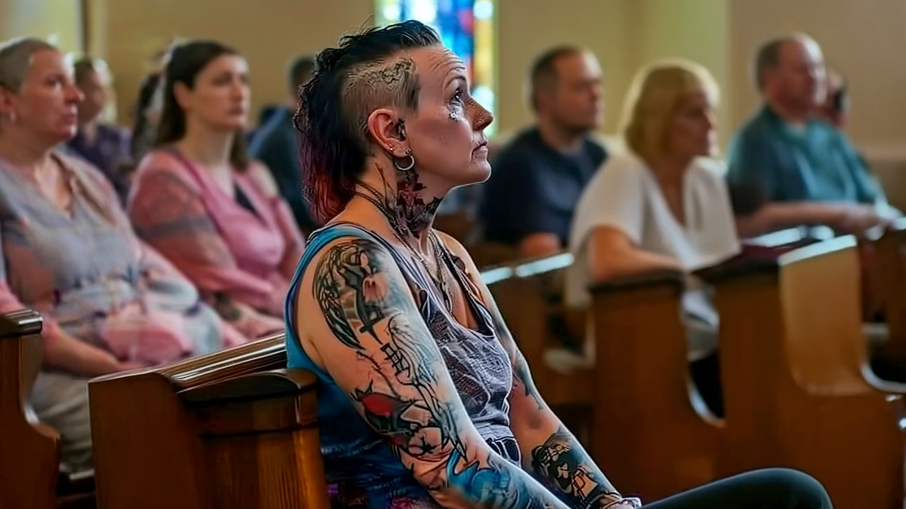
Last Sunday, as I entered the sanctuary, I faced a moment of personal reflection. I noticed a woman in her 40s, covered in tattoos and with multiple piercings.
Growing up, I was always taught that church was a place of reverence and humility, where modest clothing reflected respect for the sacred space.
Her bold appearance challenged my deeply ingrained assumptions about what is considered “appropriate” attire in church.
I began to wonder: are my views on church clothing still relevant today? Should we have expectations about how people dress in places of worship?
Challenging Traditional Ideas of Church Attire
Seeing this woman’s unconventional style, I reconsidered the traditional views I held about church clothing. After the service, I politely suggested to her that her look appeared a little too bold for church, and that perhaps a more subdued appearance would be fitting.
Her response was straightforward:
“How I look has nothing to do with you.”
Her words left me thinking—was my discomfort rooted in outdated beliefs about church attire, rather than any real issue with her appearance?
It forced me to realize that I might be holding onto a rigid notion of what “proper” church attire should be. In a world where personal expression is more valued than ever, is it reasonable to expect everyone to conform to the same standard? As society evolves, so do our ideas about individuality, and perhaps it’s time to reconsider what it means to dress “appropriately” for church.
Should There Be a Dress Code for Church?
Many of us grew up with a certain image of what church attire should look like—modest dresses, suits, ties, and clothing that doesn’t draw too much attention.
These unspoken dress codes created a sense of uniformity and respect.
However, in recent years, the lines between what’s “acceptable” and what’s “inappropriate” have blurred. Tattoos, piercings, and unique fashion choices are now common forms of self-expression.
So, should there still be a standard for how people dress in church?
While for some, dressing modestly shows respect for the sacredness of the space, others believe that our outward appearance shouldn’t dictate our ability to worship or belong.
Isn’t the essence of church about acceptance, compassion, and unity—values that welcome everyone, no matter how they look?
Embracing Diversity in Places of Worship
Churches are meant to be spaces of unity and inclusion.
Focusing too much on appearances risks losing sight of the true purpose of church: to bring people closer to God and to one another.
Judging someone for their tattoos or piercings may prevent us from connecting with them on a deeper level, overlooking their unique story and spiritual journey.
Please remember that everyone brings their personal history into the church.
Tattoos, piercings, and unconventional clothing often reflect someone’s journey, struggles, and life experiences.
Focusing solely on appearance may cause us to miss out on the diverse stories and perspectives that people carry with them, stories that could deepen our understanding of faith and life.
Balancing Tradition with Personal Expression
Embracing individuality is important, but there is also value in maintaining a sense of respect and decorum in church.
For some people, covering tattoos or dressing more modestly is a way to honor traditions they grew up with.
It acknowledges the feelings of those who may feel uncomfortable with casual attire or visible body art.
At the same time, it’s important to recognize that each person’s relationship with faith is deeply personal and unique.
Finding a balance between honoring tradition and embracing personal expression can help to create a more inclusive worship environment, in which everyone feels respected.
Promoting Respect in Faith Communities
The solution may lie in fostering a culture of mutual respect.
Instead of enforcing rigid dress codes, churches can encourage thoughtful attire that balances individual expression with respect for the sacred space.
Promoting a culture of understanding, and churches can create a more welcoming environment that embraces diversity while recognizing the significance of worship.
Encouraging people to dress in a way that feels right for them, while being mindful of the space, can help to cultivate a respectful and inclusive atmosphere.
This approach allows faith communities to honor both tradition and modern values of individuality and acceptance.
Welcoming Everyone with Open Hearts
At the heart of faith communities lies the principle of inclusivity.
Jesus reached out to those who were often marginalized, showing compassion to individuals judged by society.
If we aim to embody these values, we need to look beyond appearances and focus on what truly matters—the heart.
Whether someone comes to church with tattoos, casual clothing, or in their Sunday best, the sincerity of their faith and desire for spiritual connection is what truly counts.
By embracing diversity in our places of worship, we can create a community where everyone feels accepted and valued, no matter how they choose to express themselves.