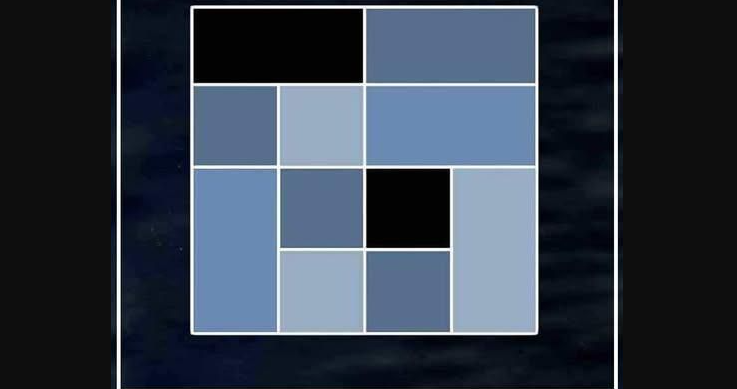
At first glance, this visual puzzle appears straightforward: count how many squares you can see. Many people approach it with confidence, assuming the task will take only a moment. Yet this familiar challenge often delivers an unexpected result. The way someone approaches this puzzle can offer insight into cognitive habits, decision-making patterns, and even personality traits related to confidence, attention, and self-awareness.
This type of visual test does more than entertain. It highlights how the human mind processes information under perceived simplicity. When the brain recognizes a familiar structure, it tends to rely on assumptions rather than careful observation. That instinct can influence how thoroughly a person examines details, how willing they are to reconsider an answer, and how they respond to the possibility of being mistaken.
Why this puzzle encourages overconfidence
Many individuals respond to this challenge with immediate certainty. They glance at the image, arrive at a number, and feel satisfied without revisiting their reasoning. This reaction is often driven by overconfidence, a cognitive tendency where people trust their first impression more than the evidence in front of them.
People who display strong self-assurance sometimes rely heavily on instinct. In situations like this, instinct may override patience and verification. The belief that one’s perception is accurate can discourage further analysis. Over time, this habit can extend beyond puzzles into everyday decisions, shaping how feedback, correction, or alternative viewpoints are received.
Others approach the same image differently. They slow down, recount, and question whether their first answer fully accounts for all possibilities. This behavior reflects a mindset oriented toward reflection and awareness. The willingness to revisit a conclusion often signals emotional maturity, curiosity, and respect for complexity.
Understanding how squares are hidden
To arrive at an accurate count, careful observation is essential. The image contains more than one obvious layer, and many squares are formed by combinations of smaller shapes.
Small squares are the most noticeable. These individual units form the foundation of the grid and are usually counted first. They create a sense of progress, which can lead some people to stop early.
Medium-sized squares emerge when smaller squares are grouped together. These shapes often blend into the overall pattern, making them easy to miss without deliberate scanning.
Large squares form when the grid is viewed as a whole. These shapes require stepping back mentally and seeing beyond individual components. They often appear only after the viewer consciously reframes the image.
People who rush through the task frequently overlook these composite squares. The tendency to rely on the most visible elements can prevent recognition of deeper structure.
What your answer may reflect
If you counted fewer than six squares, you may have relied heavily on immediate perception. This approach often aligns with impulsiveness and strong confidence in first impressions. It reflects decisiveness, though it may also suggest limited patience for detailed analysis.
If your total falls between six and nine squares, you likely noticed more than the obvious shapes while still missing some combinations. This range often reflects balanced confidence paired with occasional oversight. It shows engagement with the task, along with room for deeper examination.
If you identified ten to thirteen squares, your approach likely involved careful review and reconsideration. This range suggests attentiveness, flexibility in thinking, and comfort with questioning assumptions. These qualities are associated with thoughtful decision-making and emotional awareness.
A broader lesson in self-awareness
This puzzle serves as more than a mental exercise. It acts as a reflection of how people interact with uncertainty. The process of counting, recounting, and reassessing mirrors how individuals approach challenges in daily life.
Some move quickly, trusting instinct. Others pause, analyze, and adjust. Neither approach defines a person completely, though each reveals tendencies that influence communication, learning, and personal growth.
The true value of this challenge lies in recognizing how perception can be shaped by confidence, habit, and attention. Awareness of these patterns supports better judgment, stronger relationships, and clearer thinking.
The next time you face a task that appears simple, consider how you engage with it. Do you rely on the first answer that feels right, or do you explore further? In that moment of choice, insight often emerges—not from the puzzle itself, but from how you choose to see it.