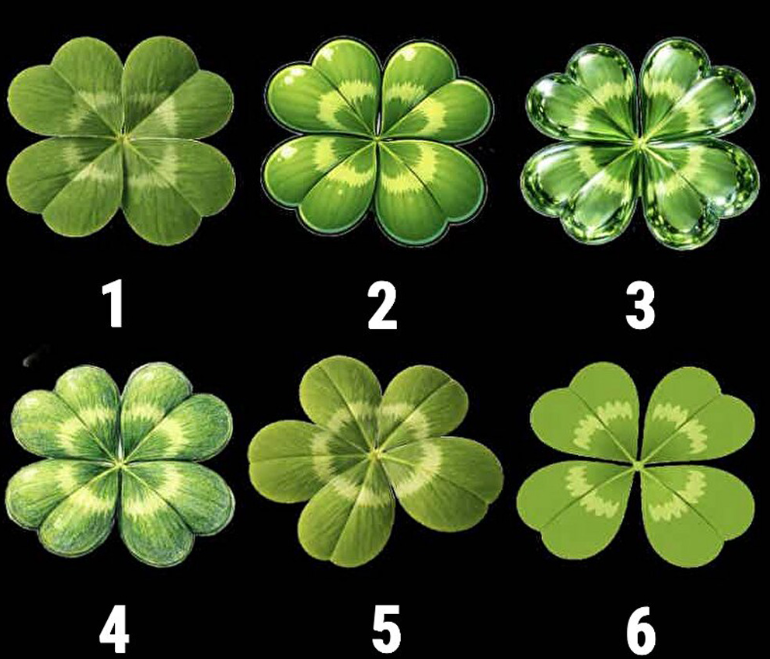
At first glance, the image appears to present a simple and entertaining challenge: six clovers arranged neatly, each with subtle differences, and one task—identify the odd one out. The setup feels light and engaging, almost like a quick puzzle meant to pass the time. However, as you spend a few more moments observing the details, it becomes clear that this image offers more than a casual game. Beneath the surface, it invites you to explore how you think, what you notice first, and how you interpret small variations.
Many people associate four-leaf clovers with positive meaning, often seeing them as rare symbols connected to good fortune and hopeful outcomes. In this case, every clover carries a sense of uniqueness. Each one appears distinctive in its own way, which makes the challenge less about finding a single correct answer and more about understanding your personal perspective. The real question becomes not which clover is different, but why one stands out to you.
This is where the experience becomes truly engaging. The human brain naturally seeks patterns and differences. When presented with a group of similar objects, your mind begins analyzing details almost instantly. You might compare shapes, examine color tones, or look closely at texture and symmetry. What makes this interesting is that no two people approach this process in exactly the same way.
Some individuals are immediately drawn to differences in color, noticing even the slightest variation in shade or brightness. Others pay closer attention to structure, focusing on how balanced or uneven each clover appears. There are those who notice surface details such as shine, smoothness, or texture. And then there are people who rely more on instinct, choosing the one that feels different without needing a clear explanation.
Your choice says something meaningful about how you process information and how you respond to the world around you.
If you chose #1, it suggests that you are attentive to detail and prefer things that feel natural and genuine. You are likely someone who values clarity and authenticity. You tend to focus on what is real rather than what is designed to attract attention. This grounded approach helps you stay focused and consistent in many areas of life.
If you chose #2, it reflects a balanced and thoughtful mindset. You are comfortable analyzing small differences and often look for harmony in what you see. You take your time when making decisions and consider multiple angles before reaching a conclusion. This careful approach often leads to steady and reliable outcomes.
If you chose #3, it highlights your attraction to bold and distinctive features. You notice elements that stand out clearly from the rest. You appreciate originality and are open to things that appear different or unconventional. This perspective allows you to embrace creativity and new ideas with ease.
If you chose #4, it shows that you have a creative and observant eye. You are able to see layers and details that others might overlook. Texture, depth, and subtle complexity capture your attention. This ability often connects with imagination and a deeper way of interpreting everyday situations.
If you chose #5, it suggests that you rely strongly on intuition. Your decision may come from a feeling rather than a visible difference. You trust your inner sense when something seems off or unique. This instinctive approach often guides you effectively, especially in uncertain situations.
If you chose #6, it points to a practical and direct way of thinking. You are drawn to clarity and simplicity. Designs or shapes that feel clean and easy to understand tend to stand out for you. You prefer straightforward solutions and clear outcomes in both small and important decisions.
Looking at the bigger picture, this exercise offers insight into something deeper than a visual test. It shows that what many people describe as luck is often influenced by awareness, perception, and the choices we make. The way you notice details, interpret differences, and trust your judgment plays a significant role in shaping your experiences.
Instead of focusing on whether luck is present, it can be more useful to consider how you observe the world and how your decisions follow from that perspective. The way you think, combined with how you act, creates patterns that influence results over time.
In the end, there may not be a single clover that serves as the definitive answer—and that is what makes this exercise meaningful. Life often presents situations without one clear solution. What matters most is how you interpret what is in front of you and how you move forward based on that understanding.
That perspective, more than anything else, shapes the outcomes you experience and the direction you choose to follow.