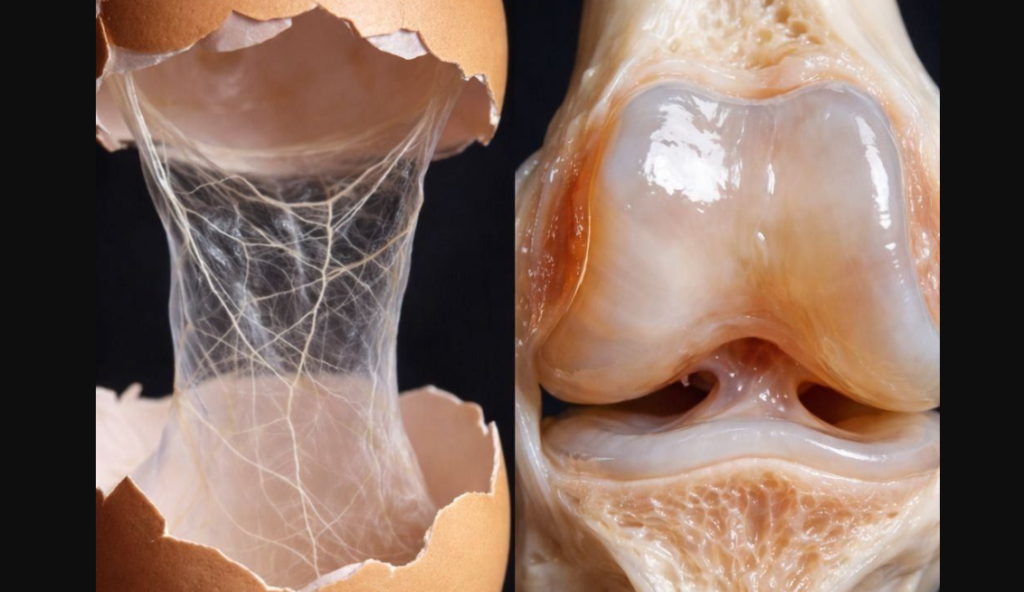
Before spending money on costly supplements or specialty joint formulas, it may be worth looking at something far simpler. Each time you crack an egg, you probably throw away a thin white membrane that clings to the inside of the shell. Most people see it as waste. In reality, this delicate layer contains valuable natural compounds that support joint health.
That membrane exists for a reason. In nature, it protects the developing chick inside the egg. It is strong, flexible, and resilient. Those same qualities are essential for knees, ligaments, tendons, and cartilage.
The eggshell membrane naturally contains collagen, chondroitin, and hyaluronic acid. These substances form part of the cushioning system that helps prevent bones from rubbing against each other. In youth, the body produces these components efficiently. Over time, production gradually declines. Factors such as aging, excess weight, repetitive strain, or improper exercise may accelerate this process.
When internal support structures begin to weaken, the body often signals that something is changing. These signals may start subtly and become more noticeable over time.
You may hear your knees crack when bending or climbing stairs.
You might wake up feeling stiff, needing several minutes to move comfortably.
After a short walk, discomfort may appear.
Your joints may feel dry, tight, or less fluid in motion.
These changes are often associated with wear and tear in the connective tissues. Cartilage, which cushions the ends of bones, can gradually thin. When this protective layer becomes less effective, everyday movements may feel more difficult.
The eggshell membrane is not a laboratory-made powder or heavily processed substance. It contains collagen and supportive compounds in their natural matrix. The body recognizes these components because they resemble what connective tissues are built from. For some individuals, this natural structure may feel more compatible than isolated synthetic forms.
That does not mean it rebuilds severely damaged cartilage or reverses advanced joint disease. It does provide raw materials that support lubrication, flexibility, and overall joint function when tissue remains capable of maintenance.
As cartilage becomes thinner, the bones beneath it absorb more impact. Activities like walking, standing, and climbing stairs can place repeated stress on the joints. When this stress continues without adequate support, discomfort may increase. The body has limits in its ability to repair tissue, especially when internal resources are depleted.
Joint pain rarely appears without reason. It often develops gradually as structural support decreases over time. Paying attention to early signs allows for proactive steps that may support long-term mobility.
Eggshell membranes are discarded in countless kitchens every day. Few people realize that this nearly transparent layer contains elements often found in commercial joint supplements. Some individuals choose to dry and grind clean eggshell membranes into a fine powder, adding small amounts to smoothies or food. Anyone considering this approach should ensure proper cleaning and consult a healthcare provider beforehand.
It is important to clarify several points. Eggshell membrane is not a substitute for medical treatment when joint damage is advanced. It should not be consumed by individuals with egg allergies. It does not cure chronic diseases, inflammatory disorders, or structural injuries on its own.
Joint health depends on multiple factors. Maintaining a healthy weight reduces pressure on knees and hips. Engaging in low-impact exercise supports circulation and muscle strength. Eating a balanced diet rich in nutrients helps sustain connective tissues. Consulting a healthcare professional ensures that symptoms are evaluated appropriately.
Ignoring persistent stiffness, swelling, or pain can lead to more complex problems later. Early support, whether through lifestyle changes, medical care, or nutritional adjustments, often makes a difference in comfort and mobility.
When your knees make sounds during movement or your body feels tight after rest, it may signal that your joints need attention. These sensations are not always a simple consequence of aging. They often reflect changes in the tissues that absorb daily impact.
Understanding the role of collagen and joint-supporting compounds encourages informed decisions. Something as simple as recognizing the value in what is typically discarded can shift perspective. Small, consistent actions aimed at supporting joint health may contribute to improved flexibility and comfort over time.