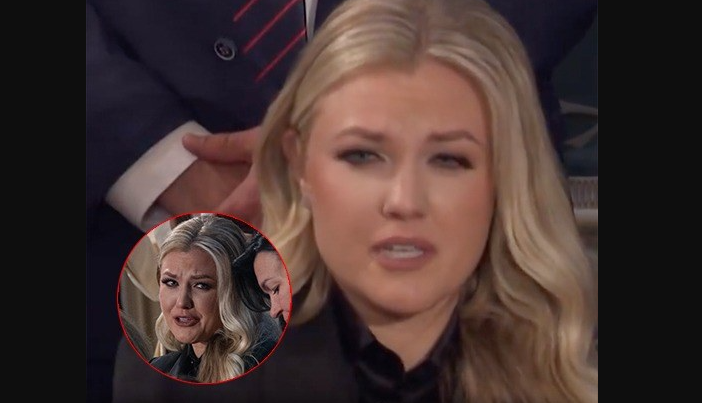
Erika Kirk’s expression said more than any prepared remarks ever could. One moment, she sat quietly among other guests in the gallery, blending into the formal setting. The next, cameras focused tightly on her face, capturing a deeply personal reaction and transmitting it to millions of viewers watching live.
As Donald Trump mentioned her husband, Charlie Kirk, applause filled the chamber. Lawmakers and attendees responded with energy, their reaction echoing through the room. Amid the clapping and rising voices, Erika appeared distant, her posture still and her expression heavy. She seemed separated from the political current moving around her.
Television broadcasts lingered on her face. Viewers at home paid close attention to every small movement. Some believed they saw her whisper a few quiet words, perhaps to herself. Others focused on the way she held her composure, her effort to steady her breathing visible in the close-up shots. What unfolded was a private emotional moment placed inside a highly public arena.
Her visible struggle to hold back tears shifted attention away from the speech itself. For a few seconds, policy and rhetoric faded into the background. The chamber remained filled with applause, yet many eyes were fixed on Erika’s reaction rather than the podium.
In a setting already defined by political tension and strong opinions, Erika’s presence cut through the atmosphere. She did not stand as a commentator, strategist, or elected official. She was present as the wife of Charlie Kirk, connected to the event through personal history rather than political messaging. That distinction changed how the moment felt to many viewers.
The contrast between the formal tribute and her quiet grief created a scene that resonated beyond the chamber walls. Cameras continued to record, ensuring that her expression became part of the public record. In the age of instant media, such images travel quickly.
Within minutes, clips of the moment circulated across social platforms. Short videos were shared, paused, replayed, and analyzed. Audiences interpreted her reaction in sharply different ways. Some questioned whether the scene carried political symbolism. Others saw a widow confronting loss in real time, under intense public scrutiny.
Online discussions reflected the broader divisions already present in the political landscape. Comments ranged from sympathetic to skeptical. Supporters expressed compassion, emphasizing the emotional weight of hearing a loved one’s name spoken in a national address. Critics debated context and presentation. Each viewer brought personal beliefs and assumptions into their interpretation.
Outside the building, demonstrations continued. Inside, separate disruptions added to the charged atmosphere. The environment was already filled with strong emotions and competing narratives. Even so, Erika’s quiet response emerged as one of the most discussed aspects of the event.
The episode illustrated how moments of grief can become complicated when they intersect with politics. Personal emotion, once captured and broadcast, no longer belongs entirely to the individual experiencing it. It becomes material for commentary, analysis, and debate.
Public life often demands composure. Cameras rarely turn away during vulnerable moments. In this case, the lens remained steady, preserving a few seconds that many viewers found more memorable than the speech itself.
Long after the applause faded and the chamber returned to its formal rhythm, the image remained in circulation. News outlets replayed the clip. Commentators referenced it in discussions about tone and symbolism. Social media users continued to share their interpretations.
Erika Kirk’s reaction served as a reminder that behind speeches, headlines, and political narratives are individuals carrying personal histories and private pain. Public ceremonies often focus on messaging and performance. Yet within those structured events, unscripted human moments can shift the emotional center of the room.
In that brief interval, attention moved away from policy and toward a single expression. Whether viewers saw sorrow, strength, distance, or resolve, the image carried weight. It underscored the reality that public recognition can reopen personal wounds, even when delivered in a setting meant to honor.
The chamber eventually moved forward. The speech continued. Applause rose and fell again. Still, the memory of Erika sitting quietly in the gallery, absorbing the moment, remained with many who watched. It illustrated how, in public life, individual emotion can stand alongside political theater, revealing the human dimension that often exists beneath formal proceedings.