Public attention has intensified following the release of new footage connected to the final moments of Renee Nicole Good, a 37-year-old mother whose death occurred during a federal law enforcement operation in Minneapolis. The video, which circulated widely across social platforms and news outlets, prompted renewed concern, public discussion, and emotional responses from viewers nationwide.
Officials representing the Department of Homeland Security stated that agents involved believed they were facing a serious safety risk at the time. At the same time, community leaders and residents expressed uncertainty about that conclusion, urging a closer look at the moments leading up to the fatal encounter. As the footage spread, demands for transparency and accountability grew louder, with many calling for a comprehensive review of the incident.
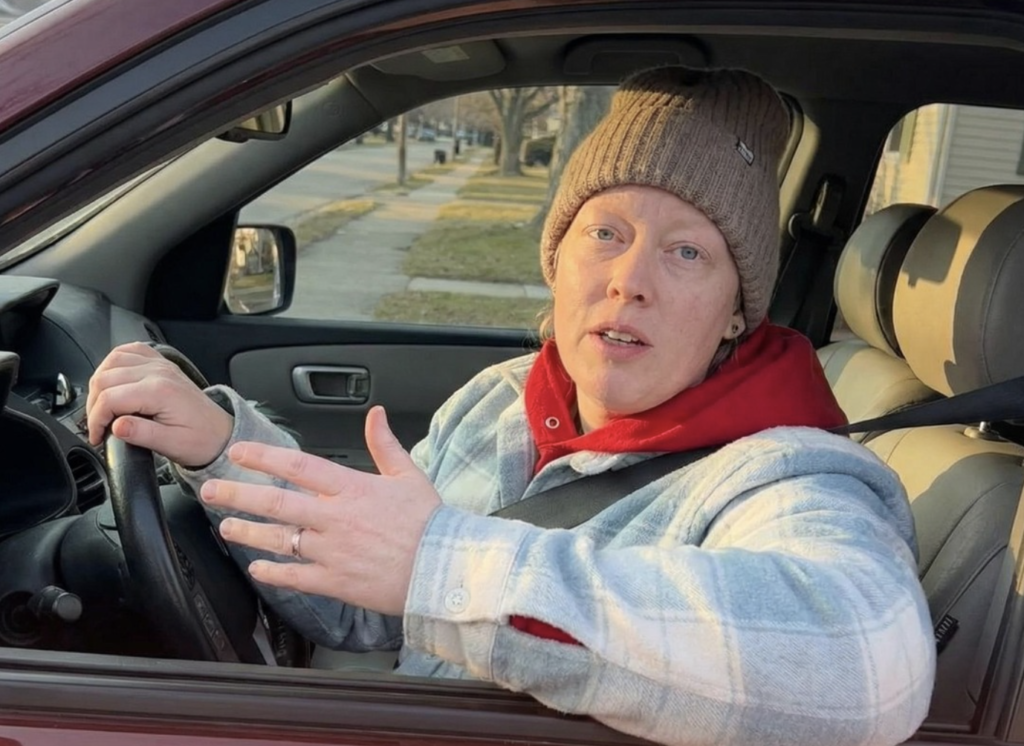
As part of the public conversation, a clinical and forensic psychology specialist reviewed the available video material to evaluate Good’s actions and behavior during the encounter. His analysis centered on physical cues such as posture, hand placement, and vehicle movement.
According to his professional assessment, these elements suggested a stress-driven response consistent with someone attempting to leave an overwhelming situation. He pointed out details including the orientation of the steering wheel, the activation of vehicle lights, and the forward motion of the car, explaining that these signs often align with instinctive reactions under pressure. In high-stress situations, he noted, the body frequently prioritizes escape and self-preservation, sometimes without deliberate planning.
The expert further explained that fear can significantly narrow perception and reaction time. When individuals feel threatened or confused, their actions may appear abrupt or disorganized, even when no harmful intent exists.
From a behavioral standpoint, the footage showed movements that aligned with urgency and anxiety. The analysis emphasized that understanding human responses under stress requires careful interpretation, especially when seconds and split-second decisions carry irreversible consequences. This perspective has added depth to public discussions, offering a lens that focuses on psychology and human behavior rather than speculation.
The situation grew more complex during the encounter when another individual attempted to approach or enter the vehicle as officers moved closer. According to the expert, this additional factor likely increased confusion and sensory overload. Multiple stimuli occurring at once can overwhelm cognitive processing, making it difficult to interpret commands or respond calmly. In such moments, perception can differ sharply between those experiencing fear inside a vehicle and officers assessing movement from outside. This gap in perception has become a focal point in ongoing discussions about how misunderstandings can escalate rapidly during enforcement actions.
Additional context shared by public officials added emotional weight to the case. Representatives confirmed that Good was a parent, and that a young child was expecting her return home that day. Items recovered from her vehicle reportedly reflected routine family life, reinforcing her identity as a mother and community member. These details resonated strongly with the public, shifting attention toward the broader human impact of the incident. Many expressed concern about how easily everyday situations can turn tragic when communication breaks down and stress dominates decision-making.
As investigations continue at both state and federal levels, the case remains under close scrutiny. Community members, advocacy groups, and officials alike have emphasized the importance of examining evidence carefully and thoroughly. Beyond determining what occurred, many hope the findings will encourage reflection on training, communication, and risk assessment during law enforcement operations. The loss of Renee Nicole Good has become a symbol of the need for clarity, accountability, and compassion. For many observers, the case underscores a shared hope that future encounters can be handled with greater understanding, preserving safety while honoring the value of every human life.