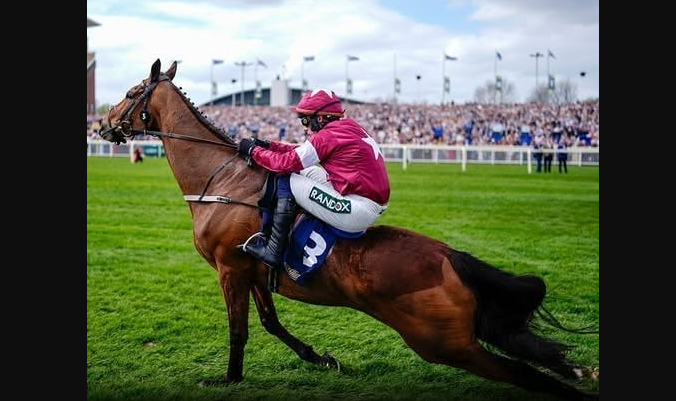
Gold Dancer completed the physical effort of the race well before the finish line arrived.
His body had already sustained a serious injury during the event at Aintree.
In the closing moments, he continued forward using only his front legs while his hind legs no longer responded.
The jockey remained in position as the horse moved across the line in front of a large crowd.
Moments later, Gold Dancer went down.
A period of quiet followed the incident.
Concern spread quickly among those present.
Medical teams attended to the horse immediately.
The situation required careful management on the course.
By the following day, reports confirmed that Gold Dancer had passed away.
Another horse, Get on George, also lost his life during the same festival.
These events brought renewed attention to safety considerations in jump racing.
The Context of the Aintree Festival
The Aintree Festival features demanding jump races that test the partnership between horse and rider.
Horses train extensively for these events.
Jockeys prepare with attention to the unique challenges of the course.
The atmosphere includes large crowds and significant interest from participants and observers.
Gold Dancer competed in one of the main races.
The competition involves multiple fences and a long distance.
Athletes in this discipline develop strength and coordination over time.
The event represents a tradition with deep roots in the sport.
During the race, Gold Dancer experienced a spinal injury.
This type of injury can occur in high-intensity activities.
The horse continued despite the challenge.
His determination carried him to the finish.
The Immediate Response and Official Statements
Following the incident, race officials and veterinary teams responded promptly.
They provided care according to established protocols.
The focus remained on the welfare of the animal throughout the process.
Statements from organizers emphasized that participants follow strict safety guidelines.
They noted that every effort goes into preparing horses and riders.
The response highlighted the commitment to animal care within the sport.
The numbers from recent years show that fatalities occur in jump racing.
Each case receives thorough investigation.
Organizers work with veterinary experts to review incidents.
These reviews contribute to ongoing discussions about safety improvements.
Gold Dancer and Get on George joined other horses in the records of the festival.
Their stories have prompted conversations about the physical demands of the sport.
Supporters of racing point to advances in training methods and track conditions.
Critics raise questions about the risks involved.
Broader Considerations for the Sport
Jump racing carries inherent challenges due to the nature of the obstacles and the speed involved.
Horses develop specific skills for these competitions.
Riders learn techniques to support their partners during the event.
The combination requires trust and preparation from both.
The public attention after incidents like the one involving Gold Dancer brings focus to welfare standards.
Many people follow the sport with appreciation for the athleticism displayed.
Others express concern about the outcomes for the animals.
These perspectives contribute to ongoing dialogue within the racing community.
Efforts to enhance safety include improvements in fence design and veterinary monitoring.
Training programs emphasize fitness and recovery.
Research into injury prevention continues through collaboration between experts.
These steps aim to support the well-being of horses in the sport.
The question that arises for many observers centers on the balance between tradition and modern expectations for animal care.
Participants in racing often express deep respect for the horses.
The bond between rider and horse forms a central element of the experience.
This connection motivates attention to proper preparation and aftercare.
Moving Forward with Awareness
The events at Aintree serve as a reminder of the responsibilities that come with any competitive sport involving animals.
Organizers continue to implement measures aimed at reducing risks.
Spectators and supporters play a role by staying informed about welfare practices.
Awareness helps foster a culture that prioritizes the health of the participants.
Gold Dancer’s story, along with that of Get on George, has encouraged reflection across the industry.
Conversations about safety standards occur regularly among trainers, owners, and officials.
These discussions focus on practical steps that can support both performance and protection.
The goal remains the responsible continuation of the sport.
For those who enjoy following jump racing, understanding the realities helps inform appreciation of the events.
Many fans value the skill and dedication shown by horses and riders.
They also support initiatives that promote higher welfare standards.
This combination of interest and care contributes to positive developments over time.
The legacy of horses like Gold Dancer highlights the importance of ongoing attention to safety.
Each incident leads to reviews and potential adjustments in procedures.
The racing community works to honor the animals through improved practices.
This approach reflects a commitment to the animals that make the sport possible.
In the broader context of equestrian sports, similar considerations apply across disciplines.
Horse welfare remains a shared priority among participants and observers.
Education about the demands of competition helps build informed support.
Responsible engagement benefits everyone involved.
Gold Dancer’s determination in those final moments reflects qualities often celebrated in athletes.
His story, and that of others like him, serves as a call to maintain high standards of care.
The racing community responds with attention to safety measures and continuous improvement.
This response supports the well-being of horses while preserving the excitement of the events.
The Path Ahead for Jump Racing
As the sport moves forward, the commitment to welfare stands as a central element.
This commitment guides decisions about training, racing conditions, and aftercare.
It also informs how supporters engage with the sport.
Through this shared focus, jump racing can continue with attention to both performance and protection.
The path forward involves ongoing collaboration among all stakeholders.
This includes veterinary professionals, course designers, and those who follow the races.
Each group brings perspective that contributes to better outcomes.
The result is a sport that values its participants while offering compelling competition.
Gold Dancer and Get on George have become part of the broader discussion about welfare in racing.
Their experiences have encouraged examination of practices and exploration of improvements.
This examination supports the development of standards that benefit horses and the sport alike.
The legacy of these horses thus contributes to positive change over time.
Those who appreciate jump racing can participate in this progress by staying informed.
They can support organizations focused on horse welfare.
They can also enjoy the events with awareness of the care that goes into preparation.
This informed appreciation strengthens the connection between spectators and the sport.
The Aintree Festival will host future races with these considerations in mind.
Horses will continue to demonstrate their abilities alongside dedicated riders.
The community will maintain focus on safety and respect.
This approach helps ensure that the tradition endures with attention to the well-being of all involved.
In reflecting on Gold Dancer’s story, many recognize the importance of balancing tradition with responsibility.
The sport has evolved over time with attention to animal care.
Continued progress depends on sustained effort from everyone connected to it.
This effort supports a future where excellence and welfare advance together.
The final strides of Gold Dancer at Aintree have left an impression that extends beyond the race itself.
They have contributed to conversations about how best to honor the horses that compete.
These conversations lead to practical steps that improve conditions across the sport.
The outcome benefits horses, riders, and those who follow the events with genuine interest.
As new seasons begin, the lessons from incidents like this one inform preparations.
Trainers emphasize fitness and recovery.
Course officials review and update safety features.
The collective work supports a responsible and engaging sport.
Gold Dancer’s effort in those final moments stands as a testament to the spirit of these athletes.
His story, shared with that of Get on George, reminds everyone of the value placed on each horse.
This value guides the ongoing commitment to welfare in jump racing.
Through this commitment, the sport can continue to inspire while prioritizing the care of its participants.
The audience at Aintree and those watching from afar play a role in this process.
Their interest supports the events and the attention given to safety.
By engaging thoughtfully, they contribute to an environment where horses receive the respect they deserve.
This engagement helps sustain the positive aspects of the tradition for years to come.
In this way, the memory of Gold Dancer and others like him supports a future focused on care and excellence.
The sport moves forward with lessons learned and standards maintained.
Those who follow it can do so with appreciation for the dedication involved at every level.
This appreciation fosters a connection that honors both the history and the animals central to it.
The path ahead for jump racing includes continued focus on the well-being of horses.
This focus shapes training, competition, and recovery practices.
It also informs how the community discusses and addresses incidents when they occur.
Through this approach, the sport maintains its appeal while upholding high standards of care.
Gold Dancer’s final contribution to the sport lies in the attention his story has brought to these matters.
Along with Get on George, he has become part of the record that guides future decisions.
This record supports improvements that benefit all participants.
The result is a stronger foundation for the events that bring together horses, riders, and enthusiasts.
As the seasons progress, the emphasis on welfare will remain a guiding principle.
This principle helps ensure that the excitement of the races occurs alongside responsible practices.
Those who value the sport can support this balance through informed engagement.
Together, these efforts help create a positive environment for everyone involved.
The story of Gold Dancer at Aintree thus serves as a reminder of the importance of care in competitive sports.
It encourages ongoing attention to safety and respect for the animals.
This attention supports the continuation of traditions in a manner that honors all participants.
The outcome benefits the sport and those who appreciate it for years ahead.