They say words cannot break bones—but some words cut far deeper. Wounds no doctor can see. Wounds that never truly heal.
The living room was dim, precisely as I preferred it after dusk. The faint scent of jasmine tea still permeated the air, and the soft ticking of the wall clock filled the silence—a sound I’d grown peculiarly fond of in my quieter years.
I was folding laundry when it happened. When he uttered those words.
My son. My only child.
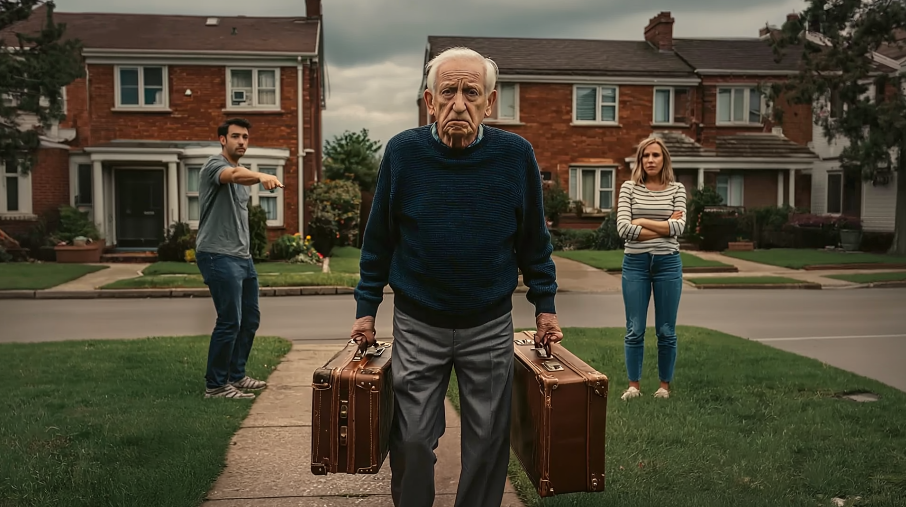
“There’s no room for you here anymore. You must leave.”
He did not stammer. He did not even blink. He simply stood there—arms folded—speaking as if addressing a neighbor, not the mother who raised him singlehandedly. The woman who forewent meals so he could eat, who wore worn-out clothes so he could commence school with something new.
For a moment, I believed I had misheard. Perhaps my aged ears, dulled by time, were deceiving me. But no. His wife sat silently on the couch, her eyes fixed on her phone, offering no objection. My grandson, no older than ten, looked up briefly—then returned to his video game.
I looked at my son. I emitted a small, nervous laugh. “What do you mean, Minh? Where would I even go?”
His tone remained unchanged. “We have decided. Your room is becoming our office. You have resided here rent-free long enough. It is time to relocate. A retirement facility is nearby.”
It felt as though I had been pushed off a cliff. His words echoed, sharp and conclusive. A retirement home? I knew no one there. I had been the one preparing their meals, caring for their child, while they worked, traveled, and pursued their lives. Now, like something aged and expended, I was being discarded.
I did not argue. That night, I packed. Pride is a peculiar companion in old age. My hands trembled as I folded my garments into the last suitcase I possessed. I would not allow them to witness my tears. I would not grant them that satisfaction.
I did not proceed to the retirement center. Instead, I boarded a bus bound for the city’s edge. I discovered a modest guesthouse by the river and paid for a small, dusty room. It smelled of old books and forgotten summers. But it was quiet. No one posed questions. That sufficed.
I spent that first night gazing at the ceiling, then at the worn suitcase in the corner. Then at my bankbook—still meticulously wrapped in the silk folds of my second-wedding ao dai. They were unaware. No one knew. I had saved discreetly over the years. Every small task, every red envelope from holidays, every additional coin slipped into that piggy bank behind the rice sack. When my husband passed, he left a modest life insurance payout. I never touched a single cent. Let them believe I was penniless. Let them believe I depended on them.
That night, I opened the bankbook.
Almost a million dollars. Not enough to be affluent—but sufficient to accomplish something. Something daring. Something unexpected.
I smiled to myself, alone in the darkness.
At sunrise, I emerged with my shoulders straightened, an idea blossoming within my chest.
For sixty years, I had lived for others. I cleaned, cooked, sacrificed. I exchanged dreams for duty.
But that morning?
That morning, I chose to live for myself.
And I would undertake something that would profoundly shake them.
I awoke earlier than I had in years. Outside, the city began to awaken—vendors arranging carts, bicycles rumbling, and the river glittering under soft golden light. I sipped a bitter cup of instant coffee and opened a blank notebook I’d acquired the previous night.
The first page was empty. Akin to my life now. A clean slate.
I had always dreamed of owning something modest. Simple. Mine. A small café, perhaps. Or a tranquil flower shop. Something with warm lighting and gentle music. When my husband and I were young, I told him I wished to open a teahouse by the river. He laughed and said, “Only if you promise to bake.”
So that was it. I would utilize the money to establish a tea house.
But not merely a tea house.
A sanctuary. For women akin to myself. Women overlooked by time and family. Women who had expended themselves until nothing remained. Women still replete with stories, songs, and abilities. A place where we were not burdens—but honored.
The subsequent three months were the most challenging—and yet, the most beautiful—I had ever experienced.
I located a narrow, dusty shop for rent on a tree-lined street. It was aged, decaying, yet charming—it evoked memories of old Saigon. I hired a local carpenter to repair the entrance. I painted the interior walls myself—soft lavender and cream. I acquired used furniture and polished every piece until it shined. I named it Floating Clouds—a haven for drifting hearts.
The first day, only two individuals appeared: an elderly man desiring hot water for his noodles, and a teenage girl who sat silently with headphones, then departed without ordering.
But I did not mind.
By the second week, information began to circulate.
Not rapidly. But steadily.
I served lotus tea in porcelain cups. Baked black sesame cookies with peanuts and palm sugar. Played old Trịnh Công Sơn records softly in the background. Outside, I positioned a handwritten sign:
“Free tea for women over 60. You are seen. You are loved.”
Each day, more women arrived.
Some brought faded photographs of grandchildren. Others shared narratives—of lost husbands, ungrateful children, and abandoned dreams. We sat together, not merely consuming tea, but offering fragments of ourselves to one another.
I began to smile again.
I began to feel alive again.
Then one day, something unexpected transpired.
A Sunday. Late afternoon. I was arranging marigolds in a vase when I observed a familiar vehicle pull up outside.
It was my son.
He exited slowly, appearing uncertain. His wife followed, holding their son’s hand. All three stared at the sign above the entrance.
I did not move.
I did not speak.
I continued arranging flowers.
He stepped in hesitantly. The tea house was nearly full—elderly women laughing, sipping tea, glowing with quiet pride and dignity.
“Mom?” he inquired softly.
I turned and looked at him. Truly looked.
He seemed… smaller. Not the towering figure who had pushed me from his life, but merely a man who had not yet comprehended his loss.
“I heard about this place,” he stated. “My friend’s mother attends here. She mentioned the owner was… you.”
I nodded, calm. “Yes. I initiated it.”
He glanced around. “But… how? What was the source of the funds?”
“I saved,” I replied. “And I recalled who I was.”
His wife opened her mouth—then closed it. My grandson tugged at her sleeve, his eyes fixed on me.
“I did not know you possessed this ability,” he whispered.
I knelt beside him. “There is much you do not know about Grandma.”
He smiled shyly. “It’s remarkable.”
The three of them stood awkwardly. My son rubbed the back of his neck. “We were thinking… perhaps you could return home. We could create space.”
I held his gaze. Steady. Unwavering.
Then I stated: “No.”
Not angrily. Not bitterly.
Simply with conviction.
“This is my home now.”
That evening, after the last customer departed, I sat under the soft glow of lanterns strung above the patio. I observed the stars shimmering in the river below.
I contemplated all the years I had confined myself for others.
But no more.
They say retribution is best served cold.
But mine?
Mine arrived warm—in delicate cups, scented with jasmine and memory. It came with sesame cookies and music, amidst the laughter of women who had finally been recognized.
And above all?
It tasted sweet.