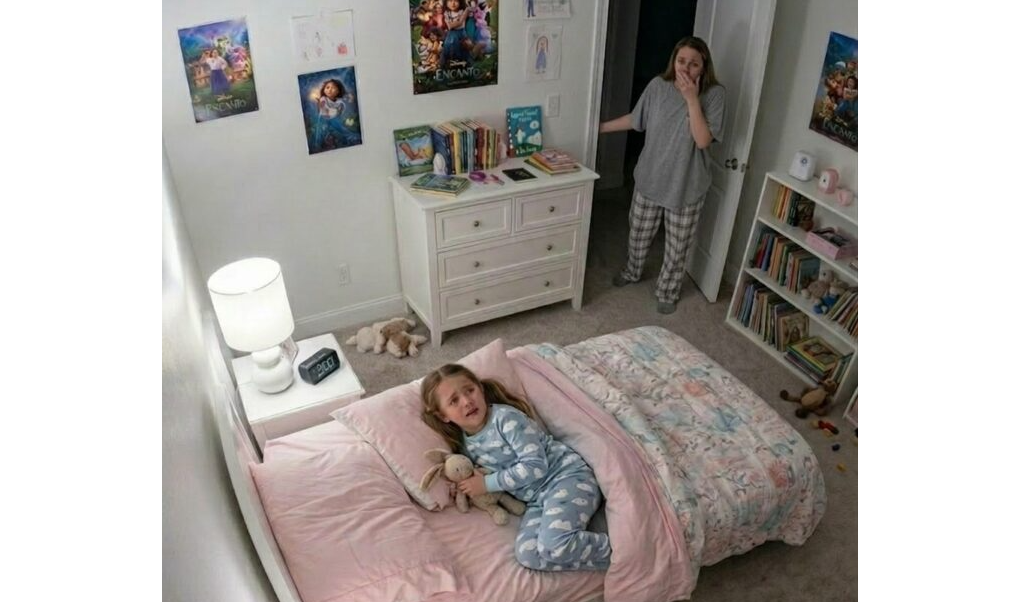
It was day 43. We were counting because that’s what you do when the walls are the same, the beeping machines never stop, and every lunch tray looks exactly like yesterday’s. My daughter Aisla had just turned six. She spent it in a hospital bed, too weak to open her own juice box.
That morning, I tried to lift her spirits with stickers and a new coloring book, but she barely smiled. She was tired of being “the brave girl.” She wanted to go outside. I promised her we’d get through this, but honestly, I wasn’t even convincing myself anymore.
Then the door swung open.
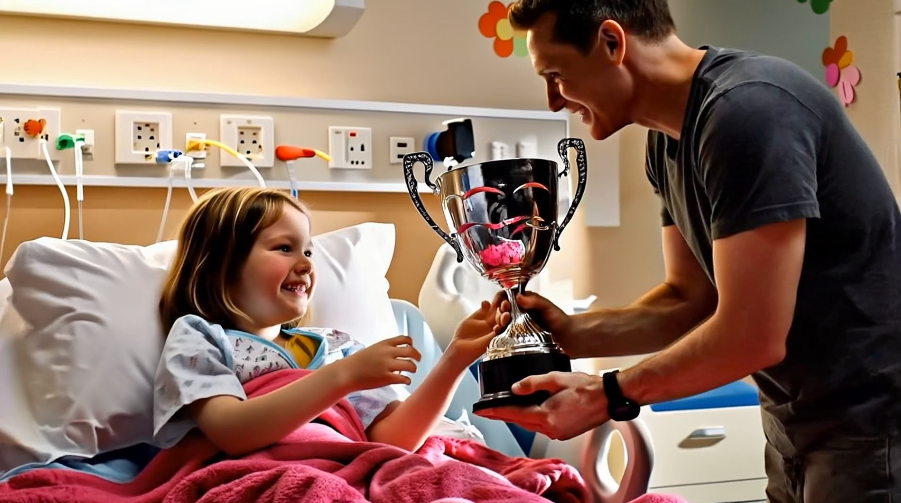
And there he was—this guy she’d only seen on TV. Holding the championship trophy like it was made of gold and fairy dust. He grinned like he’d just won the whole world and said, “I heard there’s a stronger champion in here than me.”
Aisla just stared. Then her mouth dropped open. Then she screamed. Not in pain, but like someone just told her Santa was real and he brought a puppy. She threw her arms in the air and started crying—actual happy tears.
He walked over, handed her the trophy, and crouched beside her bed. She touched it like it might melt if she squeezed too hard.
Then the nurse came in and whispered something to me that made me freeze. My expression shifted—confused, almost scared to believe what she’d just heard.
And when she turned to look at me, eyes wide, she asked—
“Mommy… am I getting better?”
I knelt down beside her, trying to keep my hands from shaking. The nurse’s words echoed in my mind: Her white cell count just spiked—in a good way. It might be the turning point.
“Yes, baby,” I said, tears rolling down my face. “You’re getting better.”
The athlete—Tariq El-Nouri, the national soccer team’s star forward—watched us quietly. He didn’t rush the moment. He didn’t say anything cheesy. He just smiled softly and gave Aisla’s tiny hand a squeeze.
Then he looked at me and said, “You don’t owe me a thank you. I lost my little sister to leukemia when she was seven. If someone had done this for her… I think she would’ve smiled like that.”
I swallowed hard, not knowing what to say. His visit wasn’t for cameras. There were no reporters, no social media posts. Just him, his trophy, and a quiet moment of human kindness.
That evening, Aisla asked if the trophy could stay beside her bed. She even asked the nurse to clean a spot on the shelf so it wouldn’t get dusty. It was the first time she’d cared about anything in days.
The next morning, she woke up and asked for cereal. Actual food. Not just the popsicles she nibbled when she could. The doctors took note. Her strength was coming back. Slowly, but undeniably.
A week later, she was sitting up on her own and drawing again. Her nurse brought in more markers and even taped her doodles on the wall like a gallery. Aisla named each drawing after a different superhero—one of them had Tariq’s jersey number and a cape.
Word must’ve spread, because soon, other players from the team stopped by. Not in big groups. One by one. Quietly. Respectfully. They brought stickers, signed jerseys, and even a pair of pink cleats “for when you’re ready to run again.”
But here’s where the twist comes in.
Three weeks after Tariq’s visit, I got a phone call. From a blocked number. I almost didn’t answer it, but something told me to pick up.
“Hi, this is Layla, Tariq’s cousin,” the woman on the line said. “I hope this isn’t weird. But he mentioned your daughter, and… there’s something you should know.”
Apparently, after his visit to the hospital, Tariq made a donation. A large one. Quietly. No headlines. He specifically requested it go toward children who needed immunotherapy but whose families couldn’t afford the additional treatments not covered by public insurance.
He listed Aisla’s name on the form.
I was stunned. I didn’t even know we’d reached the limit on what the hospital would cover. But two days later, a billing coordinator confirmed it: “It’s all been handled. You don’t have to worry anymore.”
I sat in the hallway and sobbed. Not just from relief, but from the weight of having carried fear for so long—and suddenly feeling someone else help carry it for me.
That weekend, Tariq came back.
No cameras again. No grand entrance. Just him and a bag of chocolate muffins his sister used to love.
“I wanted to say goodbye before we head back for training camp,” he said. “And also… to ask if I can come to her birthday next year.”
He sat on the floor beside her and let her paint glitter on his fingernails. She told him he looked “royal.” He said he’d wear it to practice. I don’t know if he did, but I believed him.
Then, when he thought she wasn’t looking, he pulled me aside.
“I lost my sister because we didn’t have access to the same options. We were in a different country back then. It’s something I’ll always carry. But maybe this… helps me carry it a little less.”
I nodded, because honestly, I couldn’t speak without crying.
A few days later, the hospital released Aisla. Not fully healed, but in remission. We held hands as we walked through the lobby together, past the gift shop and the nurses clapping at the exit. She carried the trophy in both arms like a crown jewel.
The first thing she did when we got home was run to the backyard and lie in the grass. Just lie there, arms wide like she was hugging the sky. She fell asleep out there for an hour while I watched from the porch, not daring to interrupt her peace.
Months passed. Her hair started growing back. Her laugh returned. She even went back to school in the spring, wearing one of the signed jerseys like a superhero costume.
And then—life gave us another twist.
One morning, I got a call from the hospital. Another child in the ward—Nico, a boy who’d shared a room with Aisla briefly—had relapsed. His parents were struggling. I knew what that felt like. I didn’t even hesitate.
We packed a box with coloring books, snacks, and yes—the trophy. I asked Aisla if she was sure.
She nodded. “It helped me. Now it’s his turn.”
We walked back into the hospital together. Aisla held the trophy, wrapped in tissue paper. When she gave it to Nico, he didn’t know what to say. He just touched it the same way she had—gently, reverently, like it held magic.
And maybe it did.
Because a few months later, I got a picture from Nico’s mom. He was walking again. Eating. Drawing. She said he’d named one of his sketches Aisla the Brave.
These days, Aisla is nine. She plays soccer on the weekends and still wears pink cleats. She hasn’t seen Tariq in person since that last visit, but every year on her birthday, he sends a handwritten card and a new pair of glittery nail polish.
Last year, he signed it: To my forever champion.
So what’s the life lesson here?
Sometimes the smallest act—showing up, sharing a moment, offering a symbol of hope—can ripple outward in ways you never imagined. Kindness doesn’t need an audience. And real champions aren’t the ones who score the goals. They’re the ones who make others believe they can win, too.
If this story touched you, please share it with someone who needs to remember that even in the darkest moments, one act of love can change everything. 💛