The accident occurred on a Thursday. I recall this specifically because it was pizza night, and we had just pulled into the driveway when the phone rang. My son Micah stood frozen on the porch after I delivered the news: His best friend Zayden’s parents… both gone. A car crash. No warning. Simply gone.
Micah said nothing initially. He sat on the steps until darkness enveloped him. Then he whispered, “Where will Zayden go?”
That was the first time I witnessed my child weep in a manner that truly frightened me. A full-body, breath-stealing grief. Upon our arrival at the hospital the following day, Zayden sat in a plastic chair, clutching a worn-out teddy bear and staring at the floor. The moment Micah entered, he ran directly into Zayden’s arms and refused to release him.
“I will care for him,” Micah declared. “He can reside with us.”
However, the system operates differently. The caseworker was compassionate, yet her voice possessed an unyielding tone. Zayden would be placed with a temporary foster family while arrangements were made.
Micah was distraught. He pleaded. He bargained. He cried himself to sleep for weeks. But the room down the hall remained empty.
What Micah did not know was… we were actively pursuing options.
This involved interviews. Background checks. Training courses. Forms requiring additional forms. Late-night calls, early-morning emails. Throughout this period, we kept him uninformed—fearing a negative outcome.
Then, months later, we invited him outside.
He grumbled as any 9-year-old would, dragging his feet behind me and my husband. “What is it?” he inquired.
We gestured toward the driveway.
Standing there, clutching that same teddy bear, was—
Zayden.
His backpack was slightly too large for him. His shoes were scuffed. But his eyes illuminated the moment he saw Micah, and he ran as if he hadn’t used his legs in weeks.
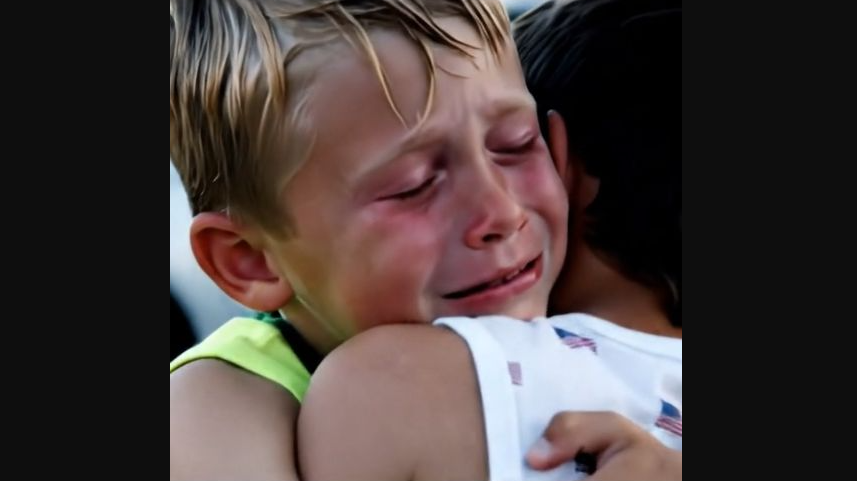
Micah met him halfway, arms extended, tears already falling. They embraced so tightly one might think they would burst.
“Are you staying?” Micah asked.
“Permanently,” I affirmed, my own voice cracking.
What followed was a blur of laughter and shouting and a myriad of questions, most of which we could not yet answer. But we allowed them their space. Permitted them to discuss Pokémon and spaghetti and the reality of ghosts.
That night, Zayden fell asleep in Micah’s bed, the teddy bear nestled between them. I stood in the doorway for an extended period, simply observing. It felt right. As if something broken had perfectly reconnected.
However, we had no idea what challenges awaited us.
Initially, things appeared satisfactory. Indeed, better than satisfactory. The boys behaved like twins separated at birth. School mornings progressed more smoothly. Dinners were more boisterous. Weekends were filled with soccer and bicycle rides.
But gradually, the fissures became apparent.
Zayden experienced nightmares. The kind that made him scream until his voice was hoarse. He disliked loud noises. He refused to enter cars. And occasionally, when we believed he was merely engaging in play, we would find him curled up in the closet, rocking rhythmically.
Micah never left his side. He became a protector—observing Zayden with vigilance. If someone uttered a unkind remark at school, Micah was present. If Zayden forgot his lines at the school play, Micah whispered them from backstage.
It was beautiful. But it was also burdensome.
One evening, I drew Micah aside. “You understand it is acceptable to simply be a child sometimes, don’t you?” I inquired gently.
He looked down. “I made a promise.”
“To whom?”
He shrugged. “To God. When I saw Zayden in the hospital. I stated if he returned home, I would protect him eternally.”
My heart ached in an unexpected way. Because I recognized so much of myself in that moment—how we assume responsibilities beyond our capacity simply out of love.
However, children are not meant to bear such promises.
That weekend, we enrolled both boys in therapy. Initially, they disliked it. They called it tedious. They complained the therapist smelled of raisins. But gradually, something shifted.
Zayden began recounting the accident. How he saw the car approaching and could not scream. How he awoke in the hospital and did not comprehend why no one was present.
Micah admitted his own fears. That sometimes he longed for how things used to be, solely the two of us and weekend pancakes. That he felt if he made an error, Zayden might vanish again.
They cried. We all did. But healing is not always demonstrative. Sometimes it exists in quiet moments—the way Zayden began sleeping through the night, or how Micah allowed himself to attend a sleepover for the first time in months.
Then came the unexpected turn.
Approximately eight months after Zayden moved in, we received a call from a woman in Missouri. She identified herself as Zayden’s aunt—his mother’s half-sister. They had been estranged for years, but upon learning of the accident, she initiated a search.
She wished to meet him.
We froze.
The caseworker confirmed her identity. She had passed all the background checks. She resided in a pleasant neighborhood. No issues. And she was family.
Micah overheard our conversation. “Is she going to take him away?”
I did not know how to respond. Because legally, she possessed a stronger claim.
We sat Zayden down and explained everything. His hands trembled. “Do I have to go?”
“No,” I stated. “But we believe you should meet her. To observe.”
The visit was scheduled for the following week. I was anxious. Micah barely ate. Zayden did not sleep.
However, she arrived.
Her name was Helena. Late thirties. Soft eyes. She carried a scrapbook of Zayden’s mom as a teenager. She brought a box of his dad’s favorite CDs. She did not force anything. She simply sat across from him and stated, “I did not know about you until recently. But I am so glad I do now.”
Zayden listened. He asked questions. He did not smile much, but he did not conceal himself. That night, he expressed a desire to see her again. So we arranged more visits. Gradually, he began to open up to her.
Micah did not say much.
Then one night, as I was tucking him in, he whispered, “If she takes him, I will not have a best friend anymore.”
I shook my head. “Nothing can undo what you two share. Regardless of where he lives.”
“I made a promise,” he reiterated.
“I know,” I stated. “But sometimes, loving someone involves allowing them to have more individuals to return that love.”
He nodded slowly, eyes wet.
A few months later, Zayden made his decision.
He wished to remain with us—but to visit Helena during school breaks.
This presented the best of both scenarios. And it worked.
Helena became family also. She attended soccer games. Assisted with Halloween costumes. Sent the boys cards on every minor holiday imaginable.
Years passed. The nightmares ceased. The closet remained empty. And Micah? He grew up comprehending the significance of fighting for someone.
Zayden never relinquished his teddy bear. However, one day, he presented it to Micah.
“Why?” Micah inquired, perplexed.
“Because I am well now,” Zayden stated. “You sustained me when I could not sustain myself. Now you can release that burden also.”
Micah wept again—but this time, it was of the cathartic kind.
The kind that purges everything one has been retaining.
They are both in high school now. Taller than me. Still completing each other’s sentences. Still playfully teasing each other. But now, their laughter possesses a lightness. They no longer carry the past as a burden.
Only a reminder.
A reminder that sometimes, the individuals who support us through our most severe storms are the ones who teach us how to persevere.
And occasionally, a 9-year-old can truly honor a promise.