In September 2022, Trinity Rowles lived through an experience that permanently divided her life into two distinct chapters. That day, she was attacked by her father’s rescue dog, a Pitbull Bulldog mix named Irish. The dog had lived around her without incident and had never displayed aggression toward her prior to that moment. What unfolded came without warning and altered the course of her life in ways she could not have anticipated.
Earlier that day, there had been emotional tension in the household following a disagreement with her father. While no one could predict what would follow, the atmosphere in the home shifted noticeably. Trinity later shared that she has little memory of the attack itself. Her recollection consists of fragmented impressions rather than a complete sequence of events. Even so, the physical consequences were unmistakable and overwhelming, leaving no doubt about the seriousness of what had occurred.
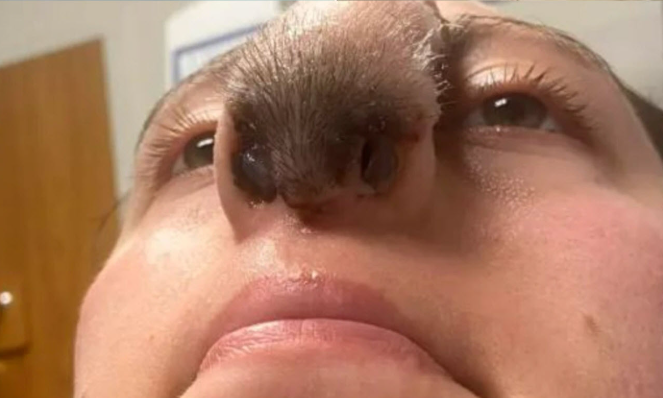
The injuries Trinity sustained required immediate and intensive medical attention. She was hospitalized for several days, during which doctors focused on stabilizing her condition and planning the long road of treatment ahead. Multiple surgeries became necessary as specialists worked to repair the damage. Recovery was not limited to physical healing alone; it reshaped how she navigated daily life, how she felt in familiar spaces, and how she viewed personal safety.
As her body began to recover gradually, the emotional weight of the experience emerged more clearly. Trinity was diagnosed with post-traumatic stress disorder and began experiencing flashbacks, persistent anxiety, and disrupted sleep. Ordinary situations became difficult to manage, and a sense of fear followed her into moments that once felt safe. With professional support, she began therapy and relied on prescribed medication to regain stability and learn coping strategies that allowed her to function day by day.
One of the most complex aspects of her medical journey involved reconstructive surgery. To rebuild part of her nose, surgeons performed a skin graft using tissue taken from her forehead and scalp. The procedure was medically successful and necessary for her recovery. However, it introduced an unexpected outcome: hair began growing on the reconstructed area. This development presented an emotional challenge that affected her self-image and confidence, adding another layer to an already demanding healing process.

By this stage, Trinity had undergone four surgeries, with the possibility of additional procedures still being discussed. Each operation came with its own recovery period, medical appointments, and emotional strain. At the same time, medical expenses continued to rise. Hospital stays, surgical care, therapy sessions, and medications placed a heavy financial burden on her and her family. Facing mounting costs, Trinity turned to fundraising as a way to manage the financial pressure while continuing necessary treatment.
Rather than withdrawing from public view, Trinity made a deliberate decision to share her recovery openly online. She documented her progress honestly, including the difficult days, moments of frustration, and parts of healing that felt uncomfortable or vulnerable. Her posts reflected both strength and uncertainty, offering an unfiltered look at recovery beyond polished narratives.
Through platforms such as TikTok, Trinity gradually built a supportive community. People followed her journey not out of curiosity alone, but because of the openness and authenticity she brought to each update. She spoke candidly about living with visible changes, navigating trauma, and learning patience with her body. Her willingness to speak openly created space for others to reflect on their own challenges.
What began as a personal recovery record grew into something more meaningful. Trinity’s story became a reminder that healing is not linear and that resilience does not require perfection. By refusing to hide the realities of her experience, she challenged narrow definitions of strength and beauty. Her presence online offered reassurance to others facing trauma, visible scars, or long-term recovery, reinforcing the idea that worth and dignity remain intact through every stage of healing.
Today, Trinity Rowles continues her journey with honesty and determination. Her experience stands as a testament to the complexity of recovery, encompassing physical healing, emotional resilience, and the courage to be seen as she is. Through sharing her story, she transformed a deeply personal struggle into a source of connection, understanding, and quiet strength for many who follow her path.