Most people give little thought to loose change. Pennies are often dropped into jars, left in cup holders, or ignored at checkout counters. Their low face value makes them easy to overlook, and over time they blend into the background of daily life. Yet experienced collectors know that, on rare occasions, an ordinary-looking coin can carry remarkable worth. One of the most striking examples is a rare penny that still appears in circulation from time to time, quietly mixed among everyday coins while holding the potential to be worth tens of thousands of dollars.
The story behind this coin begins during a critical period in American history. In 1943, the United States was deeply involved in World War II. Copper had become an essential material for military equipment, communication wiring, and ammunition production. To preserve copper for the war effort, the United States Mint made a significant change. That year, pennies were produced using zinc-coated steel instead of the traditional copper alloy.
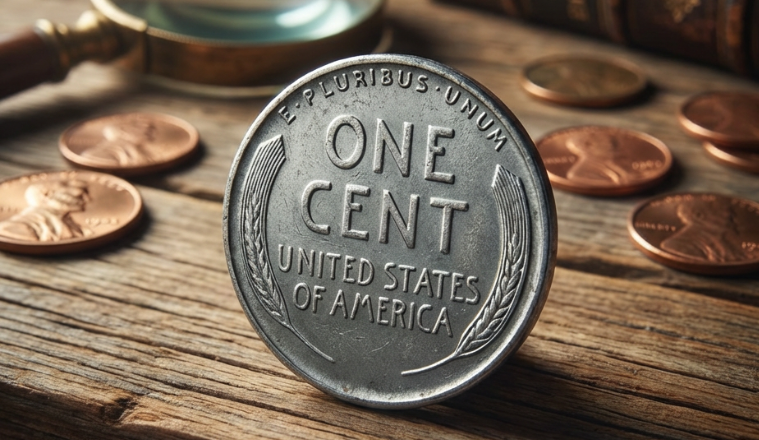
These steel pennies look noticeably different from earlier and later cents. Their silvery-gray color sets them apart, and many people still remember encountering them in childhood collections or old jars of coins. According to official plans, every penny struck in 1943 was supposed to be made from steel. Copper pennies were not intended to exist for that year at all.
Despite those intentions, a small number of copper blanks from previous production runs remained in the minting facilities. During the transition, a few of these leftover copper planchets were accidentally fed into the presses. As a result, a very limited number of 1943 pennies were struck in copper and released into circulation without immediate detection.
These accidental coins became one of the most sought-after minting errors in American numismatic history. Today, experts believe that fewer than two dozen authentic 1943 copper pennies exist across all U.S. Mint locations. Their rarity alone would make them valuable, though their historical context elevates their significance even further.
Collectors value these pennies not only for their scarcity, but also for what they represent. They serve as physical reminders of wartime resource shortages, rapid production changes, and the human element within large-scale manufacturing systems. Because of this combination of rarity and history, prices for verified examples often range from $60,000 to $85,000, depending on condition. Even coins showing wear can command impressive sums.
The contrast between the penny’s original value and its current market worth captures widespread attention. A coin once meant to circulate as everyday pocket change can now rival the price of a vehicle or contribute meaningfully toward a home purchase. That transformation stems entirely from a brief production oversight during an extraordinary moment in history.
For those curious about whether they might possess such a coin, several basic checks can be done before consulting a professional. The date should read 1943, and the coin should display the familiar wheat-ear design on the reverse side, used on pennies from 1909 through 1958. The color should resemble copper rather than steel.
One of the most important tests involves magnetism. Steel pennies will stick to a magnet, while genuine copper pennies will not. Some steel pennies have been copper-plated to imitate the rare error, making this step especially useful. Passing this test does not confirm authenticity, though it does suggest that further evaluation may be worthwhile.
If a penny meets these initial criteria, professional authentication becomes essential. Numismatic experts use precise measurements, metal composition analysis, and detailed inspection to verify legitimacy. Certification protects both sellers and buyers and ensures that genuine examples are properly documented.
The story of the 1943 copper penny reminds people that hidden value still exists in unexpected places. Old jars, inherited collections, and forgotten drawers may hold items overlooked for decades. While such discoveries are rare, they continue to fuel interest in everyday objects and the histories they carry.
Coins like this demonstrate that attention and curiosity can sometimes reveal remarkable stories. Even the smallest objects can reflect moments of national change, human error, and historical significance. Taking a closer look at what seems ordinary can occasionally uncover something extraordinary, waiting patiently to be noticed.