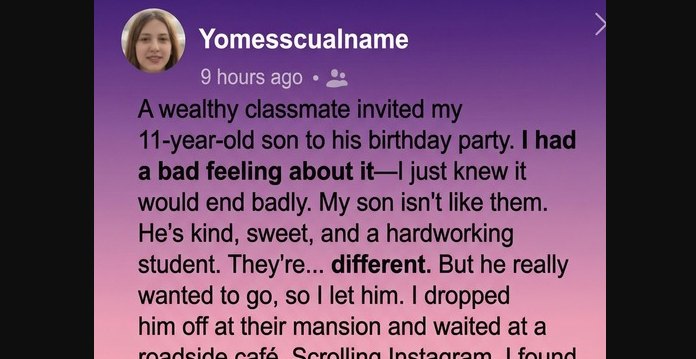
When my son came home holding an invitation to a classmate’s birthday party, my first response was hesitation. The boy hosting the party came from a wealthy family, the type known for a large home perched high above the neighborhood and a lifestyle frequently shared online.
I had noticed before that my son sometimes felt different among certain classmates. It was not a matter of insecurity, but temperament. He was gentle, reflective, and far more interested in ideas and stories than showing off. Even so, the invitation mattered to him. He wanted to go, to feel included, and to take part in something his peers were excited about. After a long pause, I agreed.
On the day of the party, I drove him up the winding road toward the house. The building was impressive, surrounded by tall gates and carefully trimmed gardens. I dropped him off with a smile and told him to enjoy himself, then parked nearby and settled into a small roadside café to wait. I reminded myself that trust often requires stepping back, even when worry lingers. With a warm cup of coffee in front of me, I opened my phone and began scrolling to pass the time.
That sense of calm did not last long. A story posted by the birthday boy appeared on my screen, and my stomach tightened. In the short video, a group of children, joined by a few adults, were laughing at my son. They mimicked his soft way of speaking and made comments about his simple clothes.
The laughter felt sharp and careless. My coffee sat untouched as a surge of anger and concern took over. I left the café quickly, climbed into the car, and drove back toward the house with a pounding heart. Each traffic light felt endless. My thoughts raced with images of my son feeling humiliated and alone.
When I reached the front doors and stepped inside, I braced myself for confrontation. What I saw stopped me cold. My son stood in the middle of the room, calm and steady. The children around him were quiet, focused on him rather than mocking. He held a small notebook in his hands and was explaining a puzzle he had designed. One by one, the children leaned closer, intrigued. Their expressions shifted to curiosity and admiration. Even the adults who had laughed earlier now watched attentively.
My son’s face showed no sign of distress. He looked comfortable, confident, and engaged. He asked questions, listened to answers, and encouraged the group to think together. The energy in the room had changed completely. What had begun as teasing had transformed into shared interest and genuine engagement. I stayed near the entrance, unnoticed, giving the moment space to unfold.
A short while later, my son walked toward me, smiling as though the afternoon had gone exactly as planned. He climbed into the car and buckled his seatbelt, then said it was time to head home. During the drive, he explained what had happened. When the teasing began, he remembered a conversation we once had about responding with grace. He chose to share something meaningful to him, something he enjoyed creating. The puzzle gave everyone something to focus on, and the laughter shifted into real enjoyment.
That evening, as I tucked him into bed, the weight of the day settled in my thoughts. I had worried about him being hurt, about the impact of careless behavior. What unfolded showed a strength I had not fully understood. He met an uncomfortable situation with dignity and creativity, reshaping the experience through quiet confidence. The lesson reached beyond the children at the party; it reached me as well.
Parenting often carries the urge to protect children from every difficult moment. Yet sometimes growth happens when they are allowed to navigate challenges using the values they carry within. That night, I felt grateful not only that my son was safe, but that he reminded me how kindness, self-respect, and composure can leave a lasting impression. I kissed his forehead, carrying with me a renewed understanding of strength that speaks without needing volume.