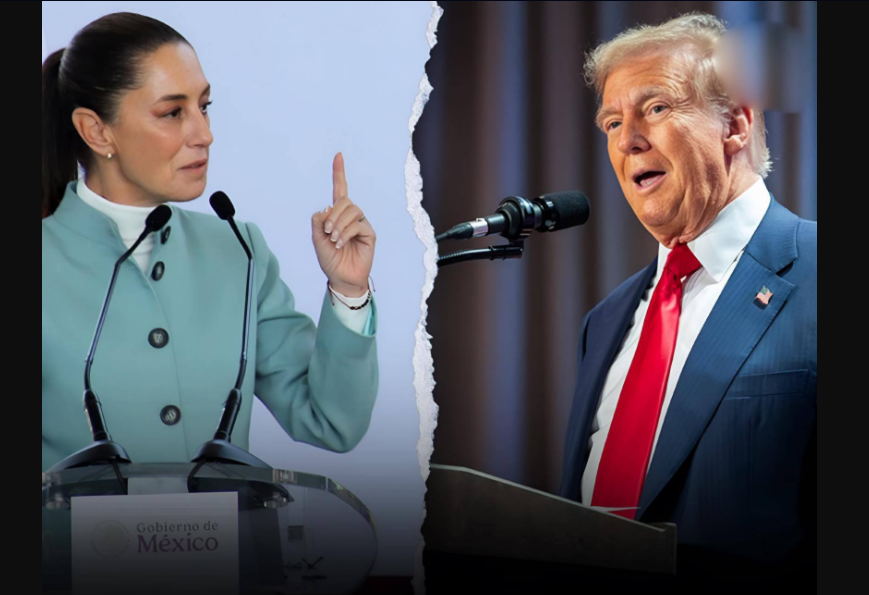
In the days after the dramatic U.S. military operation in Venezuela and the capture of President Nicolás Maduro, the reaction from Mexican President Claudia Sheinbaum rapidly evolved into one of the strongest critiques of U.S. foreign policy voiced by a Latin American leader in many years.
Her response was not an emotional outburst but a detailed argument rooted in international law, regional diplomacy, and constitutional principles. From the moment she addressed the situation publicly, it was clear her remarks were intended to influence the wider diplomatic conversation across the entire hemisphere.
Sheinbaum’s administration released a firm, formal statement condemning the military operation as a unilateral violation of the United Nations Charter. The statement highlighted Article 2(4), which prohibits the use of force against the territorial integrity or political independence of any member state. The wording was deliberate, signaling a move beyond political disagreement and into the realm of legal accountability.
In multiple appearances, Sheinbaum emphasized that Latin America and the Caribbean have long been acknowledged as a “zone of peace,” a phrase used by regional institutions to reinforce the absence of foreign military intervention. She framed the U.S. action not only as a legal breach but as a dangerous setback for regional stability, threatening principles that have guided diplomatic relations for decades.
Her government called for immediate multilateral involvement. She appealed to both the United Nations and the Organization of American States to step into their roles as defenders of sovereignty and mediators of conflict. According to her, these institutions must serve as active guardians of international norms, particularly during moments when powerful nations act independently.
She also expressed frustration with what she and other critics viewed as hesitation within the UN Security Council, a reminder of the ongoing challenges facing global governance.
Throughout her statements, Sheinbaum referenced Mexico’s own diplomatic traditions, especially the Estrada Doctrine. This doctrine reinforces non-intervention, sovereign equality, and respect for internal political processes. These principles have shaped Mexico’s foreign policy for nearly a century, and Sheinbaum insisted they must guide responses to the crisis in Venezuela.
More than once, she acknowledged Latin America’s historical memory—decades marked by external interference, covert operations, and imposed governments. She framed the U.S. operation as part of a pattern the region knows all too well, linking present tensions to collective experience and regional identity.
Sheinbaum argued that foreign military actions, even those framed as efforts to restore stability, rarely produce democratic outcomes. Instead, they often deepen humanitarian challenges and disrupt regional equilibrium. She insisted that true democratic change must emerge internally through the will of the people involved, not through external force.
Mexico’s position carried symbolic and practical weight. Sheinbaum made it clear that cooperation with the United States on issues such as migration, trade, and border security does not require silence on matters involving war, sovereignty, or international order. According to her, maintaining a respectful partnership does not eliminate the responsibility to defend foundational principles.
Her comments resonated across Latin America. Governments in South America and the Caribbean expressed concern about what the U.S. operation might mean for the future of regional diplomacy. Many noted the long-term risks of allowing unilateral military action to become a precedent in the hemisphere.
Sheinbaum’s message presented the crisis as a larger question: whether power in the Americas would be shaped by legal norms or by unilateral decisions made by dominant countries. Her insistence on law, dialogue, and cooperative action marked Mexico as a central voice in defining the terms of that debate.
She also warned that the consequences of abrupt military intervention extend well beyond Venezuela’s borders. She highlighted the possibility of humanitarian strain, regional displacement, and increased security challenges—issues that could impact Mexico directly. Her approach linked core legal principles with practical, real-world concerns.
By appealing to the United Nations and the OAS, Sheinbaum reinforced the need for collective oversight. She emphasized that these institutions cannot remain passive; their involvement is necessary to protect international norms and maintain regional stability.
Her comments sparked further discussion throughout the hemisphere. Some nations echoed her concerns about sovereignty. Others questioned the long-term strategy behind the U.S. operation. In every case, Mexico’s position helped frame the event as more than an isolated conflict.
Domestically, Sheinbaum strengthened Mexico’s international identity as a nation that values legal consistency, diplomatic integrity, and respect for sovereignty. Her stance demonstrated that Mexico can maintain cooperation with global powers while upholding its principles without compromise.
Her position also centered the importance of Venezuelan self-determination. She rejected the idea that military action can create political legitimacy or substitute for public consent. For her, the situation in Caracas represents a test of global commitment to law, multilateralism, and peaceful resolution.
The broader significance of her response is clear. The crisis in Venezuela has become a defining moment for the Western Hemisphere. It challenges governments to consider how future conflicts should be addressed—through force, or through law and collective diplomacy.
By grounding her critique in legal doctrine, historical awareness, and regional cooperation, Sheinbaum presented a vision of leadership focused on sovereignty, stability, and ethical foreign policy. Her approach represents a modern model of Latin American diplomacy: one that seeks balance, justice, and peaceful solutions.
In this context, the Venezuelan crisis is no longer a localized event. It is a reflection of the region’s ongoing struggle to preserve sovereignty, reinforce legal norms, and protect the foundations of peace.
Sheinbaum’s voice remains central in that conversation, reminding the hemisphere that durable order depends on law, respect, and diplomacy—not military power.
If you want a shorter version, a headline version, or a more dramatic tone, tell me and I’ll rewrite it.