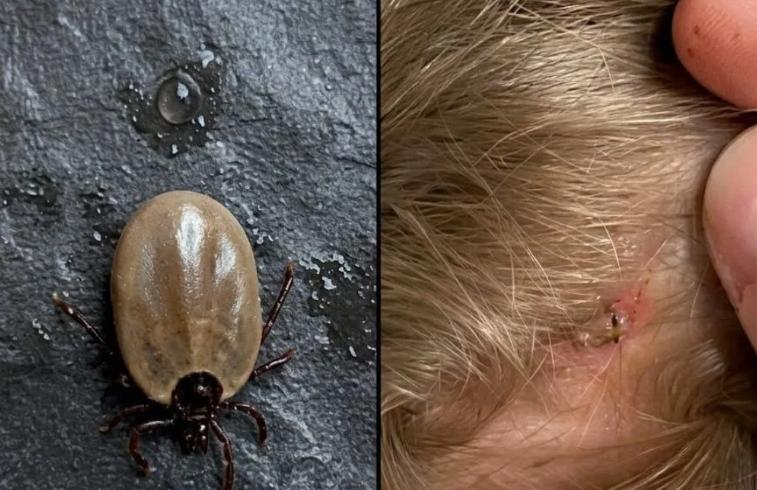
1. What Are Ticks?
Ticks are tiny parasites that survive by feeding on the blood of both humans and animals. They are commonly found in grassy fields, wooded areas, gardens, and locations where pets or wild animals frequently pass. Because of their size and behavior, they can attach to the skin without being noticed immediately. A tick bite does not usually cause pain, which makes it easy to overlook at first. In many situations, a tick can remain attached for several hours or even days before a person becomes aware of it.
These parasites are patient and persistent, waiting on plants or grass until a host brushes past. Once they find a suitable place on the body, they latch on and begin feeding quietly.
2. What Happens When a Tick Bites?
When a tick bites, it secures itself firmly to the skin and begins to feed on blood. At the beginning, the bite may appear as a small red spot or bump. Some individuals may notice slight itching, mild swelling, or a sense of irritation around that area. These reactions can vary depending on the person and the sensitivity of their skin.
The main concern does not always come from the bite itself. Some ticks can carry harmful germs, and these may enter the body during feeding. The amount of time the tick stays attached can play a role in increasing the chance of infection in certain cases. For this reason, removing the tick promptly and cleaning the area carefully is an important step in reducing potential risks.
3. Common Symptoms After a Tick Bite
After experiencing a tick bite, mild redness or slight itching can be a normal reaction. It is helpful to observe your body closely over the following days and weeks. Changes may develop gradually, and paying attention early can make a difference.
Possible warning signs include fever, headaches, fatigue, muscle discomfort, joint pain, swollen lymph nodes, or the appearance of a rash that spreads over time. A rash that expands slowly can be an important signal that should not be ignored. Some individuals may also feel chills, general weakness, or symptoms that resemble a common flu.
Each person may respond differently, so staying aware of any unusual changes remains important.
4. Diseases Ticks Can Spread
Ticks are known carriers of several illnesses that can affect humans. One of the most widely recognized conditions is Lyme disease. This illness may lead to symptoms such as fever, fatigue, headaches, muscle aches, joint discomfort, and sometimes a spreading skin rash. If it is not treated in time, it can influence the joints, nervous system, or even the heart.
In addition to Lyme disease, ticks may transmit other conditions such as Rocky Mountain spotted fever, ehrlichiosis, anaplasmosis, babesiosis, and tick paralysis. These illnesses can become more serious in children, older adults, and individuals with weakened immune systems.
Awareness and early attention play a key role in managing these risks.
5. When Should You Worry?
It is important to seek medical advice if the bite area begins to grow larger, becomes painful, swollen, warm to the touch, or shows signs of infection such as pus. Monitoring your overall health after a tick bite is equally important.
If symptoms such as fever, rash, headaches, muscle pain, joint discomfort, or unusual fatigue appear, consulting a healthcare professional is recommended. In more serious situations, immediate medical attention may be necessary. These include difficulty breathing, severe headaches, weakness, signs of paralysis, chest discomfort, or noticeable heart palpitations following a bite.
Taking action at the right time can help prevent complications.
6. How to Remove a Tick Safely
To remove a tick properly, use a pair of fine-tipped tweezers. Grip the tick as close to the skin as possible, then pull upward slowly and steadily. Applying even pressure helps ensure that the tick is removed completely.
Avoid twisting, crushing, burning, or covering the tick with substances like oil. These actions can make the process more difficult and may increase irritation. Once the tick is removed, clean the area thoroughly with soap and water or rubbing alcohol. Washing your hands afterward is also important.
If possible, place the tick in a sealed container or bag. This can be useful if a doctor needs to identify it later.
7. How to Prevent Tick Bites
Reducing exposure to ticks begins with simple precautions. Try to avoid walking through tall grass or dense vegetation when possible. Wearing long sleeves, long pants, and closed shoes can provide an extra layer of protection in areas where ticks may be present.
After spending time outdoors, check your body carefully. Pay attention to areas such as the scalp, behind the ears, under the arms, along the waistline, behind the knees, and around the ankles. These are common places where ticks may hide.
Pets should also be inspected regularly, as ticks can attach to their fur and later enter the home environment.
8. Final Thoughts
Ticks may be small in size, yet their presence can lead to health concerns that require attention. Not every tick carries disease, though each bite deserves care and awareness. Early removal, proper cleaning, and close monitoring of symptoms can make a meaningful difference.
A bite may appear minor in the beginning, though careful observation helps reduce the chance of complications. Staying informed and taking simple precautions can support your health and well-being over time.