The shop had fallen into an unusual stillness that afternoon, the kind of quiet that arrives near closing time, when the warm scent of fresh bread lingers in the air longer than footsteps do.
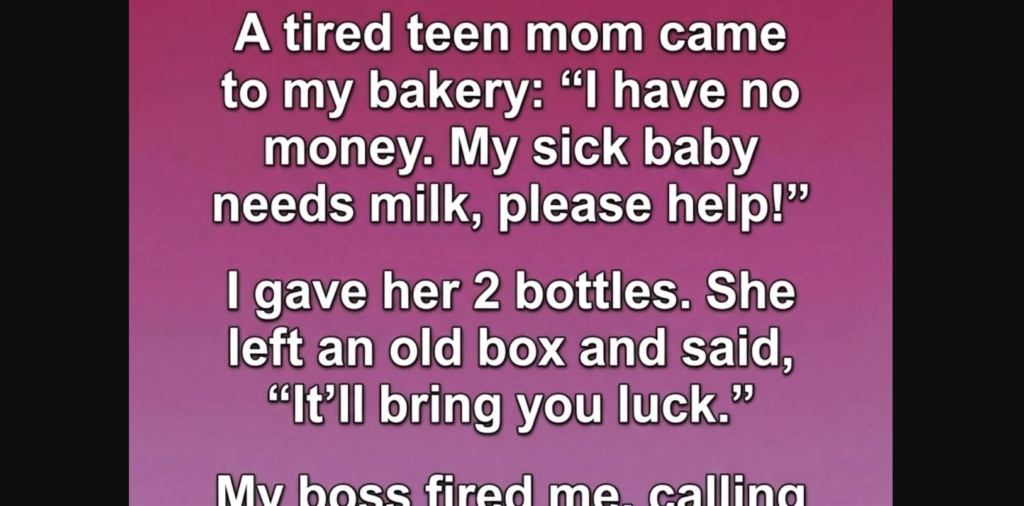
The shelves were mostly stocked, the lights slightly dimmer than earlier in the day, and the hours seemed to move more slowly. Then the door opened, breaking the silence, and a young woman stepped inside with a baby held close against her chest. She moved carefully, as if conserving energy. Her face carried the marks of fatigue, the kind that builds over many days rather than one difficult afternoon.
In a low, uncertain voice, she explained that she had no money and needed milk for her child. She did not plead or dramatize her situation. There was no attempt to persuade. Her words carried straightforward honesty and visible weariness.
The baby stirred slightly, wrapped tightly in a thin blanket. Without stopping to calculate consequences or policies, I reached for what she needed and placed it in her hands. She looked up with surprise, then relief, and thanked me in a way that felt sincere and lasting. Before leaving, she set a small, weathered box on the counter. “For luck,” she said softly. Then she turned, and the bell above the door rang as she stepped back into the street.
The exchange did not remain private for long. When my manager discovered what had happened, his response was immediate and firm. Procedures, store rules, and accountability were recited with precision.
There was no room for explanation, intention, or circumstance. By the time my shift ended, my position did as well. I walked home with a heavy mix of disbelief and frustration, replaying the moment in my mind and wondering how kindness had become something to be punished. Only after I reached my apartment did I remember the small box resting in my bag.
I sat at the kitchen table and opened it slowly. Inside were neatly folded papers and a handwritten note. The note did not focus on the milk. It thanked me for seeing her as a person and for offering respect when she needed it most. Reading those words steadied me in a way nothing else that day had managed to do.
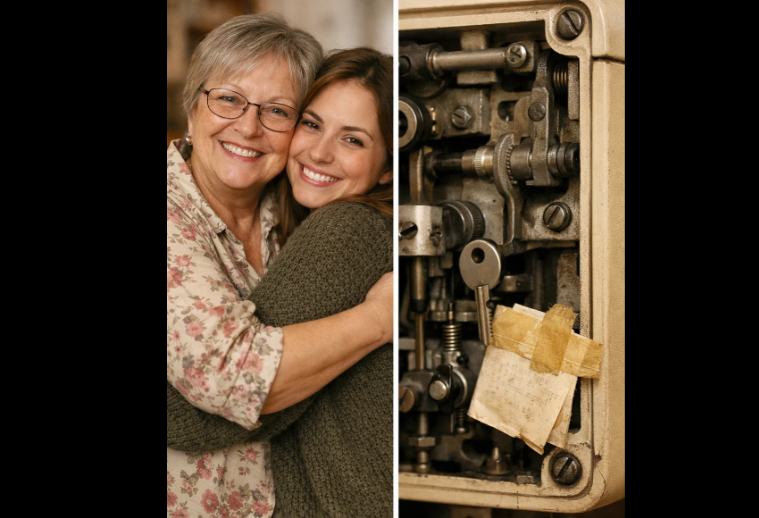
The papers inside the box revealed more than I expected. There were certificates, letters, and a few carefully drawn sketches. Together, they told a story of ambition placed on pause rather than abandoned. She had once dreamed of becoming a baker, learning techniques and recipes from her grandmother, who believed that food carried care, tradition, and hope from one person to another.
The box held no money, yet it carried trust and vulnerability. At the bottom, written lightly, was a phone number, accompanied by a brief message inviting me to call if I ever needed support as well.
The following morning, instead of sending out job applications immediately, I made a different decision and dialed the number. Our conversation was simple and cautious at first. Weeks later, we met again, this time standing side by side at a small weekend market stall.
What began as a conversation grew into collaboration. Her recipes and dedication paired naturally with my experience. The early mornings were long, and the work demanded patience, but it felt purposeful.
People came to the stall drawn by the smell of bread and stayed for the warmth of the exchange. They returned because the food carried a story, and because the hands offering it did so with care. Losing my job no longer felt like an ending.
It became a redirection I had not anticipated. The small box did not bring fortune in the traditional sense. It brought clarity, connection, and a new beginning.
There are moments when compassion seems costly. Yet sometimes, a single act of empathy opens a door that could not be planned. It does not remove something from your life. It guides you toward a place where you are meant to grow again.