I moved into the neighborhood three weeks after my husband passed. It wasn’t by choice—it was what I could afford after the bills and the medical debt consumed everything else. The rent was cheap. Too cheap. It did not take long to understand why.
Loud music at night. Shouting matches on the sidewalk. Cars speeding through stop signs as if they did not exist. I’d observe it all from my window with the blinds barely open, clutching my tea as if it could provide protection.
When I finally summoned the courage to walk to the corner store, I went during the day, hoping it would be safer. I made it there and back with my small cloth bags, but halfway home my knees began to falter. I had to pause and catch my breath on the sidewalk.
That’s when I saw him.
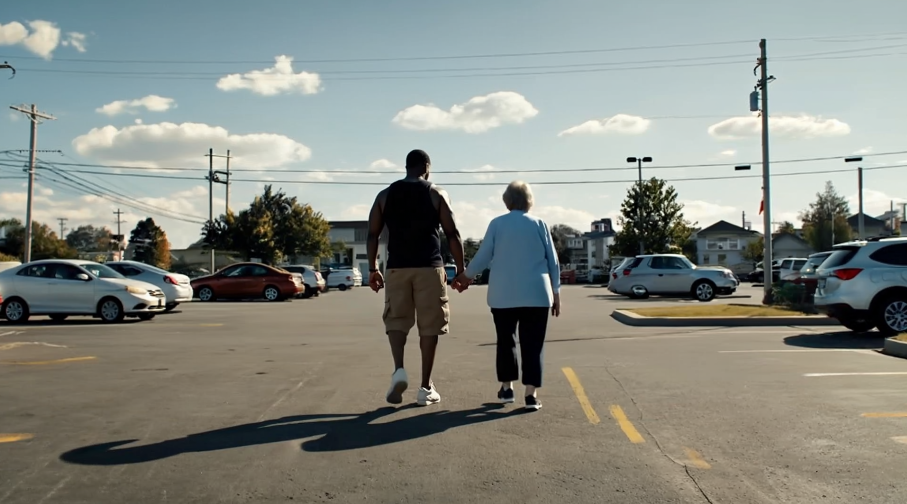
A large man. Tall. Muscular. Tattoos adorned both arms, wearing a sleeveless shirt and sneakers the size of small boats. He crossed the street toward me—rapidly.
My stomach lurched.
I clutched my bag tighter and attempted not to appear afraid, but I know I failed.
“Are you well, ma’am?” he inquired, his voice gentle but deep.
I hesitated. Then, for some reason, I spoke the truth. “I do not feel safe here.”
He looked around, then back at me. “Indeed. Many people do not. That is why I ensure individuals like you do not walk alone.”
Then he reached for one of my bags, extended his arm, and stated, “Come on, I’ll escort you back.”
We did not converse much on the way, but upon reaching my door, I finally asked, “Why are you doing this?”
He smiled, faintly, and said—
“Because someone did it for my mom once. And it changed everything for us.”
Then he gave a small nod and walked off before I could utter another word. I watched him depart, stunned and somehow… safer. As if perhaps the neighborhood was not as hopeless as I’d initially believed.
That night, I left the window blinds open a little wider.
The next morning, I found a small paper bag on my doorstep with a note scribbled on it: Fresh from Miss Anita’s bakery—try the peach scone first. Inside were three pastries, still warm.
I did not know who left it. But I had a suspicion.
Over the next few days, I saw the tattooed man again—assisting an old man lift groceries from his car, conversing with a group of teenagers who actually listened to him, intervening in an argument outside the liquor store.
I finally inquired of the clerk at the corner store about him.
“That’s Marcus,” she said, scanning my items. “He lives with his little sister two streets over. Good guy. He has endured much.”
“What kind of much?” I asked, careful not to appear too inquisitive.
She lowered her voice. “He lost his dad when he was ten. Mom raised him and his sister on her own. He used to associate with a troubled crowd, but he transformed his life. Now he works at the rec center and prevents the neighborhood from deteriorating.”
That night, I baked banana bread. It was the only thing I could still make without burning it. I wrapped it in foil and walked it over to the rec center after dinner.
He was sitting on the front steps, conversing with two boys. When he saw me, he stood.
“I inferred it was you who left the pastries,” I said, holding out the bread.
He laughed. “Exposed.”
I handed him the loaf, feeling a little embarrassed. “It’s nothing elaborate, only a thank you.”
He nodded. “It holds significance. Thank you for not assuming the worst.”
That moment sparked something. We began conversing more. I learned he was only twenty-eight, which surprised me—he carried himself as someone older. He lived with his sister, Leila, who was seventeen and graduating that year. He worked part-time and attended school in the evenings.
One afternoon, he knocked on my door with a toolbox.
“I noticed your porch light flickering. I thought I’d fix it before it stopped working.”
I did not argue. I let him in and made tea while he worked. After that, it became routine—he’d check in every few days, and I’d prepare something warm to eat.
A few weeks later, I woke up to shouting. It was past midnight, and I could hear a woman screaming. I peeked through the window and saw two figures across the street. One of them held a bottle.
Without thinking, I called Marcus. He answered on the second ring.
“I am observing two people fighting across the street. She appears terrified.”
He did not ask questions. “Remain inside. I am coming.”
Five minutes later, I saw him step between them, calm but firm. The man with the bottle retreated. The woman burst into tears.
The next morning, I saw the same woman sitting on Marcus’s steps, sipping coffee with Leila.
He was becoming the cohesive element of the neighborhood.
Then something unexpected happened. One morning, Marcus did not answer his phone. I called again, then texted, but nothing.
Two days passed. I inquired. No one had seen him.
Leila came by the third day. Her eyes were red and tired.
“He’s in the hospital,” she said quietly. “Someone attacked him on his way home from class. Took his wallet and phone. He resisted… and they severely beat him.”
My knees nearly gave out.
I visited him the next day, flowers in one hand, banana bread in the other.
His face was bruised, and his arm was in a sling, but he smiled when he saw me.
“I suppose I am not invincible after all,” he joked, his voice hoarse.
“You are permitted to rest, Marcus. Allow someone else to manage things for a while.”
He looked at me, eyes soft. “Indeed, but who?”
That’s when it resonated with me.
I could.
I began checking in on people as he used to—walking to the store with the older individuals, collecting trash outside the playground, organizing a food donation for the family whose father lost his employment.
I was not Marcus. But I could contribute.
And gradually, people noticed.
Teenagers who used to play loud music reduced the volume when they saw me. One of them—Tre—began walking Miss Clara’s dog for her in the evenings. The woman across the street who never spoke to anyone brought soup over when she learned Marcus was home.
We were not flawless. But we were striving.
Two months after his attack, Marcus returned to the rec center.
He moved a little slower, but his smile was unchanged.
“You transformed this place,” he told me.
“No,” I said, “you did. I merely… kept things running.”
That summer, we held a block party. Music, food, dancing in the street. Even the landlord attended—and promised to repair the broken lights and repaint the graffiti-covered walls.
Later that night, I sat with Marcus on my porch. He had a popsicle, I had iced tea.
“You know,” I said, “I was terrified when I relocated here.”
He nodded. “You informed me.”
“But now… I feel a sense of belonging.”
He grinned. “That is the intention.”
There was a pause. Then he added, “You know my mom… she passed five years ago. She always stated, ‘We are not here simply to endure—we are here to leave a place better than we found it.’”
I blinked away tears. “She’d be proud of you.”
He looked down at his popsicle, then back at me. “She’d be proud of us.”
Months passed. Leila gained acceptance to college. Tre applied to join the fire department. Even the corner store began stocking fresh produce and flowers.
The real revelation came when I received a call from the landlord’s office. They were reducing my rent by $100.
“Why?” I inquired, shocked.
“Well,” the woman on the phone said, “we’ve experienced fewer complaints and more lease renewals. Whatever you individuals are doing there… continue it.”
I laughed aloud. “Understood.”
I ended the call and walked outside, precisely as Marcus was jogging by—still recuperating, but smiling broadly.
I called out, “Hey! Are you available next Saturday?”
He slowed. “What is happening?”
“I am considering hosting a small garden workshop. Some of the children wish to plant sunflowers.”
He grinned. “I will bring the shovels.”
Reflecting on it, I never would have imagined that moving to that street—terrified and alone—would lead to this peculiar little family. But it did.
And perhaps that is the lesson in all of this.
Sometimes, the most intimidating places are simply waiting for someone to care enough to change them.
So if you ever feel like you do not belong… perhaps it is not about finding a better place. Perhaps it is about becoming the kind of person who makes the place better.