As senior prom drew closer, a realization settled into my thoughts with unexpected clarity. It was one of those truths that, once recognized, felt like it had always been there. My mom never experienced a prom of her own.
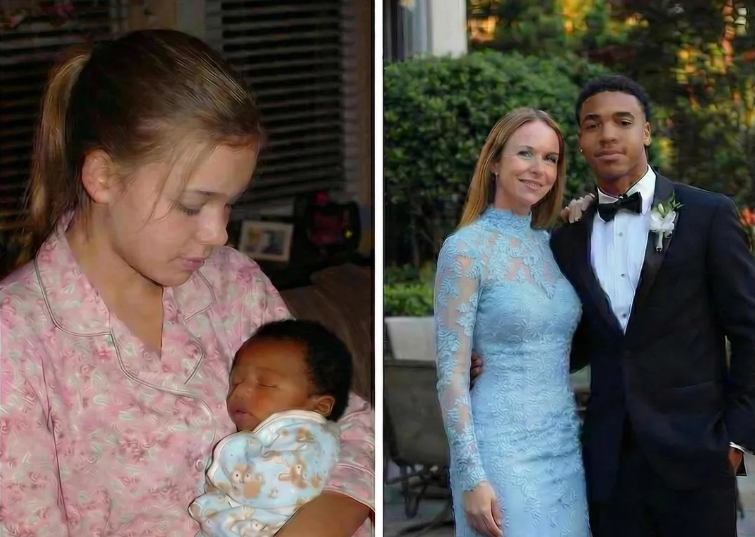
At seventeen, her life shifted overnight when she became a mother. While other teenagers were choosing dresses, planning dances, and dreaming about the future, she was learning how to survive. Her world filled with night shifts, textbooks balanced beside a crib, and responsibilities that arrived far too early.
She rarely voiced regret, but I noticed the pauses when she joked about her “almost-prom.” There was always something unspoken in those moments. That silence told me everything. This milestone everyone talked about did not need to center on me. It belonged to her.
When I asked her to attend prom with me, her reaction unfolded in waves. First came laughter, then tears, followed by hesitation. She asked if I truly meant it, if I was certain I would not feel awkward or judged. Her concerns came from years of placing herself last, of assuming her presence might inconvenience others. I reassured her without hesitation.
On the evening of the dance, she wore a simple blue gown that reflected her quiet elegance. She seemed nervous at first, unsure where to place her hands, how to stand, how to take in a moment she never expected to experience. Yet as the night progressed, something remarkable happened. She did not change into someone else. She stepped fully into herself.
Teachers greeted her warmly. Parents offered kind words. My friends spoke to her with genuine respect. For once, she was not explaining her past or minimizing her presence. She was part of the evening, fully and confidently. Watching her move through the room, smiling in a way I had not often seen, felt like witnessing a long-overdue acknowledgment. She was not standing on the sidelines of life. She was living it, openly.
The evening shifted when my stepsister attempted to draw attention through cruelty. She mocked my mother’s place at the event, implying that my mom had no right to be there. I felt tension rise, but I stayed beside my mom, holding her hand. Silence felt stronger than argument in that moment. Then something unexpected happened. The principal approached the microphone. The room quieted.
He spoke calmly and with intention. He shared my mom’s story, not as gossip, but as truth. He described a young woman who stepped into adulthood before she had time to be young. He spoke of long hours, personal sacrifice, and unwavering dedication. He acknowledged the strength it took to raise a child alone and the perseverance that carried her forward. He looked directly at her and said he was proud to see the result of her efforts standing at graduation that night. Applause filled the room. People stood. My mom covered her face, overwhelmed by the recognition she had never sought. I leaned close and whispered what I had believed for years: her life deserved celebration.
When the music faded and the night came to a close, another conversation followed. My stepfather addressed the behavior that had caused harm and made it clear that it had no place in our family. His words carried protection and resolve. My mom cried again, though this time the tears felt lighter. They came from relief and affirmation rather than pain.
The photographs from that evening still hang in our home. Guests often pause to look at them, commenting on the joy captured in those frames. They say how meaningful the moment was, how powerful it felt to witness. Yet the most important change did not come from the applause or the compliments. It came from within my mom.
That night helped her see what had always been true. She did not miss out on life. She shaped it. She built something enduring through effort, love, and resilience. Offering her that experience was not a favor or a gesture. It was recognition. And being able to share that night with her remains one of the moments I carry with the greatest pride.