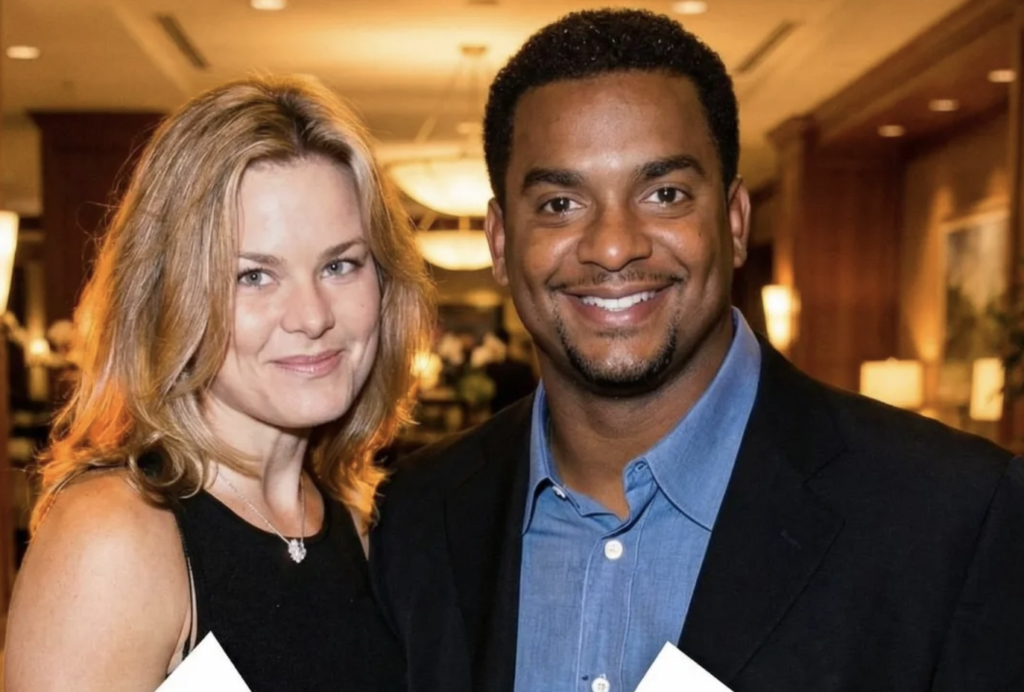
They may come from different chapters of his life, but Alfonso Ribeiro’s four children are connected by one steady, enduring presence: a father who remains attentive, encouraging, and fully engaged in their lives.
While many people continue to associate him with his memorable role on The Fresh Prince of Bel-Air, the work that holds the greatest meaning for him unfolds far from cameras and scripts. Now in his mid-50s, Ribeiro often reflects on family life with openness, expressing pride not through achievements on screen, but through the everyday moments that shape his children into confident, grounded individuals.
Parenting for Alfonso has never been about image or public validation. It has been about showing up consistently, listening carefully, and creating a home where communication is valued. In interviews and personal reflections, he has spoken about the importance of being emotionally available, especially in a blended family where understanding and patience matter deeply. His approach centers on presence—being there not only for celebrations, but also for uncertainty, growth, and quiet moments that often go unseen.
His oldest child, Sienna Michele, was born during his first marriage and spent her early years watching her father navigate both professional success and personal change. Divorce can create distance in many families, yet Alfonso and Sienna’s mother made a deliberate choice to prioritize cooperation and stability. That commitment allowed Sienna to grow up with reassurance rather than disruption. As she developed her own interest in acting, she did so in an environment that encouraged exploration without pressure. Family support gave her room to build confidence at her own pace, shaping independence alongside a strong sense of belonging.
Years later, Alfonso remarried and welcomed three more children, expanding his family with renewed intention and shared responsibility. Each child arrived with a distinct personality, contributing to the household in unique ways. One child displayed thoughtful leadership early on, another expressed curiosity through questions and creativity, while the others gravitated toward movement, sports, and imaginative play. Rather than comparing differences, Alfonso and his wife focused on honoring them. The goal was not uniformity, but balance—ensuring that every child felt equally heard, supported, and valued.
Blended families require deliberate care, and Alfonso approached this role with awareness. Parenting involved clear communication, shared routines, and an emphasis on empathy between siblings. Family time was treated as essential rather than optional. Whether through shared meals, school events, or simple conversations at home, connection remained a priority. These everyday practices helped build trust and emotional closeness, creating a sense of unity that extended beyond biological ties.
Another defining element of Alfonso’s parenting has been modeling accountability. His children have seen him navigate career transitions, public attention, and private challenges with honesty. By acknowledging effort rather than perfection, he reinforced the idea that growth is an ongoing process. Lessons about responsibility, kindness, and resilience were woven into daily life rather than delivered as formal rules. This approach allowed values to take root naturally.
What stands out most in Alfonso Ribeiro’s family story is consistency. Careers evolve, schedules change, and life introduces unexpected turns, yet his role as a father has remained steady. His children’s confidence, warmth, and mutual respect reflect a home built on reliability rather than performance. They speak comfortably, express themselves openly, and show consideration for one another—signs of an environment where emotional safety is firmly established.
Long after applause fades and television roles become memories, Alfonso’s most lasting influence continues to grow within his family. His legacy is not defined by past fame, but by daily presence, thoughtful guidance, and a commitment to parenting with intention. In a world that often measures success by visibility, his story offers a quieter truth: the most meaningful work often happens where the audience is small, but the impact lasts a lifetime.