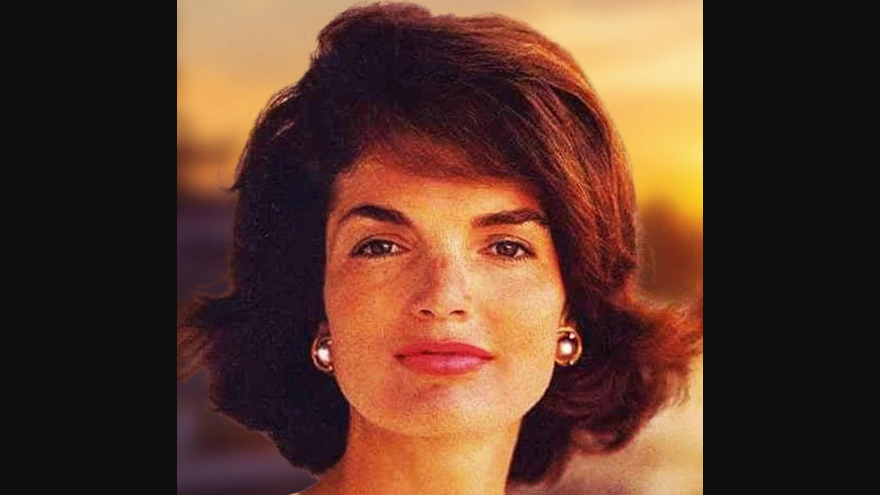
Jacqueline Kennedy Onassis remains one of the most admired First Ladies in American history, remembered not only for her enduring sense of style, but for her intellect, cultural vision, and composure during periods of national and personal trial. During her years in the White House alongside John F. Kennedy, she helped redefine the public role of a First Lady, approaching the position with intention rather than ceremony. She championed the arts, supported historic preservation, and worked to ensure that American culture was presented with dignity and depth on the global stage. Her televised tour of the White House introduced millions to the nation’s history, reflecting her belief that leadership and culture are inseparable.
Beyond public life, Jacqueline Kennedy Onassis was known for her private resilience. After enduring profound loss, she focused her energy on raising her children with stability and purpose, protecting their privacy while encouraging curiosity and independence. Later in life, she built a respected career in publishing, where she worked as an editor and advocate for literature, authors, and historical scholarship. Her professional life after politics demonstrated that reinvention rooted in substance and discipline can be both meaningful and lasting.
That legacy continues through her family, particularly through her eldest granddaughter, Rose Kennedy Schlossberg, the daughter of Caroline Kennedy. As Rose reached adulthood, public attention occasionally noted her resemblance to her grandmother, yet those who know her work emphasize that her achievements stand on their own merit. Like Jacqueline, Rose shows a deep respect for storytelling, creativity, and thoughtful communication. Her interests reflect a family tradition that values ideas, education, and cultural contribution over spectacle.
Rose’s academic path mirrors that commitment. After attending a rigorous preparatory school, she went on to study English at Harvard University, where she developed her voice as a writer and thinker. Her education strengthened skills that would later shape her creative projects, particularly her ability to blend observation, humor, and social commentary. Friends and collaborators describe her as intellectually curious and grounded, qualities often associated with her grandmother’s influence.
Rather than pursuing elected office, Rose chose a creative direction that allows space for experimentation and dialogue. She co-created and starred in the satirical comedy series End Times Girls Club, which explores preparedness culture, anxiety, and resilience through a distinctly female perspective. The project reflects cultural awareness and a willingness to engage with contemporary issues in an accessible way. Her work demonstrates that creativity can be a form of civic engagement, encouraging reflection without requiring formal political power.
Although she has supported political causes and participated in civic initiatives through volunteering and advocacy, Rose has remained focused on storytelling rather than public office. This choice aligns with a broader family pattern: contributing to public life through ideas, culture, and service rather than constant visibility. Her career suggests an understanding that influence can be exercised quietly, through consistent effort and thoughtful expression.
Jacqueline Kennedy Onassis passed away in 1994, when Rose was still young, yet the bond between grandmother and granddaughter left a meaningful imprint. Family members have shared that Rose carried warm memories of Jacqueline and felt connected to the values she embodied. Those values—intellectual rigor, compassion, cultural curiosity, and personal discipline—continue to surface in Rose’s choices and work.
Each generation inevitably shapes its own identity, informed by changing times and personal experiences. Even so, the influence of Jacqueline Kennedy Onassis continues to resonate, not as a distant chapter in history, but as a living framework for grace, resilience, and engagement with the world. Through Rose Kennedy Schlossberg’s education, creativity, and measured approach to public life, that legacy remains active, evolving thoughtfully while honoring its origins.