At the Orphaned Wildlife Center in Middletown, New York, a devoted couple, Marty and Debbie Kowalczik, have built a life centered entirely around compassion, responsibility, and respect for the creatures who depend on them. For decades, they have welcomed injured and orphaned wildlife onto their 100-acre sanctuary, offering rehabilitation, safety, and, when possible, a path back to the wild. The land itself is peaceful and expansive, filled with trees, natural water sources, and quiet spaces where animals can recover without fear. Among all the species that have passed through their care, the bears—Kodiak bears, American black bears, and Syrian bears—have become the true icons of the center. And within this remarkable group, one gentle giant has become a favorite among everyone who encounters his story: Jimmy.
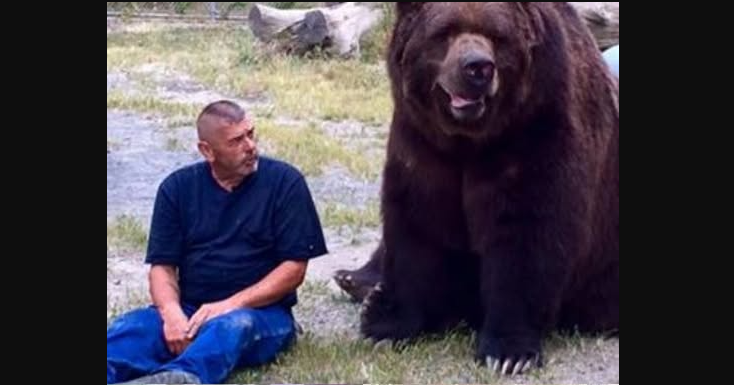
Jimmy is now 21 years old, a bear who has known the Orphaned Wildlife Center from the very first moments of his life. Born in captivity, he never learned the instincts or survival behaviors needed to navigate life in the wild. Because of this, returning him to his natural habitat was never an option. Yet what he lacks in wilderness experience, he more than makes up for in personality. Jimmy is affectionate, calm, and deeply connected to the humans who have raised him. His peaceful nature has made him a symbol of the sanctuary’s mission—proof that a life shaped by care can produce trust, gentleness, and comfort.
Standing over nine feet tall and weighing more than 1,500 pounds, Jimmy is breathtaking to behold. His presence is powerful, yet his temperament remains serene and steady. He has never been asked to perform tricks or behaviors for entertainment. The center has been very clear about that, explaining in a social media post, “Jimmy doesn’t do any performing or tricks. He’s been with us since he was a cub, and he thrives in an environment of trust and care.” Their purpose is not to turn wildlife into attractions, but to offer them a life of dignity. For Jimmy, that philosophy has given him the freedom to simply be who he is.
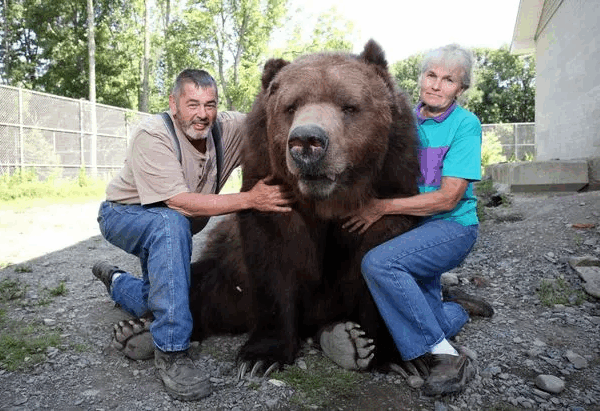
The sanctuary is not open to the public, and the Kowalcziks run it with a quiet focus on what matters most: the animals’ well-being. Every decision they make revolves around comfort, health, mental stimulation, and individualized care. Bears like Jimmy, who cannot return to the wild, receive lifelong support with carefully designed enclosures that mimic natural habitats as closely as possible. They roam freely, explore, climb, nap, and interact with other bears in ways that nourish their instincts and emotions.
One of the most fascinating aspects of their routine is their diet. Each bear consumes between 25 and 30 pounds of food every day, including fruits, vegetables, meats, and special treats that enrich their lives. Peanuts are a favorite among the bears, and watching them crack the shells, examine the contents, and discard the husks is a reminder that their innate behaviors remain alive and well. These small details reflect how deeply the center prioritizes a natural, enriching environment.
Jimmy, in particular, has formed profound connections with his caregivers. Stories shared by the team often describe quiet, tender moments—lying beside him while he gently nudges closer, offering the kind of trust that only forms through years of consistent, compassionate treatment. These experiences reveal the powerful bond that can develop between humans and animals when care is given without expectation of return.
The work done by Marty and Debbie represents the highest form of ethical wildlife care. Their commitment shows that true rescue is not about control or spectacle. It is about creating a life where animals who cannot return to the wild can still experience safety, affection, and joy. Through thoughtful routines, expansive habitats, and unwavering dedication, they have given Jimmy and the other bears not only a place to survive, but a place to flourish.
Jimmy’s life story is a testament to what compassionate stewardship can accomplish. Though he was never able to roam free in the wilderness, he has lived a life marked by comfort, warmth, and meaningful relationships. At the Orphaned Wildlife Center, he is not merely a resident—he is family. And through the Kowalcziks’ work, he continues to thrive as a gentle giant surrounded by the love and security he has always deserved.