When Lizzie Velasquez was born on March 13, 1989, in Texas, no one could have imagined the path her life would take or the number of people she would one day reach. From her first moments, Lizzie stood apart in ways that were both medically complex and deeply personal. At birth, she weighed 2.1 kilograms, a detail that immediately drew attention from doctors and caregivers. Early evaluations made it clear that her body functioned differently, setting the stage for a lifetime of adaptation, resilience, and growth.
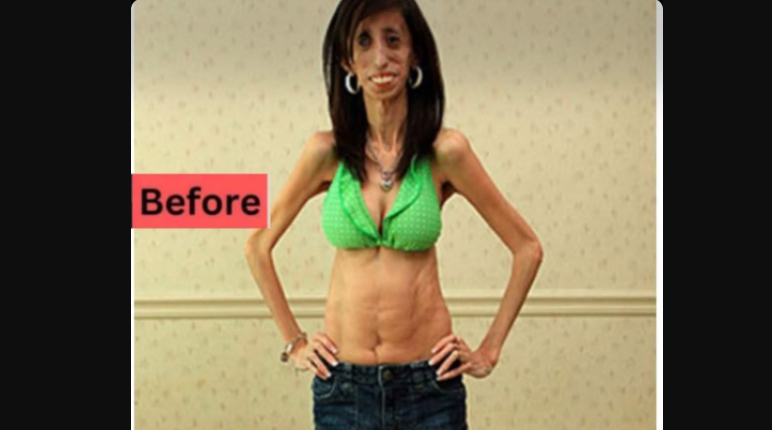
As Lizzie grew, physicians identified the cause of these differences as Marfanoid–Progeroid–Lipodystrophy Syndrome. This diagnosis came with enormous uncertainty. The condition was, and remains, extremely rare, with only a small number of documented cases worldwide. Medical literature offered few clear answers, leaving her family to navigate unfamiliar territory with limited guidance. The disorder affects how the body processes and stores fat, making weight gain impossible regardless of diet or calorie intake. Throughout her life, Lizzie’s weight has never exceeded 28 kilograms, a fact that shaped her daily routines, health needs, and public visibility.
In addition to these physical challenges, the condition affected her eyesight, resulting in complete blindness in her left eye. This required early adjustments and ongoing care, reinforcing the reality that Lizzie would need to approach the world differently from those around her. From childhood onward, she learned to listen closely to her body, conserve energy, and manage health concerns that most people never encounter.
Growing up, Lizzie entered schools and social spaces that were rarely prepared for difference. Curiosity often turned into stares, whispers, and comments that revealed more about others’ discomfort than her own worth. Children asked questions that adults struggled to answer, and some reactions crossed into cruelty. These moments left marks that went beyond the physical, shaping how she saw herself and how she learned to navigate public attention.
Despite this environment, Lizzie’s family emphasized stability, encouragement, and self-belief. They reminded her that her value was not defined by appearance or diagnosis. Education became a foundation, offering structure and a sense of progress. Over time, Lizzie discovered that her voice carried weight. Writing and speaking allowed her to express experiences that many people never see, opening doors to understanding that statistics and diagnoses cannot provide.
As social media expanded, Lizzie faced a new and harsher form of visibility. Online platforms magnified judgment, spreading labels that reduced her to a headline rather than a human being. One viral video introduced her to a global audience through words meant to wound. Instead of retreating, Lizzie chose to respond with purpose. She reframed attention into opportunity, using the spotlight to address bullying, empathy, and self-worth with clarity and strength.
Public speaking became a turning point. Standing on stages, Lizzie spoke openly about her condition, her experiences, and the emotional impact of being misunderstood. She addressed students, educators, parents, and professionals, encouraging reflection rather than pity. Her message focused on accountability in how people treat one another and responsibility in how individuals define themselves.
Through books, talks, and advocacy, Lizzie emphasized that confidence grows through intention and support. She spoke about identity as something shaped by values, actions, and resilience. Her work reached millions, not because of shock value, but because it resonated with anyone who has ever felt overlooked or judged.
Today, Lizzie continues to share her story with honesty and purpose. Her life illustrates how rare conditions can bring uncommon perspective, and how challenges can become sources of insight. She remains a powerful reminder that dignity does not require permission, and that understanding begins when people choose to listen.
Her journey did not unfold according to expectations set at birth. It unfolded through courage, persistence, and a commitment to using lived experience as a bridge rather than a barrier. Lizzie Velasquez stands as an example of how one voice, shaped by adversity and guided by intention, can inspire reflection, empathy, and meaningful change.