“You’re not my father.” Those words echo in the thoughts of a devoted stepfather who devoted countless years to forging a bond with his stepdaughter. Presence marked his role consistently, extending assistance across various aspects of her life, yet emotional closeness eluded them. Confronted with a monetary demand, he resolves to establish firm boundaries.
This complete account unfolds as follows:
My spouse departed this world when our sons reached ages eight and four. Time passed, leading to remarriage, and my present wife and I share eleven years of companionship. A daughter from her prior union joined our household. The former husband remains among the living, though involvement in their daily experiences ceased long ago.
Marriage united us when my boys stood at thirteen and nine years, while my stepdaughter entered at twelve. Immediate actions focused on cultivating connection with her. Presents arrived regularly, encouragement flowed during academic pursuits and outside activities, and assurances guaranteed fulfillment of her desires. Transportation to educational facilities occurred daily, funding covered elite schooling, and labor extended relentlessly to secure prosperity for all three children—my sons alongside her. My wife embraced homemaking after departing employment, placing the economic responsibility squarely upon my shoulders.
Equal treatment defined my approach toward her, mirroring that given to my biological offspring, yet reciprocity in acceptance never materialized.
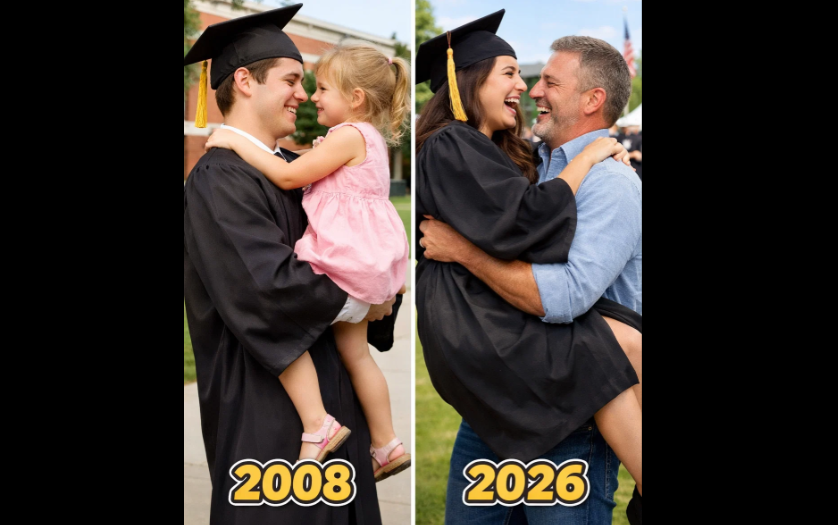
A pivotal moment arrived upon her completion of secondary education approximately five years past. Invitation extended from my older son to my wife, his stepmother, for attendance at his ceremony, whereas my stepdaughter declined to include me in hers. Allocation provided two admissions, selection limited to her mother exclusively. Inquiry into the reasoning prompted this response:
“You’re not my dad. You didn’t raise me, and I don’t want you in my life.”
Devastation enveloped me entirely. Persistence in provision continued nonetheless—tuition for higher learning received coverage identical to that for my sons.
Recent months brought awareness, via my wife, of impending nuptials for my stepdaughter. Direct communication bypassed me. Enthusiasm prompted acquisition of celebratory items—balloons in vibrant arrays, a confectionery centerpiece, and ornamental accents—for an anticipated home visit. Abrupt cancellation preceded the event, instructions relayed for my wife to arrive at the separate residence solo, excluding my sons and myself.
Profound disappointment settled deeply. Subsequent telephone outreach aimed at extending felicitations encountered brevity in reply. Sole aspiration voiced involved participation in a traditional father-daughter dance sequence. Denial followed swiftly.
Silence maintained thereafter, yet disclosure soon emerged from my wife regarding financial requirements for the matrimonial occasion. Deliberation spanned extensive periods, clarity prevailing—she viewed me devoid of paternal status. Communication to my wife conveyed refusal to allocate funds. Suggestion included utilization of her personal reserves should contribution appeal, while my involvement ceased.
Outrage consumed my wife. Assertions highlighted minimal accumulated resources, labeling my stance as self-centered and harsh. Rapid escalation involved relatives—father-in-law, brother-in-law, and additional kin—initiating contacts insisting upon payment. Division now fractures familial ties.
Recurring reflection centers upon her explicit declaration: paternal identity holds no place in her perception. Absence of that role raises valid questioning—why impose obligations aligned with fatherhood?
Delving further into the emotional landscape reveals layers of quiet endurance. Early interactions brimmed with optimism; family outings to local parks included games where laughter attempted to bridge gaps. Attendance at her performances in school plays meant arriving early to secure prime seating, applause resounding with genuine pride. Holidays featured gifts tailored to her evolving interests—books on favored subjects, equipment for hobbies pursued passionately. These gestures aimed to weave a tapestry of belonging, thread by thread.
Challenges persisted in subtle forms. References to “my dad” during conversations invariably pointed elsewhere, a reminder of boundaries drawn early. Efforts to engage in dialogue about future aspirations met with polite but detached responses. Counseling sessions, suggested gently, remained unexplored, respect for her autonomy guiding decisions. Patience became a constant companion, hoping time would soften reservations.
Financial commitments extended beyond necessities into realms of enrichment. Summer programs at esteemed institutions received sponsorship, opening doors to experiences broadening horizons. Wardrobe updates for special events, technological devices aiding studies—all flowed from a desire to equalize opportunities among the children. Household dynamics adjusted to accommodate her preferences in meals or entertainment choices, fostering an environment of inclusion.
The graduation exclusion stung with particular intensity, replaying in quiet moments. Visualizing the empty seat intended for me amid the audience evoked a hollow ache. Continuation of support post-incident stemmed from commitment to the family unit, believing actions might eventually resonate. College years brought periodic updates through my wife—academic successes, new friendships formed—pride swelling despite the distance.
Wedding preparations, learned indirectly, stirred a mix of joy and sorrow. Imagining the gown selection, venue choices, and guest lists proceeded without input, a parallel life unfolding. The planned home celebration represented an olive branch, decorations chosen with care to evoke warmth and welcome. Cancellation dismantled that vision, leaving remnants as symbols of unclaimed connection.
The monetary request crystallized years of unspoken tensions. Evaluation weighed emotional investment against reciprocation received. Boundaries, long flexible, solidified in recognition of self-respect. Dialogue with my wife emphasized principles over conflict, framing the decision as alignment with expressed realities rather than punishment.
Family interventions amplified the strain. Conversations with in-laws revisited history, highlighting contributions made over time. Defense rested on consistency—treatment as a daughter warranted mutual acknowledgment. Accusations of cruelty prompted reflection on definitions of generosity; extending resources without emotional foundation risked enabling detachment.
Moving forward involves nurturing existing bonds with my sons, whose relationships flourish with openness. Shared activities—sporting events, collaborative projects—strengthen those ties. My wife and I navigate discussions to preserve our partnership, seeking common ground amid disagreement. Professional mediation emerges as a potential avenue to address underlying grievances constructively.
This narrative illuminates the complexities of blended families, where love manifests in diverse forms. Dedication from a stepparent can build foundations, yet acceptance requires willingness from all parties. Establishing limits protects emotional well-being, allowing space for authentic connections to develop organically. Ultimately, respect flows bidirectionally, honoring individual truths while pursuing harmony.
Reflections on paternity extend beyond biology into realms of presence, guidance, and sacrifice. Years invested reflect a choice to embrace role fully, regardless of origins. The stepdaughter’s journey toward independence marks a natural progression, one hopefully enriched by stability provided. Future possibilities remain open—perhaps time will invite reevaluation, fostering mutual understanding.
For now, peace derives from alignment between actions and inner convictions. The household continues functioning with adjusted parameters, prioritizing equilibrium. Stories like this resonate widely, offering insights into resilience and the evolving nature of family roles.