How to Tell If It’s Safe: The 3-Point Check
Even though the jelly in Spam is completely normal, it is still wise to examine any canned meat before eating it. Canned products are made to last for extended periods, yet age, storage conditions, or unseen damage can affect safety. A brief inspection can protect your health and give you peace of mind. These three simple steps can guide you each time you open a can.
1. 🥫 Examine the Condition of the Can
Always begin with the exterior. The can itself provides the first clues about what might be happening inside.
A safe can typically has firm, smooth sides, no deep dents, no rust, and a level top and bottom. When you open it, there should be no surprising spray, foam, or sudden release of pressure.
Warning signs include bulging ends, heavy dents along seams, rust that flakes when touched, leaking liquid, or a hissing sound at the moment of opening. These signs may indicate bacterial growth, including the possibility of botulism. If you notice any of these issues, avoid tasting the contents entirely and discard the whole can safely.
2. 👀 Look Closely at the Jelly and the Meat
After opening, take a careful look at what is inside before touching or smelling it.
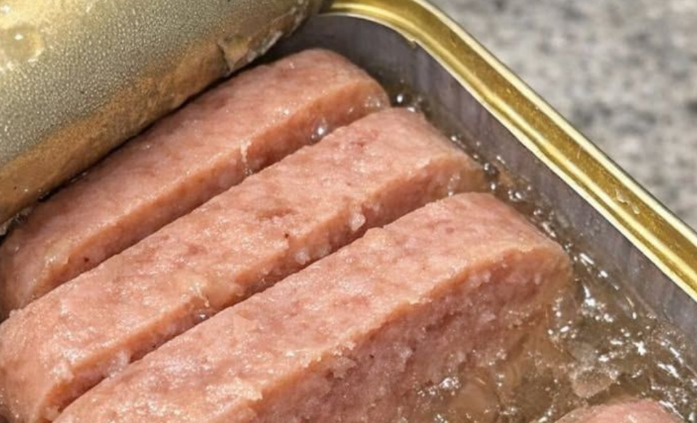
Normal jelly appears clear or pale amber, smooth, and firm in texture. The meat should have an even pink color and remain solid when sliced, with well-defined edges.
Signs of spoilage include jelly that appears cloudy, greenish, very dark, or slimy with stringy consistency. Meat that looks gray, brown, green, or patchy with slime should never be eaten. Any foamy or bubbly separation between layers is also a significant concern.
Texture is an important factor. Spam should feel firm and structured, not soft, mushy, or sticky.
3. 👃 Use the Smell Test
Your sense of smell is one of the most reliable tools for detecting freshness.
Normal Spam has a mild aroma—slightly salty and gently meaty. It should never have a strong or unpleasant scent.
Spoiled Spam produces an unmistakable odor. Sourness, rancid notes, sharp smells, or anything rotten signals that it should be thrown away immediately. If your instinct alerts you that something is wrong, trust it. Tasting canned meat to “check” safety is never recommended.
⚠️ When any step of this inspection points toward spoilage, stop there. Safety comes first.
Frequently Asked Questions
Q: Can cooking remove the jelly?
Yes. When Spam is fried, baked, or grilled, the gelatin melts. It either absorbs back into the meat or becomes part of the rendered drippings. After cooking, many people find it enhances texture and flavor.
Q: Does every variety of Spam contain jelly?
Most versions do, especially the original recipe. Spam naturally forms gelatin during processing. Lower-fat varieties or those with added seasonings may have less, yet its presence is still completely normal.
Q: Is the jelly safe to eat?
Yes. The jelly is simply gelatin produced from proteins released during cooking, similar to the layer that forms on cooled homemade broth. It is harmless and edible.
Q: What about watery jelly?
Changes in storage temperature can cause gelatin to soften or liquefy. As long as the color and smell are normal, watery jelly is not a concern.
The Bottom Line
The clear jelly on Spam is not a defect. It is a natural result of proper cooking and preservation. If the can shows no damage, the meat is firm and pink, and the aroma is mild, it is considered safe to enjoy.
Whether you prefer slicing it, frying it, mixing it into fried rice, or adding it to a sandwich, that small layer of gelatin is part of the character of a pantry classic that has been around for nearly a century.
Sometimes the things that seem unusual are simply signs that food has been prepared the way it was meant to be.
Have you ever been surprised by the jelly in Spam? Share your thoughts below—everyone learns something new from these conversations. 🥫✨