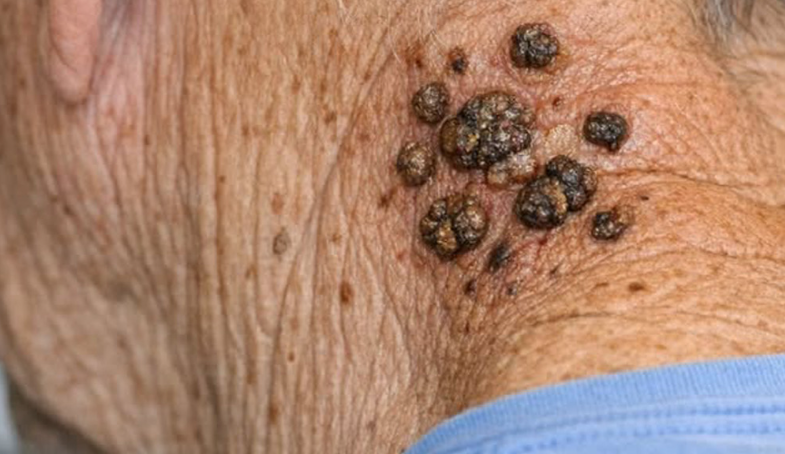
My grandpa has these dark, waxy bumps on his neck that itch. What are they?
As people age, the skin often becomes a canvas for new spots, growths, and changes. Many of these developments are harmless, yet they can still cause concern because of how they appear or how they feel. Itching, rough texture, or sudden appearance may raise questions, especially when the growth looks unusual.
One very common skin growth seen in older adults is called seborrheic keratosis. These spots may appear gradually over the years or seem to show up without much warning. Their look can be surprising, which often leads families to wonder whether something serious is developing.
Understanding what these skin changes are and why they form can make them less alarming. Below is a clear explanation of what the dark, waxy bumps on your grandpa’s neck are likely to be, how they differ from more serious skin conditions, and what options exist for managing them.
1. What Those Dark, Waxy Neck Bumps Most Likely Are
The dark, waxy spots on your grandpa’s neck are most likely seborrheic keratoses. These are benign, meaning non-cancerous, skin growths that are extremely common in adults over the age of 50.
They often appear brown, black, or tan and have a waxy or slightly scaly surface. Many people describe them as looking like they were placed on top of the skin rather than growing from within it. Their size can vary from a few millimeters to more than an inch, or about 2.5 centimeters.
Although they can develop anywhere, they frequently appear on the chest, back, scalp, and neck.
2. Classic Signs Of Seborrheic Keratosis You Can Spot At Home
Seborrheic keratoses have recognizable features. They often look waxy, rough, or slightly raised. Some resemble a drop of candle wax resting on the skin. Others may feel textured when touched.
They can appear alone or in clusters. The color may range from light tan to deep brown or even black. In some cases, they itch, especially if clothing rubs against them or if they are scratched repeatedly.
Itching does not automatically mean something dangerous is present. Friction and dryness can make these spots feel irritated.
3. How Seborrheic Keratoses Are Different From Skin Cancer
Because of their dark color and raised appearance, seborrheic keratoses can sometimes resemble certain forms of skin cancer, including melanoma. There are important differences.
Seborrheic keratoses usually have a uniform color and clearly defined edges. Cancerous lesions often show uneven borders, multiple shades within the same spot, or irregular shapes.
Any skin growth that changes rapidly in size, shape, or color should be evaluated by a healthcare professional. Seeking medical advice provides reassurance and ensures that nothing more serious is present.
4. Why Your Grandpa’s Age And Skin Type Matter
Seborrheic keratosis becomes more common with age. People over 50 are far more likely to develop them. This may be linked to natural skin aging and years of sun exposure.
Individuals with lighter skin tones may notice them more easily, although they can develop in all skin types. Recognizing that these growths are frequently associated with aging can help reduce unnecessary anxiety.
5. Common Triggers: Sun, Genetics, And Irritation
The exact cause of seborrheic keratoses remains unclear. Researchers believe several factors contribute. Long-term sun exposure appears to play a role, as these growths often develop on areas exposed to sunlight.
Genetics is another factor. They often run in families, meaning a family history increases the likelihood of developing them. Friction from clothing or jewelry may also increase irritation and itching.
6. When Itching, Bleeding, Or Changes Are A Red Flag
Although seborrheic keratoses are usually harmless, certain changes deserve medical attention. Intense itching, bleeding, rapid growth, or noticeable changes in color or shape should be examined by a doctor.
Persistent irritation can lead to infection if the area is scratched repeatedly. Paying attention to changes helps protect overall skin health.
7. How Dermatologists Confirm The Diagnosis
Doctors can often identify seborrheic keratosis through a visual examination. Dermatologists may use a dermatoscope, a handheld magnifying device, to inspect the lesion more closely.
If the growth appears unusual, a biopsy may be performed. This involves removing a small tissue sample and examining it under a microscope. The procedure ensures an accurate diagnosis.
8. Treatment Options: From Freezing To Scraping To Lasers
Treatment is not always necessary unless the growth causes discomfort or cosmetic concern. Common medical treatments include cryotherapy, which freezes the growth using liquid nitrogen. Another option is curettage, where the growth is gently scraped away.
Laser therapy may also be used to remove the lesion by vaporizing it. These procedures are typically quick and performed in a dermatologist’s office. Recovery time is usually minimal.
9. Home Care, What Not To Do, And When To Skip DIY Fixes
Attempting to remove seborrheic keratoses at home is not recommended. Picking, cutting, or scratching them can cause bleeding, irritation, or infection. Over-the-counter remedies may not be effective and could damage surrounding skin.
Consulting a healthcare provider before trying any treatment ensures safety and proper care.
10. Helping An Older Relative Talk To Their Doctor About Skin Changes
Encouraging your grandpa to speak with his doctor about skin changes is a supportive step. Before the appointment, note any new symptoms such as increased itching or bleeding.
Offering to attend the visit can provide reassurance and help ensure all concerns are discussed. Clear communication with a medical professional leads to better understanding and peace of mind.
Skin changes are a common part of aging. Learning what they represent allows families to respond with knowledge rather than worry.