Many people notice thick or rough patches of skin on their feet and immediately assume they are simple calluses. While calluses are common and often harmless, some of these patches may actually be something different. One condition that frequently creates confusion is the plantar wart. At first glance, plantar warts can resemble calluses because both appear as hardened areas of skin on the sole of the foot. However, the two conditions have very different causes and require different approaches to treatment.
Understanding the difference between plantar warts and calluses is important for maintaining healthy feet and preventing unnecessary discomfort. Misidentifying the condition can lead to incorrect care methods, which may allow the problem to persist or worsen over time.
A callus forms when the skin thickens in response to repeated pressure or friction. This often happens in areas where shoes rub against the skin or where weight is applied repeatedly while walking or standing. The body produces extra layers of skin as a protective response, which results in the rough or hardened texture that people recognize as a callus.
Plantar warts, on the other hand, develop due to an infection caused by the human papillomavirus, commonly known as HPV. The virus enters the body through small openings in the skin, such as minor cuts, cracks, or weakened areas on the sole of the foot. Once inside, the virus stimulates abnormal skin growth that forms the wart.
Because plantar warts originate from a viral infection, they behave differently from calluses. In some cases, they can spread to nearby areas of the skin or appear in clusters on the foot. Environments that are warm and moist increase the likelihood of infection. Public swimming pools, locker rooms, gym showers, and communal changing areas are places where the virus may spread more easily, especially when people walk barefoot.
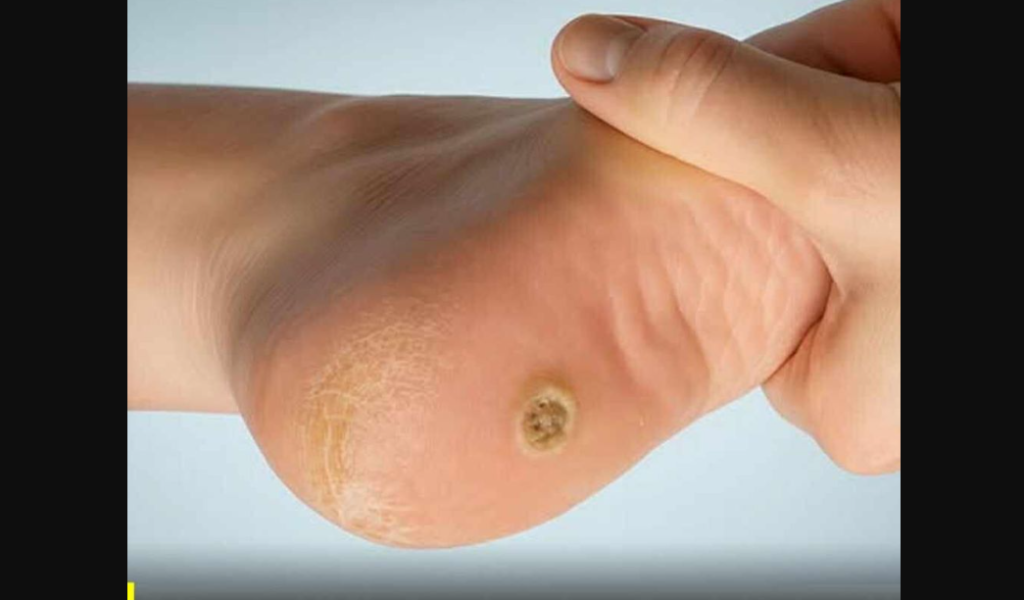
Although plantar warts and calluses may look similar, several signs can help distinguish one from the other. Plantar warts often appear as rounded areas of thickened skin that may feel slightly raised or uneven. A noticeable feature that sometimes appears within the wart is a series of small dark dots. These dots are tiny blood vessels that have clotted within the lesion, and they often serve as an identifying sign.
Another important difference relates to the type of discomfort experienced. Calluses usually cause pain when direct pressure is applied from above, such as when standing or walking in tight shoes. Plantar warts may feel different. Many people report that the discomfort becomes more noticeable when pressure is applied from the sides of the lesion. The sensation can feel as if the pain originates deeper within the foot.
The location of the growth can also offer clues. Calluses frequently develop in areas that experience consistent friction, such as the heel, the ball of the foot, or the outer edges of the toes. Plantar warts may appear on weight-bearing areas of the sole or between the toes, depending on where the virus entered the skin.
Because plantar warts result from a viral infection, treating them in the same way as calluses can be ineffective. Some individuals attempt to remove the thickened skin using pumice stones, blades, or abrasive tools. These methods may temporarily reduce the hardened surface but do not eliminate the underlying virus.
Improper treatment may also irritate the surrounding skin, creating conditions where the virus spreads to nearby areas. When this occurs, multiple warts can develop, making the condition more difficult to manage.
For this reason, proper diagnosis becomes an important step. Health professionals can determine whether the growth is a callus or a wart and recommend appropriate care. Treatment options may include topical medications designed to target the virus, specialized dermatological procedures, or other methods recommended by medical providers.
Ignoring plantar warts can also lead to ongoing discomfort. Because the sole of the foot carries the body’s weight throughout the day, the wart may grow inward rather than outward. This inward pressure can create the sensation of walking with a small object under the skin, which can affect posture and walking patterns over time.
Preventive habits can reduce the likelihood of developing plantar warts. Maintaining good foot hygiene is essential. Washing and drying the feet carefully after bathing helps limit moisture that encourages viral growth. Wearing sandals or protective footwear in shared showers, locker rooms, or pool areas can also reduce exposure.
It is also helpful to avoid sharing personal items such as towels, socks, shoes, or pedicure tools. These items may carry the virus if they have been used by someone with a wart.
In summary, although calluses and plantar warts may appear similar at first, they represent two very different conditions. A callus develops as the skin responds to repeated pressure, while a plantar wart forms because of a viral infection that requires a different type of care. Recognizing the difference helps ensure proper treatment and supports long-term foot health.
Paying attention to the signs, maintaining good hygiene, and seeking professional advice when necessary can help protect the health and comfort of your feet.