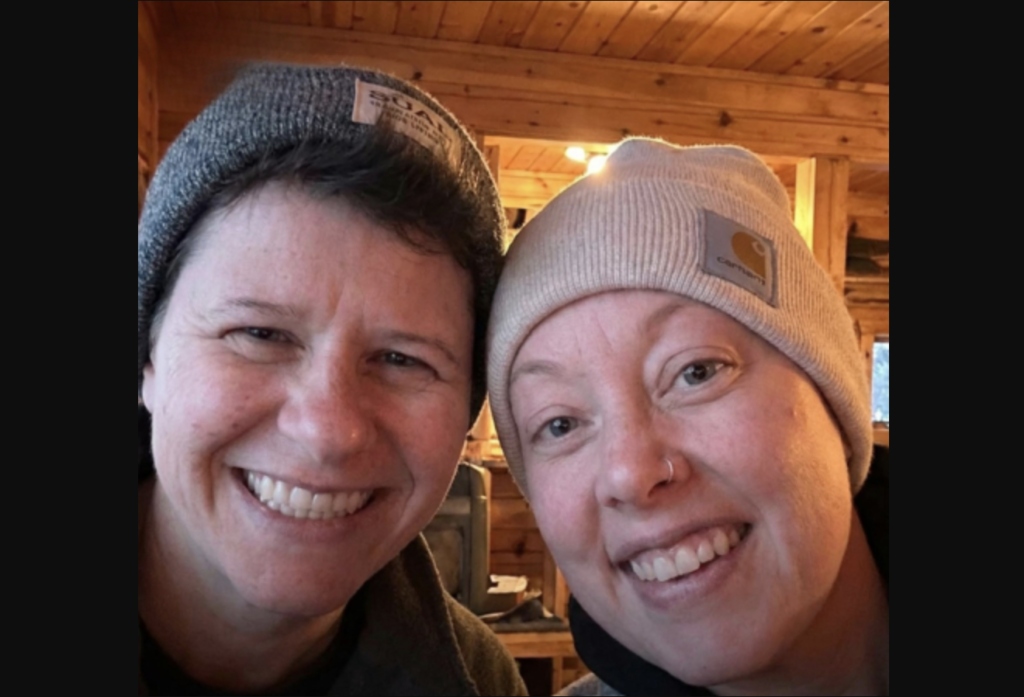
The death of Renee Nicole Good, a 37-year-old mother from Minneapolis, has continued to draw national attention as new details and personal reflections come forward. In her first public remarks since the incident, Renee’s wife, Rebecca Good, offered a deeply personal account of the moments and values that defined their lives together.
Speaking with Minnesota Public Radio, Rebecca explained that the couple had paused that evening to support neighbors during a community response connected to immigration enforcement activity in their area. She emphasized that their actions were peaceful and motivated by care rather than confrontation.
“We had whistles,” she said quietly. “They had guns.”
Those words have echoed widely, capturing the emotional distance between community intent and the outcome that followed. As public discussion continues, her statement has added a human dimension to an incident often described through official language and procedural explanations.
A moment that changed many lives
According to federal accounts, Renee Nicole Good was shot on January 7, 2026, during an encounter with a federal law-enforcement officer in south Minneapolis. Authorities stated that officers believed the situation involved immediate danger during an active operation.
Since that day, video footage from multiple angles has circulated, prompting ongoing debate about what unfolded in those critical moments.
Federal agencies have maintained that the officer acted based on perceived risk. At the same time, local leaders, legal observers, and residents have called for a comprehensive and independent review, stressing that public trust depends on transparency and clear answers. As the investigation proceeds, differing interpretations of the footage continue to shape public conversation across the country.
Remembering Renee beyond the headlines
Rebecca Good’s remarks focused less on the mechanics of the incident and more on the life that was lost. She described Renee as a person defined by warmth, humor, and a deep sense of moral responsibility. Faith played a central role in Renee’s life, not as a label but as a daily practice of compassion and service.
Together, the couple had been raising their six-year-old son with the belief that dignity belongs to everyone, regardless of background or circumstance. Rebecca shared that this value guided their everyday decisions, from how they treated neighbors to how they explained the world to their child.
The family had moved to Minnesota seeking stability and community. According to Rebecca, Minneapolis initially offered exactly that. They built friendships, found shared purpose, and felt rooted in their neighborhood. That sense of safety, she said, has been deeply shaken in the aftermath of Renee’s death.
Community response and calls for clarity
In the weeks since the shooting, vigils and demonstrations have taken place throughout Minneapolis and beyond. Neighbors, faith leaders, and advocates have gathered to honor Renee’s life and to ask difficult questions about enforcement practices, use-of-force standards, and community safety.
City officials have also weighed in. Minneapolis Mayor Jacob Frey has publicly supported calls for an independent investigation, emphasizing that accountability and transparency are essential for healing and trust. State and local leaders have urged calm while affirming the importance of a full and impartial review of all available evidence.
A family navigating grief and purpose
Now facing life without her partner, Rebecca Good is raising their young son while carrying the responsibility of preserving Renee’s memory. She has spoken about the challenge of explaining loss to a child while still teaching the values Renee lived by: empathy, patience, and care for others.
Rather than allowing anger to define the future, Rebecca has said she hopes to continue modeling those principles, even amid grief. Her message has resonated with many who see the situation as a reminder of how quickly ordinary moments can turn into life-altering events.
Beyond the investigation
While legal and procedural questions remain unresolved, many in the community have emphasized that Renee Nicole Good should be remembered for who she was, not only for how she died. She was a mother, a partner, a neighbor, and someone known for showing up when others needed support.
As reviews and investigations continue, the case has become part of a broader national reflection on public safety, enforcement practices, and the human cost of split-second decisions. For those closest to Renee, however, the focus remains personal: honoring a life shaped by compassion and ensuring that her story is told with care, dignity, and truth.